
Seasonal Pest Guide: Which Pests Are Active in Spring, Summer, Fall, and Winter
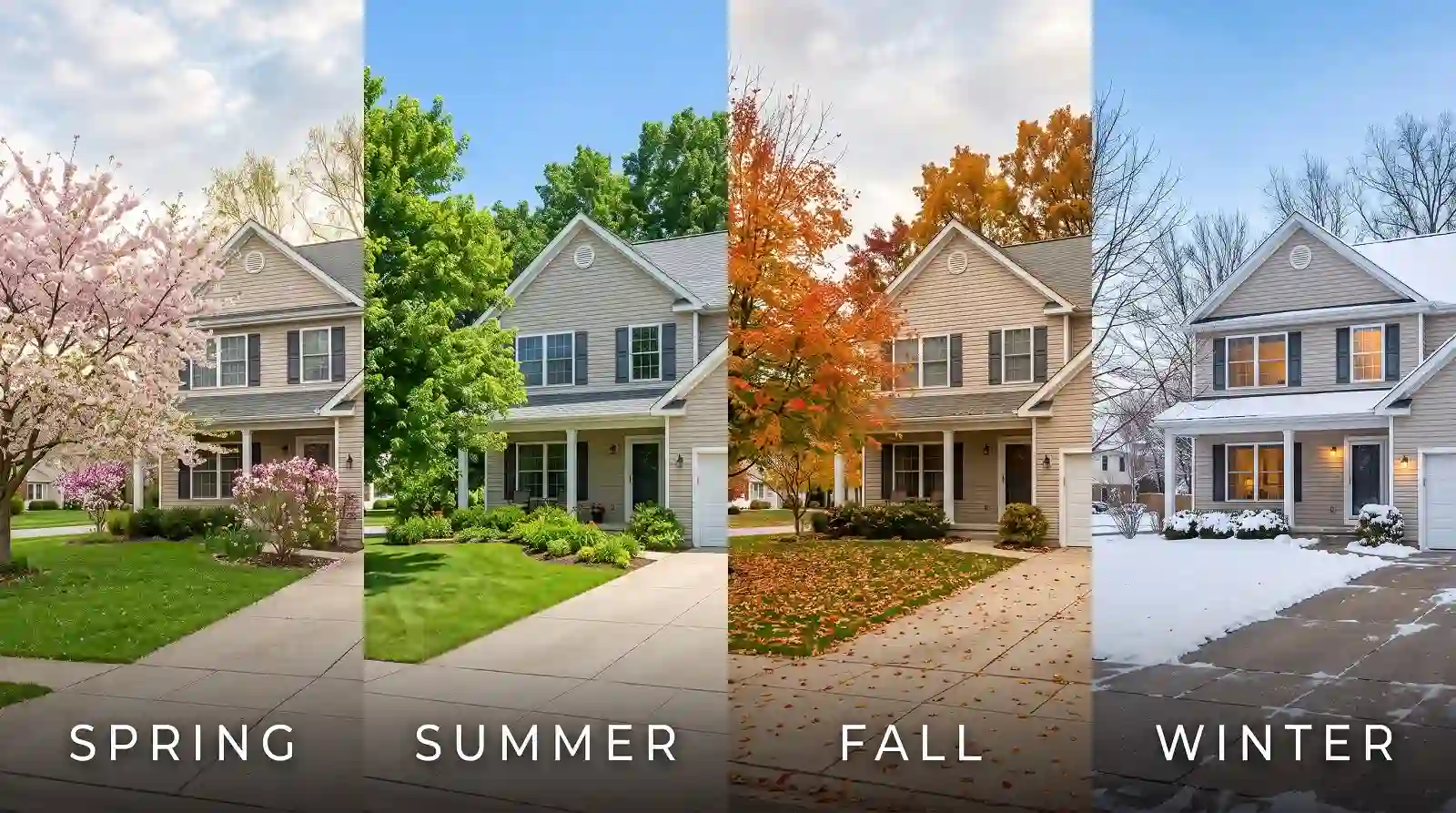
You seal a gap in the siding in April and think the job is done. Then October arrives and something new is scratching inside the wall. Pests do not show up at random. They follow temperature, rain, and daylight, and they arrive on a schedule you can learn.
I started tracking this after a spring when I found termite wings on a windowsill and mice in the pantry the same year. Once I mapped what shows up when, prevention got a lot easier. This seasonal pest guide walks through all four seasons and tells you what to watch for in each one.
Jump to a season: Spring · Summer · Fall · Winter · Prevention Timing
Quick Reference: Pest Activity by Month in U.S. Homes
| Month | Watch For | Why |
|---|---|---|
| January | Mice, cockroaches, silverfish | Cold pushes rodents and insects toward heated interiors |
| February | Termites (Gulf Coast), mice | Early swarms begin in the warmest southern states |
| March | Termites, ants, wasp queens | First warm days wake overwintering colonies |
| April | Termites, carpenter ants, mosquito larvae | Spring rain fills standing water and softens wood |
| May | Ants, wasps, mosquitoes, raccoons | Nesting and breeding season peaks |
| June | Mosquitoes, bed bugs, cockroaches | Heat speeds up insect life cycles |
| July | Mosquitoes, roaches, wasps, earwigs | Peak activity across almost every species |
| August | Mosquitoes, wasps, spiders, earwigs | Wasp colonies hit maximum size |
| September | Spiders, boxelder bugs, crickets, mice | Insects begin hunting for winter shelter |
| October | Mice, boxelder bugs, camel crickets, spiders | The main indoor migration month |
| November | Mice, raccoons, overwintering insects | Attics and wall voids fill up |
| December | Mice, roaches, bed bugs | Holiday travel moves bed bugs between homes |
This seasonal pest guide uses average U.S. timing, and your climate shifts it. Gulf Coast readers will see most of this two to six weeks earlier than the Upper Midwest, and northern winters push the whole calendar tighter.
Spring: Swarming and Waking Up
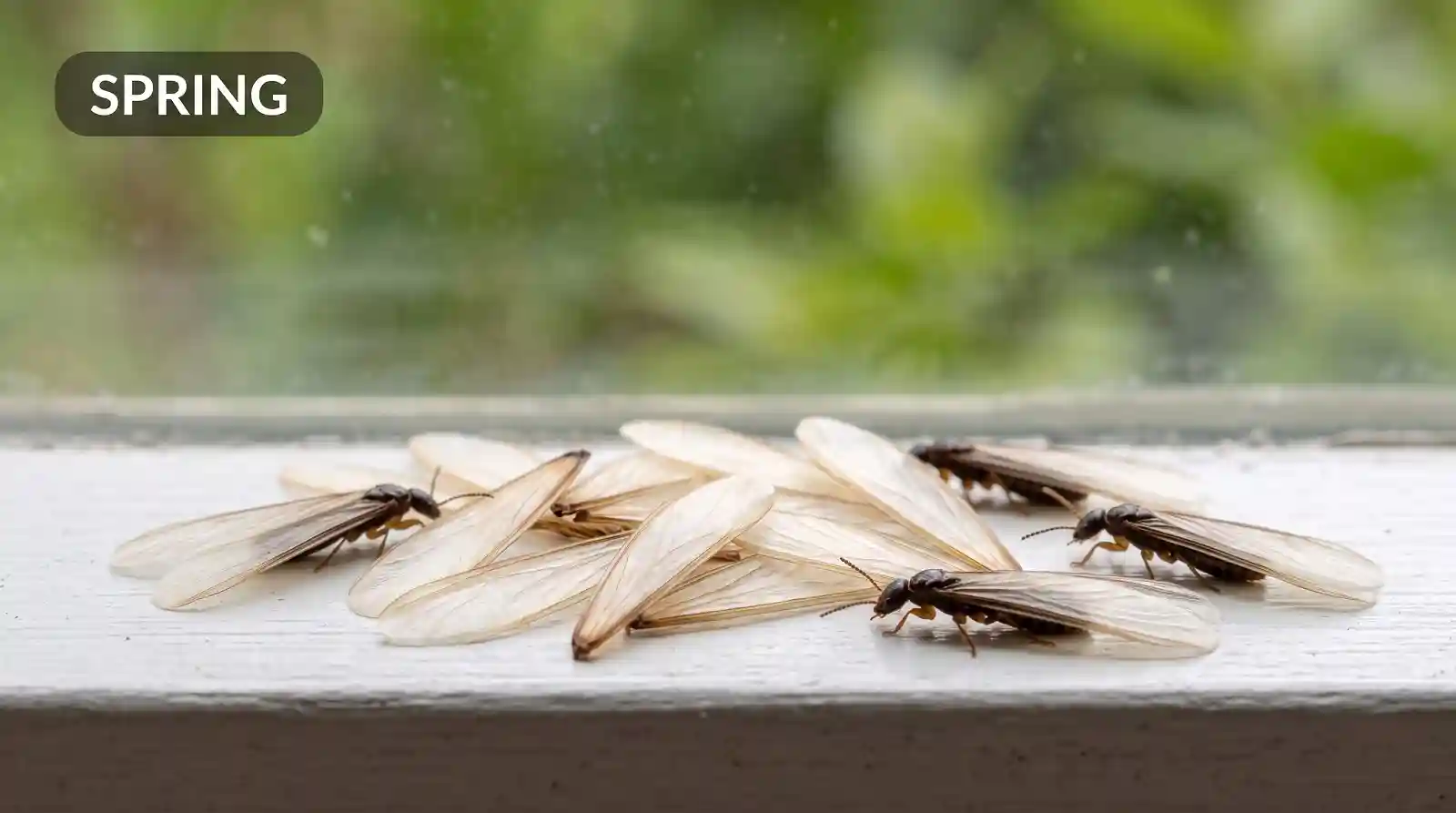
Spring is the loudest season for pests, and most homeowners are not ready for it. Colonies that spent winter dormant come back online all at once. Warm afternoons after rain are the trigger.
Termites are the biggest spring threat. Most subterranean termite swarms happen in spring, though the timing shifts with location. In coastal counties, swarms can start as early as late January, while northern areas usually see them from April through June. If you find discarded wings on a windowsill, that is a warning sign. Learn how to identify termites and their damage before you assume it is nothing, then read the full termite control and treatment guide for your options.
Ants wake up next. Carpenter ants start hollowing out damp wood, and their swarmers look enough like termites to cause real confusion. Smaller trails of odorous house ants start showing up around sinks and pet bowls as the colonies expand.
Wasp queens emerge alone in early spring and start building. A nest the size of a golf ball in April becomes the size of a football by August. Catching it early is far safer, and the paper wasp guide covers how to spot and handle young nests.
Mosquitoes begin as eggs in standing water. Spring rain fills gutters, buckets, and tarps. Clearing that water in April saves you weeks of misery later. The mosquito larvae guide shows you what to look for in the water itself.
Raccoons give birth in spring, and a female looking for a den will target your attic or chimney. Early signs are usually droppings. Our raccoon poop identification and cleanup guide explains the health risks and how to clean up safely.
Summer: Peak Activity Everywhere
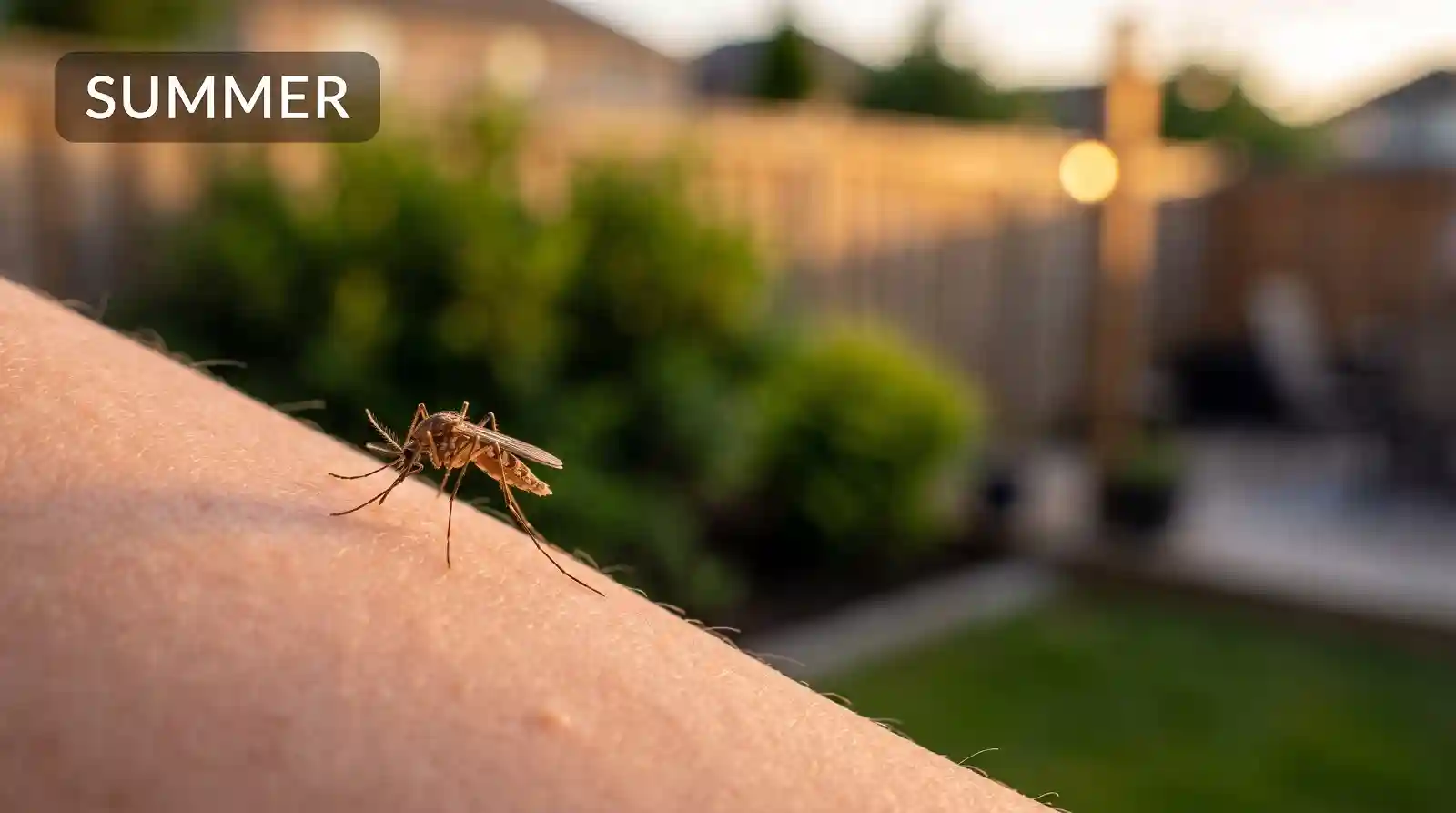
Summer is when populations hit their maximum. Heat shortens insect life cycles, so colonies grow fast.
Mosquitoes dominate the season. People get infected with West Nile virus during mosquito season, which runs from summer through fall, typically June through October, with cases peaking in late August and early September. That makes yard control worth the effort. Our guide to mosquito foggers and yard control methods compares sprays, zappers, and repellents. If you are already covered in bites, here is how to calm mosquito bites overnight.
Bed bugs move in summer because people move in summer. Hotels, rentals, and dorm turnover all spread them. Check for early signs of bed bugs in homes and hotels before you unpack, and learn what bed bug bites actually look like so you do not misread them.
Cockroaches breed fastest in warm, humid conditions. If you are seeing small brown ones in the kitchen, confirm the species first with our guide to German cockroaches and their lookalikes, then work through the cockroach baits and treatment guide.
Wasps turn aggressive in late summer. Colonies peak in size around August, and food sources start running short. That combination makes them defensive around patios and trash cans.
Earwigs show up indoors when the weather turns dry. They move from mulch beds toward damp bathrooms and basements. The earwig guide covers whether they actually bite and how to keep them out.
Fall: The Indoor Migration
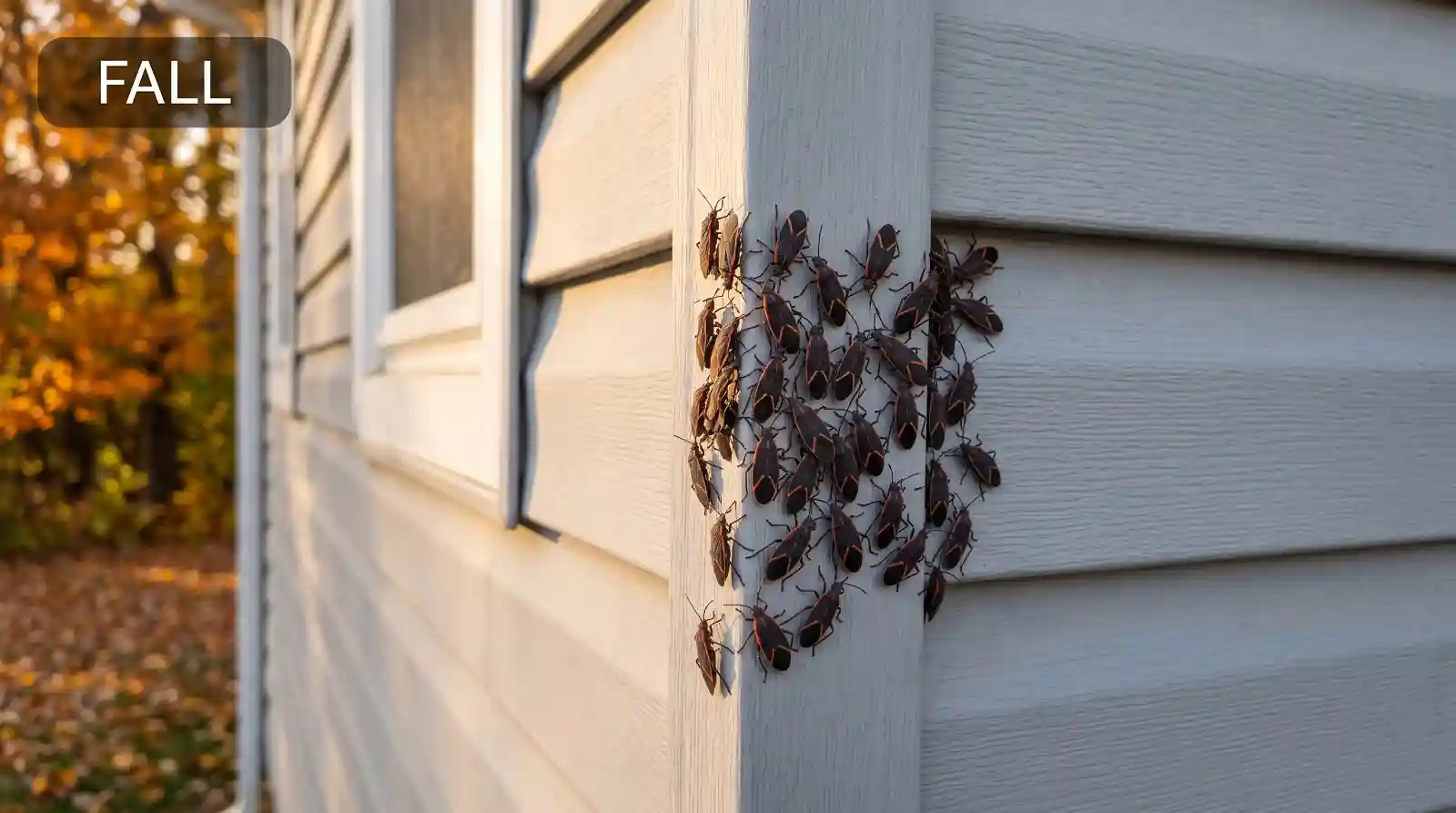
Fall is the single most important season for prevention. Insects that spend winter as adults need shelter, and your walls are ideal.
Boxelder bugs overwinter as adults in protected spots such as houses, hiding in cracks around walls, doors, and foundations, particularly on south- and west-facing sides. That sun-warmed wall is the reason they cluster where they do. Our boxelder bug guide covers identification and control.
Mice are the classic fall arrival. A gap the width of a pencil is enough. Once the nights turn cold, they come in for food and warmth, and a small problem grows fast. Start with how to get rid of mice and keep them out.
Spiders become more visible in fall, mostly because males wander looking for mates. Most are harmless. A few are not. Read the brown recluse and dangerous spiders guide if you want to know what you are dealing with, or the big spiders guide for state-by-state identification.
Camel crickets move into basements and crawl spaces as outdoor temperatures drop. They jump toward you when startled, which is unsettling but harmless. The camel cricket guide explains how to clear them out.
Raccoons look for winter denning sites in late fall. If one seems disoriented or active in daylight, treat it seriously. Our guide on rabid raccoon warning signs and removal covers what to do and what removal costs.
Winter: Quiet Outside, Busy Inside
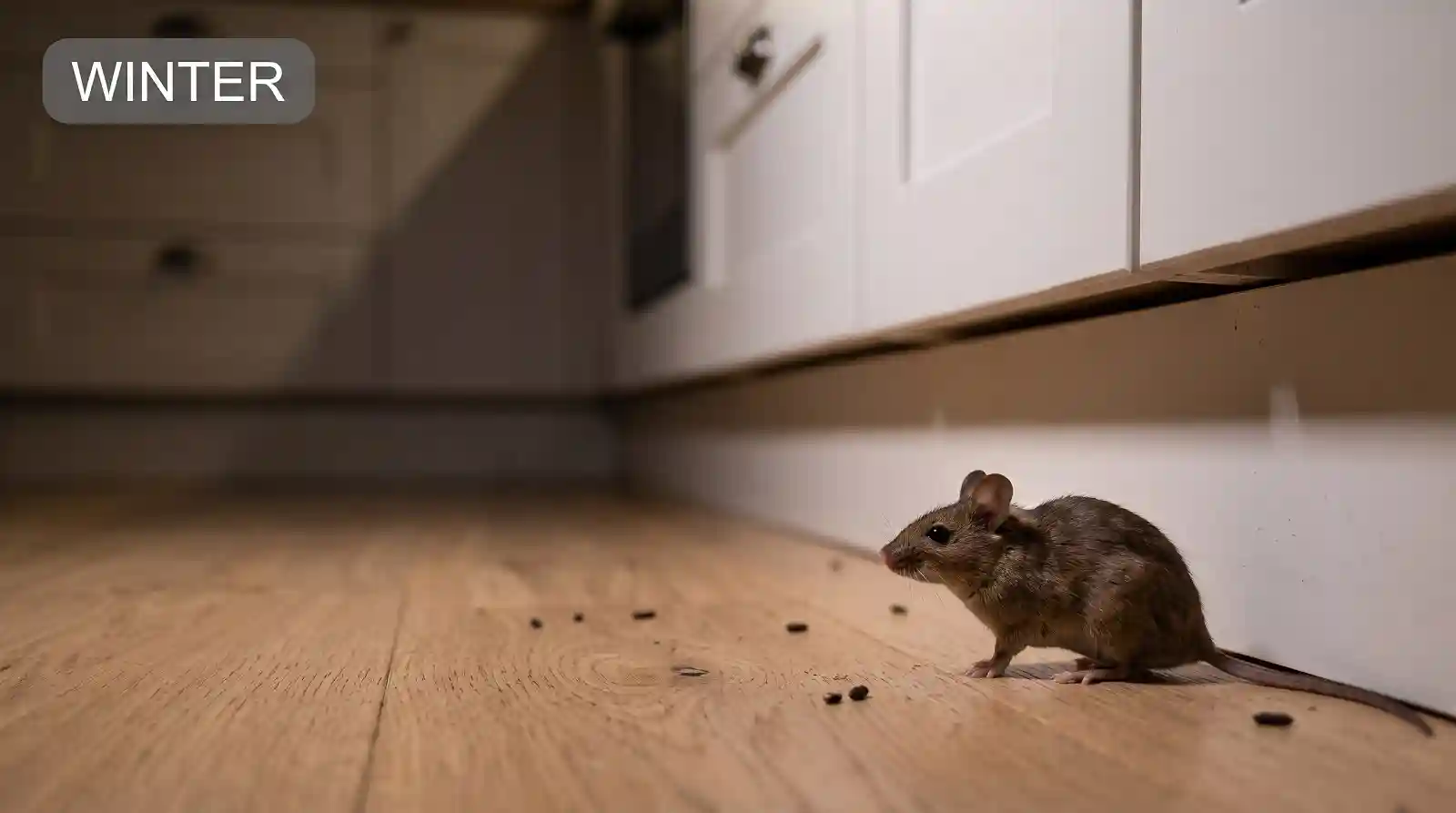
Outdoor pest activity drops in winter. Indoor activity does not. Everything that got in during fall is now living in your walls.
Mice and rats are most active indoors now. Droppings behind appliances and gnawed packaging are the usual first clues.
Cockroaches thrive in heated kitchens all winter. Warmth near appliances keeps them breeding when it is freezing outside.
Silverfish turn up in bathrooms, basements, and around stored paper. They like damp, dark, and undisturbed spaces. The silverfish identification guide helps you tell them apart from lookalikes.
Bed bugs spread during holiday travel. Luggage moving between homes and hotels is how most infestations start.
Overwintering insects like boxelder bugs and stink bugs sometimes wake on warm winter days and wander into living areas. They are not breeding indoors. They just took a wrong turn.
The Prevention Work That Actually Pays Off
The whole point of a seasonal pest guide is timing. When you act matters more than what you buy. Seal exterior gaps in late summer, before the fall migration starts. Clear standing water in early spring, before mosquito eggs hatch. Check for termite activity when swarming season begins in your region.
The EPA recommends an approach called integrated pest management, which prioritizes exclusion and sanitation over routine spraying. It combines monitoring, correct identification, and targeted control, using pesticides only when they are needed. That fits seasonal prevention well, because it means acting before a problem starts rather than reacting afterward.
If you are not sure what you are looking at, start with our house bugs identification guide. Correct identification changes the entire treatment plan.
Bottom Line: How to Use This Seasonal Pest Guide
Pests run on a calendar. Spring brings swarms, summer brings peak numbers, fall brings the move indoors, and winter keeps whatever already made it inside.
I built this guide after years of tracking what shows up when around my own home and answering reader questions about the same seasonal patterns. It gets reviewed and updated each year as the seasons turn.
Find the season you are in, open the guide for what you are actually seeing, and deal with it before the next season stacks something new on top.
Browse the Full Pest Library
- Termites
- Cockroaches
- Bed Bugs
- Ants
- Mosquitoes
- Spiders
- Rodents
- Wasps
- Silverfish
- Occasional Invaders
- Nuisance Wildlife
Not sure what you are looking at? Start with the house bugs identification guide.