
The Complete Guide to Boxelder Bugs: Identification, Behavior, Look-Alikes, and Control
I still remember the first home inspection I walked into that had a boxelder bug problem.
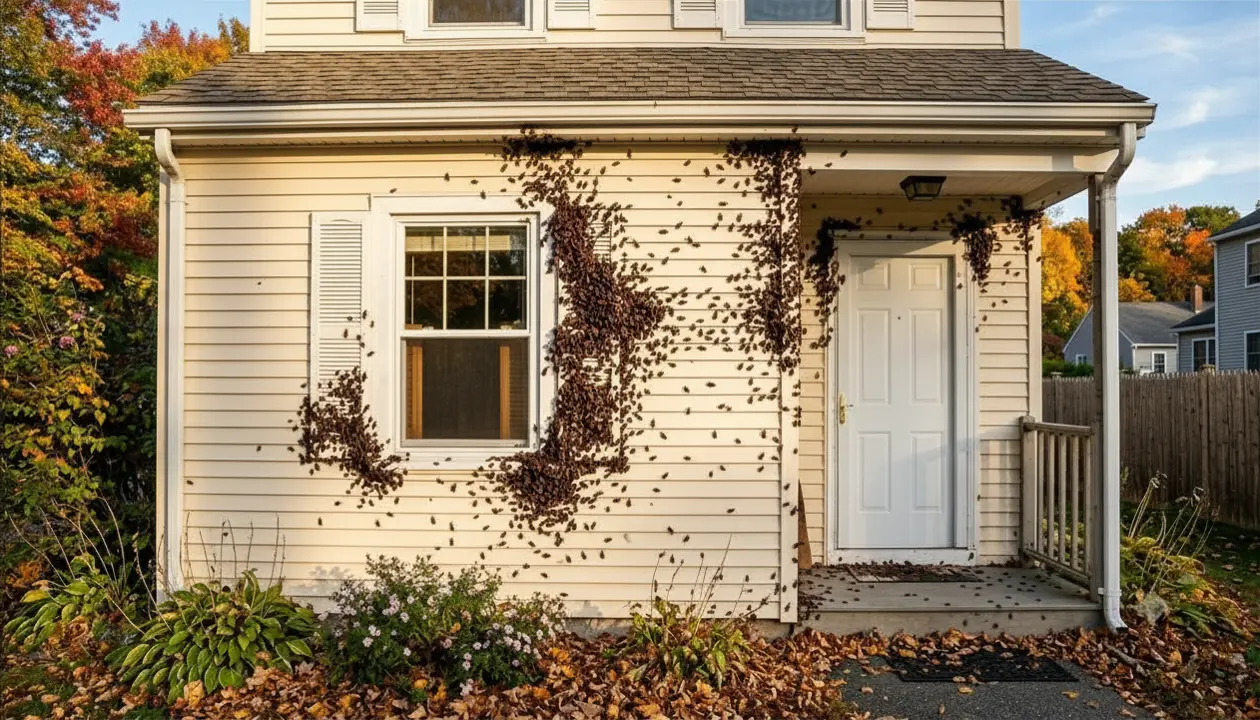
It was early November. The homeowner met me at the door looking exhausted. She had been vacuuming bugs every morning for three weeks. They were coming out of the baseboards. They were on the curtains. They were floating in her dog’s water bowl.
She asked me one question before I even stepped inside: “Why is it always my house?”
That question stuck with me. Because she was right: her neighbor’s house, on the same street with the same trees nearby, barely had any. Hers had hundreds, every single fall.
I have spent years inspecting homes and studying the behaviour of overwintering pests. Boxelder bugs are one of the most misunderstood insects homeowners deal with. They look alarming. They arrive in terrifying numbers. And they seem to target certain homes like they have a personal grudge.
But here is what I have learned from years of fieldwork and research: there is always a reason. The invasion is not random. And once you understand the reason, you can actually do something about it.
This guide covers everything you need to know about boxelder bugs, from correct identification to the behavioural science that explains why your home keeps getting targeted.
Table of Contents
Sound familiar? You Are Not Alone.
Before we dive in, here are the pain points I hear from homeowners every single fall:
- “They are all over my south wall, and I don’t know why.”
- “I sealed everything last year, and they are back again.”
- “I crushed a few, and now my living room smells terrible.”
- “Are these things dangerous? Should I be worried?”
- “Why does my neighbor’s house have none and mine is covered?”
Every single one of these has a direct answer. And by the end of this guide, you will have all of them.
At a Glance: Boxelder Bug Fast Facts
| Attribute | Details |
|---|---|
| Scientific Name | Boisea trivittata (Eastern) / Boisea rubrolineata (Western) |
| Size | About ½ inch long as adults |
| Color | Black with bright red or orange markings |
| Classification | True bug (Order: Hemiptera), not a beetle |
| Dangerous? | No; does not bite, sting, or spread disease |
| Peak Season | September through mid-October |
| Primary Host | Female boxelder trees (Acer negundo) |
| Why They Target Homes | Overwintering instinct + heat-seeking + aggregation pheromones |
| Biggest Nuisance | Large numbers, reddish staining, unpleasant odor when crushed |
| Best Control Timing | Late summer to early fall before they arrive |
What Are Boxelder Bugs?
Boxelder bugs (Boisea trivittata) are true bugs. That means they belong to the insect order Hemiptera, the same group as stink bugs and cicadas.
They are not beetles. They are not cockroaches. They are not dangerous.
They are native to North America. They do not bite. They do not spread disease. They do not damage wood or chew through walls.
So why do homeowners dread them so much? Because they show up in huge numbers. And once they find a way inside, they spend the whole winter hiding in your walls.
There are two species of boxelder bugs in the US:
- Eastern Boxelder Bug (Boisea trivittata) found across most of the eastern and central US
- Western Boxelder Bug (Boisea rubrolineata) found in western states, from Washington down through California and Nevada
Both species look nearly identical. Both behave the same way. The eastern species is the one most homeowners deal with.
How to Identify Boxelder Bugs
What Adults Look Like
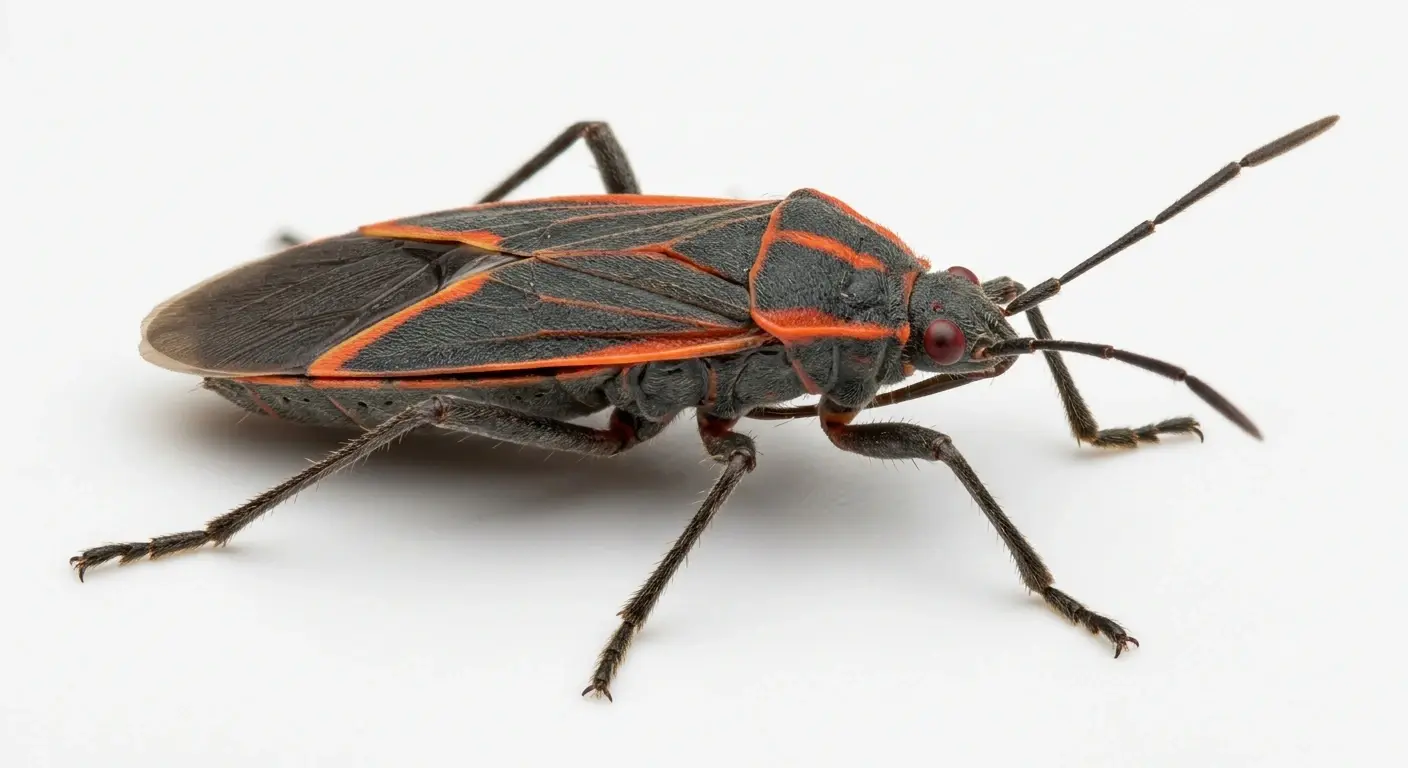
Adult boxelder bugs are easy to spot once you know what to look for:
- Size: About ½ inch long, roughly the size of a watermelon seed
- Body shape: Flat, oval, and elongated
- Color: Dark black or dark brown base
- Markings: Bright red or orange lines running along the edges of the wings and thorax
- Wing pattern: Wings lay flat over the body and overlap, forming a clear X shape
- Eyes: Small and dark red
- Legs: Six legs, dark-colored
- Antennae: Two antennae, about half the body’s length
The three red stripes behind the head, on the prothorax, are the fastest confirmation. If you see that pattern, you have a boxelder bug.
What Nymphs Look Like
Nymphs are young boxelder bugs that have not yet grown wings. They go through five growth stages called instars. Here is how they change at each stage:
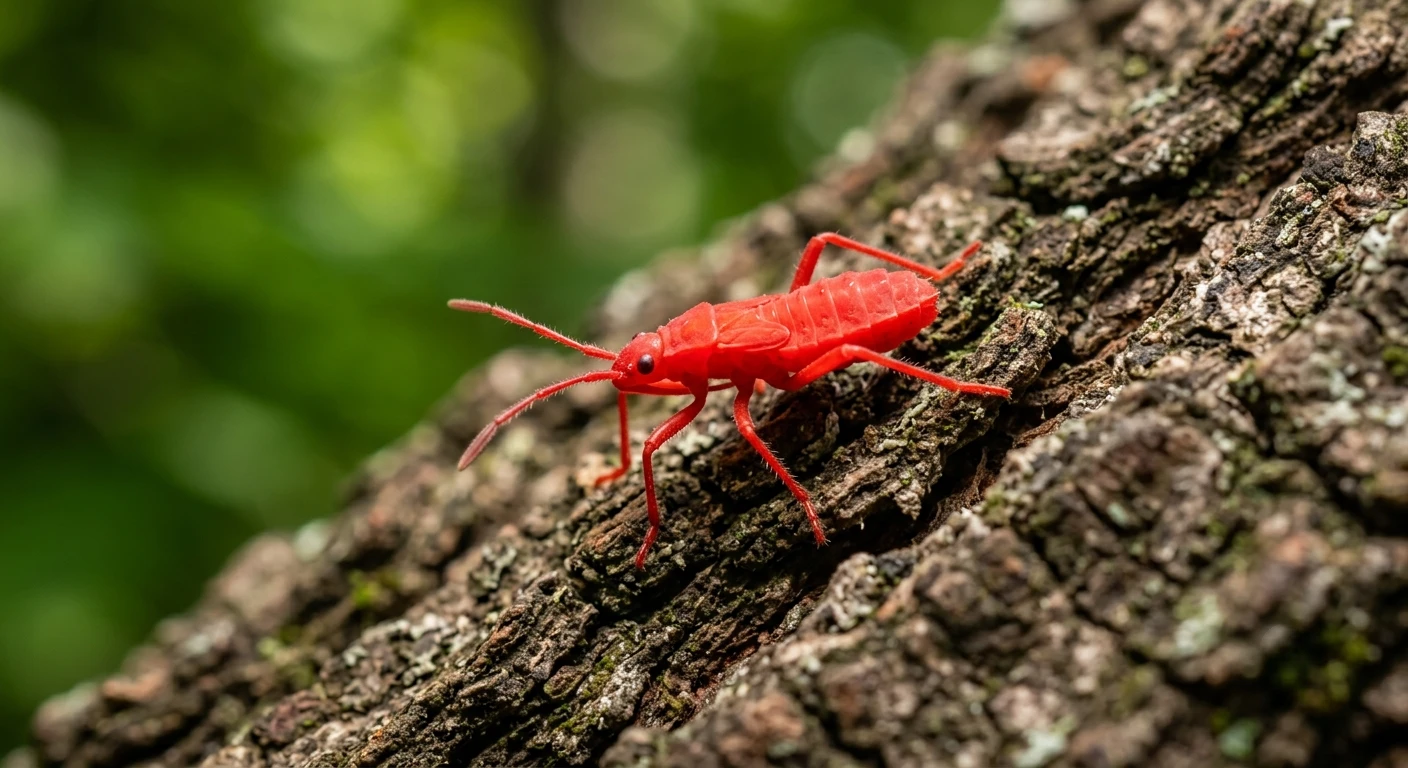
- Early instars (1–2): Tiny, entirely bright red, no wings, no dark markings at all
- Middle instars (3–4): Slightly larger, still mostly red, small dark wing pads beginning to show
- Late instar (5): Near adult size, red and black coloring, wing pads clearly visible
Many homeowners panic when they see small, bright red bugs crawling on their home in spring. These are boxelder bug nymphs, not a new or separate pest. They are part of the same population.
Boxelder Bugs vs. Look-Alike Insects
This is one of the most important things to get right. Several insects look like boxelder bugs. Most are harmless. One is not.
| Insect | Size | Color | Key Difference |
|---|---|---|---|
| Boxelder Bug | ½ inch | Black with red/orange stripes | Elongated body, X-wing pattern, red-lined edges |
| Stink Bug | ¾ inch | Brown/gray | Broad, shield-shaped body; much wider |
| Small Milkweed Bug | ½ inch | Orange/black | Found only on milkweed plants: a solid orange X. Note: Large milkweed bugs reach ¾ inch and are generally bigger than boxelder bugs. |
| Western Conifer Seed Bug | ¾ inch | Brown | Larger body; distinctive leaf-like flare on hind legs |
| Goldenrain Tree Bug | ½ inch | Red/black | Found on goldenrain trees; solid banded pattern across abdomen |
| Kissing Bug | Up to 1.5 inches | Brown with orange edge | Cone-shaped head, elongated body. Can carry Chagas disease; get professional ID before handling. |
The most critical comparison is with the kissing bug. Kissing bugs are larger. They have a distinctly cone-shaped head. They are mostly found in southern US states. If you are in Texas, Arizona, New Mexico, or neighboring states and see a large dark bug with orange markings, do not handle it. Have it identified by a professional first.
Stink bugs and boxelder bugs are the most commonly confused pair. The quick tell: stink bugs are broad and shield-shaped. Boxelder bugs are slim and striped.
The Boxelder Tree: Your Home’s Real Bug Magnet
Here is something most articles skip completely. The real reason boxelder bugs are targeting your home may be growing in your yard right now.
Boxelder bugs need boxelder trees to survive. The tree is their primary food source. They feed on its seeds, seedpods, and young leaves using sharp, sap-sucking mouthparts.
They also feed on:
- Silver maple trees
- Ash trees
- Occasionally, fruit trees including apple, cherry, peach, pear, plum, and almond
How to Identify a Boxelder Tree in Your Yard
Boxelder trees (Acer negundo) are a type of maple. Most people do not recognize them because their leaves look nothing like a classic maple leaf. Here is how to spot one:
- Leaves: Compound leaves with 3 to 5 individual leaflets, unlike the single, palmate maple leaf most people picture
- Seeds: Paired, winged seeds called samaras that hang in long clusters, the classic “helicopter seeds”
- Bark: Gray-brown with shallow furrows on mature trunks
- Size: Medium tree, typically 30 to 60 feet tall
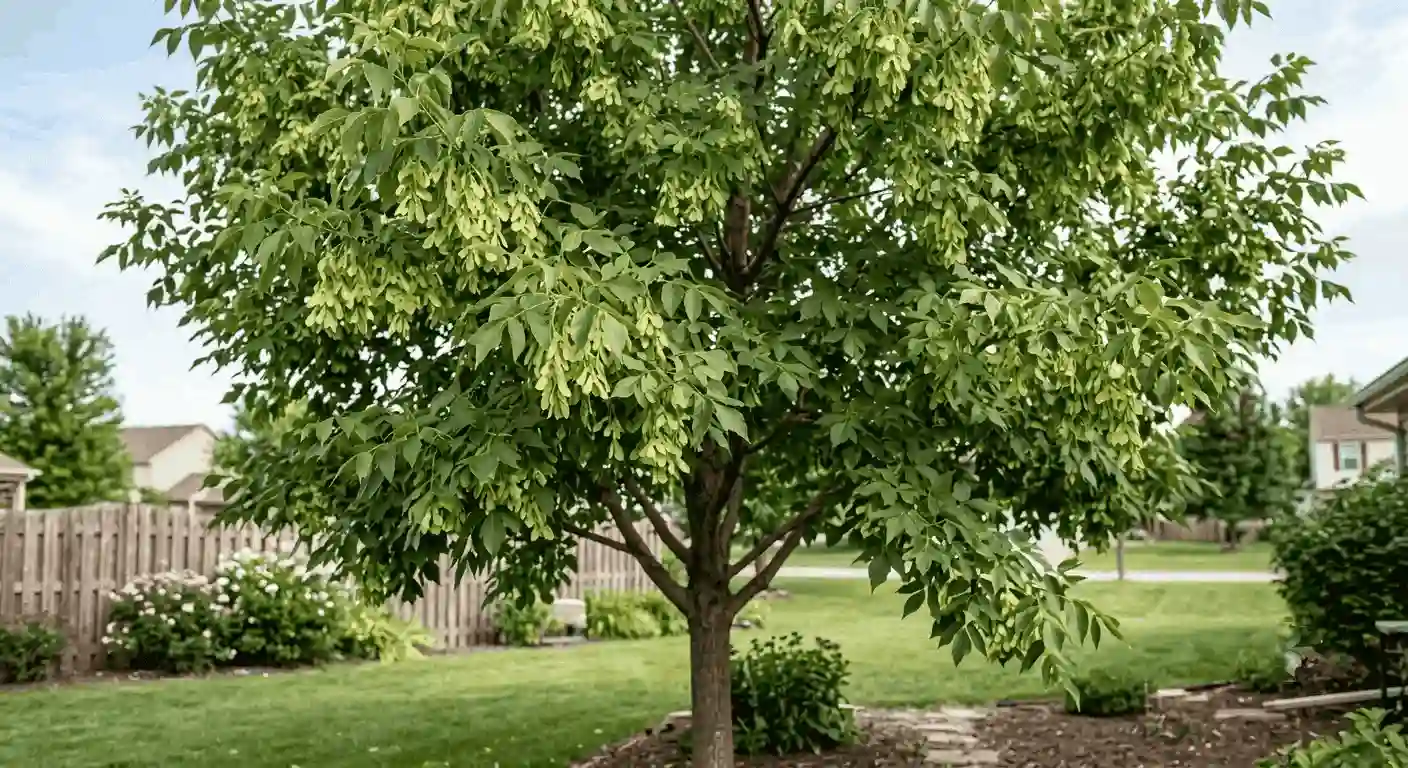
Here is the detail that matters most: only female boxelder trees produce seeds. Seeds are the primary food source for boxelder bugs. A female tree in your yard draws significantly larger populations than a male tree would. If your home has repeat invasions every fall, have a certified arborist assess nearby trees. Removing a seed-bearing female tree is the single most permanent solution to a recurring problem.
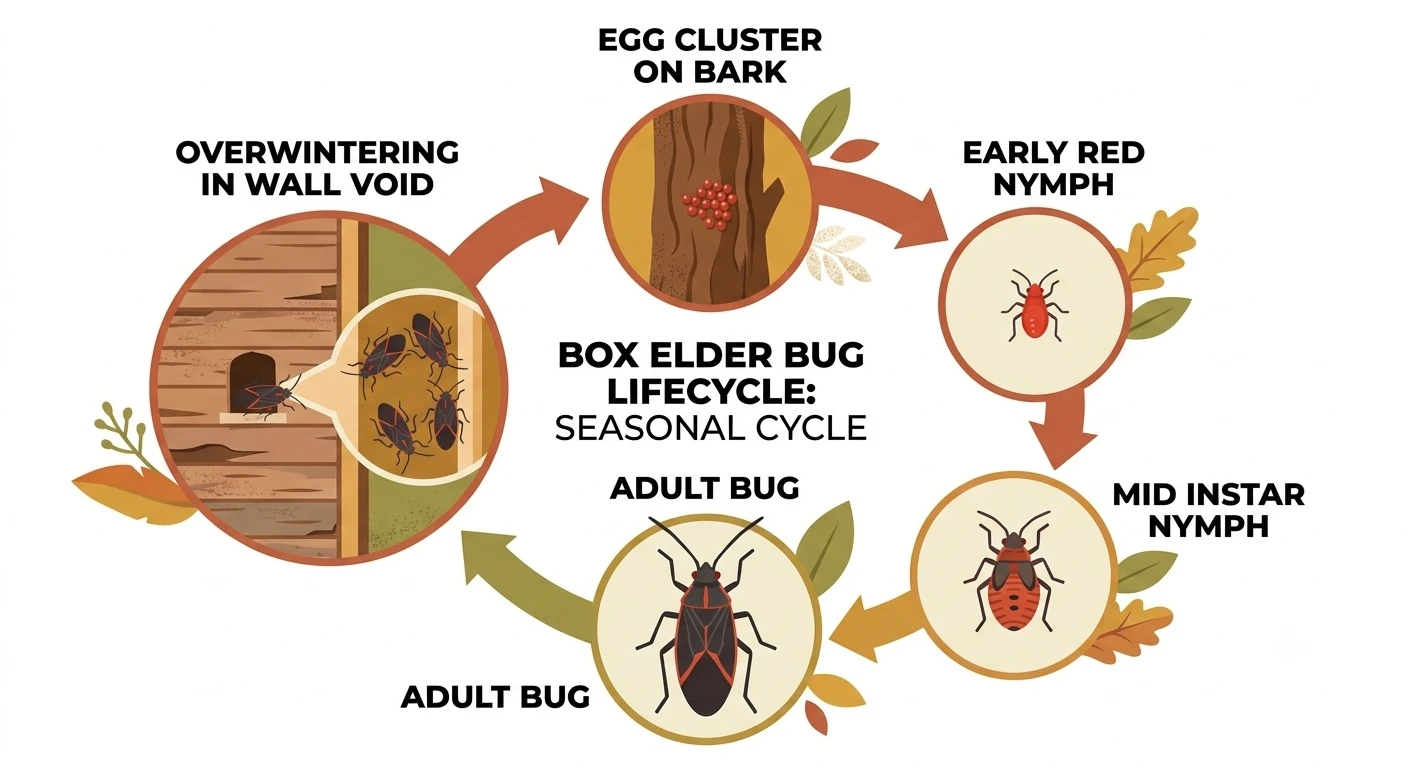
The Boxelder Bug Life Cycle: Month by Month
Understanding when boxelder bugs are active helps you act at the right time. Prevention is always more effective than reaction.
| Month | What Is Happening |
|---|---|
| January–February | Adults dormant inside wall voids, attics, and tree bark |
| March–April | Adults emerge from overwintering sites and return to host trees |
| April–May | First mating season on host trees begins |
| May–June | Females lay small, red, bean-shaped egg clusters on bark and leaves. Eggs hatch in 10–14 days |
| June–July | First-generation nymphs develop and feed. A second mating cycle begins, producing a second egg generation |
| July–August | Second-generation nymphs develop rapidly. Population reaches its annual peak on host trees |
| September–October | Adults begin moving to warm structures; this is peak invasion season |
| November–December | Bugs squeeze into wall voids and go fully dormant for winter |
The window that matters most for homeowners is late August through mid-October. Act before that window closes, and you will have a much quieter winter.
Why Do Boxelder Bugs Gather on Homes?
This is the question I get asked most often. The answer has three distinct layers, and most articles only explain one of them.
Layer 1: Overwintering Instinct
Boxelder bugs cannot survive a cold winter outdoors. Every fall, their instinct drives them toward a warm, sheltered place to wait it out.
In nature, that means hollow tree trunks, rock piles, and leaf debris. In a suburban neighborhood, that means the wall voids, attics, and crawlspaces of your home.
Layer 2: They Are Chasing the Heat Your Walls Absorb
Boxelder bugs do not land on your home randomly. They are thermoregulating, actively seeking heat sources.
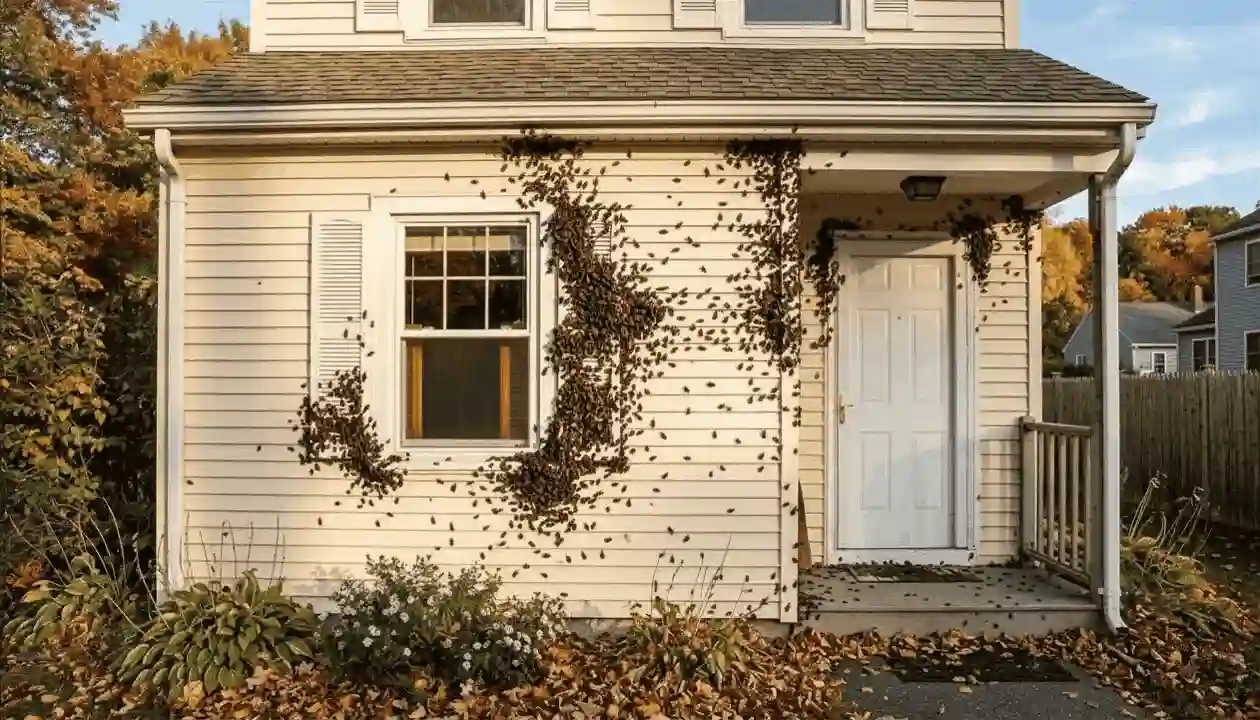
South-facing and west-facing walls absorb the most afternoon sunlight. These surfaces heat up quickly and hold warmth longer than north- or east-facing walls. Boxelder bugs detect this surface warmth and are drawn to it.
This is why you almost always see them massing on the south or west side of your home. The north side stays comparatively empty.
Layer 3: Aggregation Pheromones: The Real Reason It Keeps Happening
This is the piece that almost nobody explains. And it is the direct answer to the question that the exhausted homeowner asked me on that November morning.
When boxelder bugs find a good overwintering site, they release aggregation pheromones, chemical signals that actively attract other boxelder bugs in the area. Think of it as a biological announcement: “A warm entry point is found here. All welcome.”
Once your home has been successfully invaded, it becomes a magnet. The pheromone signal can persist across seasons. That is why the same wall, the same window frame, and the same house get hit year after year even after you think you sealed everything. Unless you break the cycle with proper sealing and treatment, the signal keeps broadcasting.
Are Boxelder Bugs Dangerous?
Let’s be direct. Boxelder bugs are not dangerous. But a few facts deserve a clear and honest explanation.
They do NOT:
- Bite humans intentionally
- Sting
- Spread disease
- Damage wood, insulation, or structural components
- Reproduce indoors
They CAN:
- Cause mild skin irritation if handled in large numbers; their piercing mouthparts can poke skin
- Leave reddish-brown stains on curtains, upholstery, and walls from their droppings
- Release an unpleasant smell when crushed
- Be genuinely exhausting in large numbers over weeks
Are Boxelder Bugs Harmful to Dogs or Cats?
This is one of the most common concerns I hear from pet owners. The honest answer: generally, no.
Boxelder bugs are not toxic to pets. If a dog or cat eats one, the bug’s chemical defenses may taste bitter and cause brief drooling or mild stomach upset. In most cases, nothing more happens.
They are not poisonous. A pet eating one or two boxelder bugs is not a veterinary emergency. If a pet consumes a very large number of them, monitor for vomiting and call your vet if symptoms persist.
What’s That Smell? Understanding the Boxelder Bug Odor
You crushed one. Now the room smells. Here is what actually happened and why you should not do it again.
It Is a Chemical Defense, Not a Sign of Danger
Boxelder bugs produce no odour during normal activity. A bug crawling quietly across your wall or sitting on a window is completely odourless.
The smell only triggers in two situations: when a bug is crushed or when it feels seriously threatened. At that moment, the bug releases a pungent chemical compound from body glands. This is a purely defensive response; it tells predators the bug tastes terrible and should be left alone.
The bright red and black coloring works alongside the smell as a combined warning system. The colors say “avoid me visually”. The smell reinforces the message on contact.
How Bad Is the Smell, Really?
Boxelder bug odour is real. But it is significantly less intense and shorter-lasting than stink bug odour.
Stink bugs produce a notoriously powerful, room-filling smell that can linger for a long time. Boxelder bug odor dissipates much faster. One or two crushed bugs create a noticeable but manageable smell. Crushing a large number of them indoors at once is a different story; the combined output is much more unpleasant and harder to clear quickly.
There is a second problem with crushing them indoors. Dead boxelder bug bodies attract dermestid beetles, a group that includes carpet beetles and larder beetles. These secondary pests can cause damage that boxelder bugs themselves never would. Crushing is never the right move indoors.
The Rule Is Simple: Vacuum, Never Crush
A vacuum removes live bugs cleanly, quickly, and without odor or staining. Empty the bag or canister outside immediately afterward. That one habit solves most of the indoor management problem on its own.
How to Clean Boxelder Bug Stains
Boxelder bug droppings leave reddish-brown stains on light-colored surfaces. Here is what actually removes them:
- Painted walls: Dab a small amount of rubbing alcohol onto a clean cloth. Blot gently; do not scrub. Repeat if needed.
- Carpet: Mix equal parts cold water and white vinegar. Apply to the stain and blot with a clean cloth. Work from the outside of the stain inward. Repeat until the mark lifts.
Catch stains early. The longer boxelder bug droppings sit on a surface, the harder they become to remove fully.
Signs of a Boxelder Bug Infestation: When It Is More Than a Few Bugs
Seeing one or two boxelder bugs in your home is not an infestation. It happens. But there are clear signals that tell you when you have a genuine problem.
Outdoor Warning Signs: Watch for These in Fall
These signs appear before the bugs get inside. Do not ignore them.
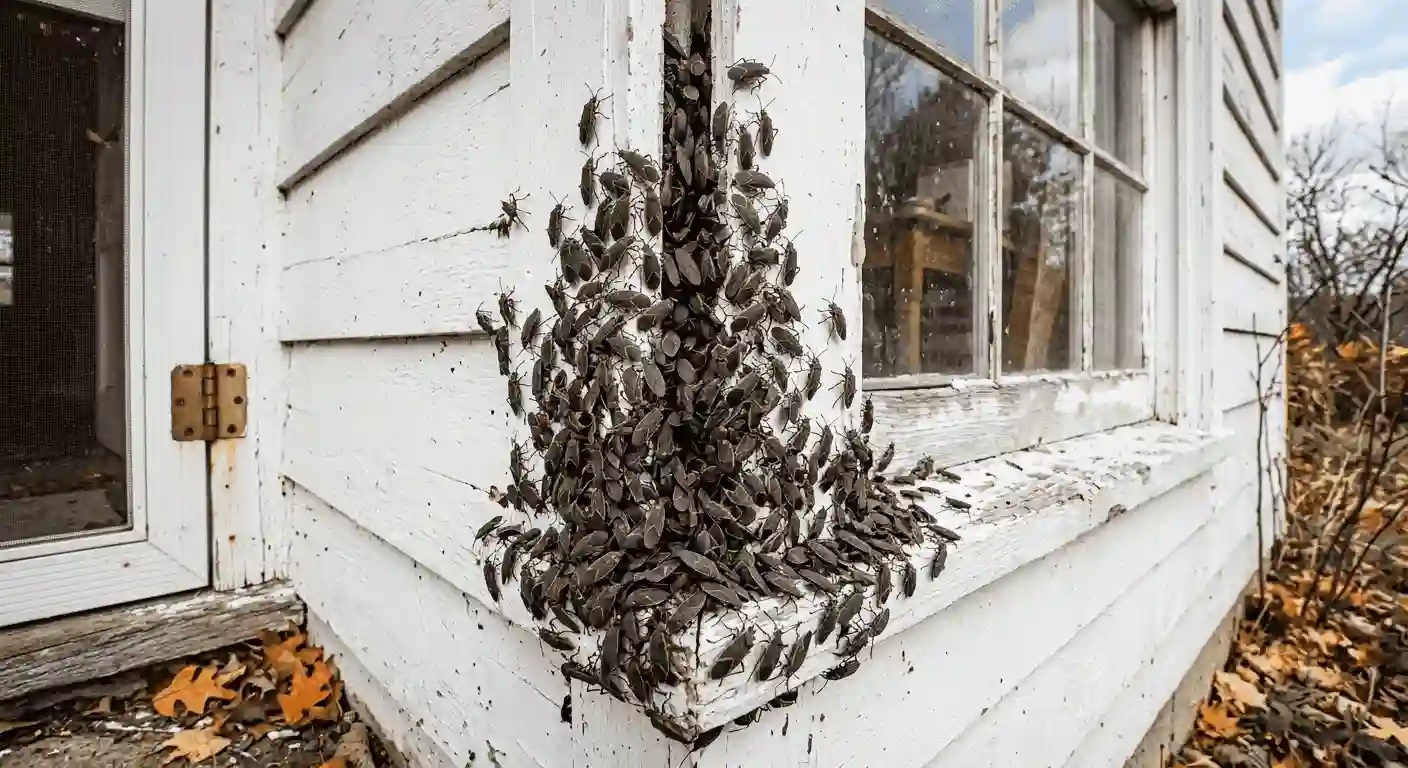
- Large clusters on your south or west walls. Dozens to hundreds gathering in one location is the clearest warning they are preparing to enter.
- Bugs congregating around window frames, door frames, and utility penetrations. These are their preferred entry points. If they are gathering there, they have already identified a way in.
- Visible bugs actively squeezing into cracks or siding gaps. Entry is happening in real time.
Indoor Warning Signs Fall Through Spring
- Reddish-orange stains near windowsills and door frames. Boxelder bugs excrete liquid feces that leave small rust-colored marks. Finding these spots near windows is a reliable sign they are overwintering inside your walls right now.
- Bugs appearing near windows or light fixtures in winter. Boxelder bugs follow warmth toward light sources. Seeing them in January or February on a warm day means they overwintered inside your walls and woke up when interior heat rose.
- Large numbers emerge in early spring. If dozens of bugs suddenly appear on interior walls or near windows in March or April, it is confirmed: they spent the entire winter inside.
- The same entry points are getting hit every fall. Aggregation pheromones bring bugs back to previously successful sites year after year. If the same corner, wall section, or window frame attracts them repeatedly, that spot has a history.
When to Call a Professional
A few stray bugs indoors? Vacuum them. Not worth calling anyone.
Call a licensed pest control professional when you are seeing hundreds clustering on your exterior walls every fall, when bugs are appearing inside living spaces through winter and spring, or when your home has experienced repeat invasions for two or more consecutive years. Those patterns indicate established overwintering activity inside the structure activity that DIY measures alone rarely resolve fully.
Why Are Some Years Worse Than Others?
You may have noticed that boxelder bug pressure varies dramatically from year to year. This is not random. There are clear environmental drivers behind population spikes.
Populations surge in years with:
- Hot, dry summers: warm, dry conditions accelerate nymph development and dramatically increase survival rates through both seasonal generations
- Mild spring weather: a warm spring gives the first generation a strong start, producing more adults who then lay the second generation
- Abundant female boxelder trees on nearby properties: more seeds means more food and faster population growth across the neighborhood
Cool, wet summers consistently suppress boxelder bug populations. This is why some falls bring overwhelming swarms while others pass almost quietly. If neighbors are reporting a bad year, prepare early. The environmental conditions affect every property in the area.
What Are the Different Names for Boxelder Bugs?
Depending on where you grew up, you may have heard boxelder bugs called something completely different. Here is a quick breakdown:
- Boxelder Beetle: the most common misnomer. They are bugs, not beetles. Different insect order entirely.
- Maple Bug: used in regions where silver maples are more prevalent than boxelder trees. Accurate enough, since they feed on maples too.
- Democrat Bug: a distinctly Midwest nickname, coined as a nod to their habit of gathering in conspicuously large groups.
- Garage Bug: named for their tendency to overwinter in garage wall voids, where they are often discovered in spring.
- Zebra Bug: a reference to the sharp contrast of their red and black striped pattern.
No matter what your region calls them, they are all the same insect behaving the same way every fall.
The Bottom Line From Someone Who Has Seen This Up Close
Over the years, I have walked through dozens of homes dealing with boxelder bug invasions. Big ones. Small ones. Repeat invasions in houses where the homeowner did everything right the year before.
Here is what I can tell you with confidence.
The homeowners who struggle most are the ones who act too late. They wait until they see hundreds of bugs massed on their walls. By then, some have already found a way inside. The window for easy prevention has closed. Now they are vacuuming bugs out of baseboards every morning for three months.
The homeowners who handle it best act in late summer before the first bugs even appear on the walls. They seal gaps. They treat the exterior perimeter. They know which trees on their property are feeding the local population. And they do not panic, because they understand what they are dealing with.
That is the mindset this guide was built to give you.
Boxelder bugs are not a threat to your family or your home. I want to be completely clear about that. In all my years inspecting infested homes, I have never seen structural damage caused by boxelder bugs. Not once. The real damage is psychological; the sheer relentless number of them wears people down over weeks. It erodes the feeling that your home is a safe, comfortable place. And that feeling matters. You deserve to have it back.
So here is my honest, experience-based advice in plain terms:
If they are outside on your walls right now, you still have time. Seal every gap you can find on your south and west walls. Focus on window frames, door frames, soffits, and where utility lines enter the building. A professional perimeter insecticide treatment applied in September or early October creates a meaningful barrier before the main wave arrives.
If they are already inside, do not panic and absolutely do not crush them. Vacuum them up and empty the bag outside. They will not reproduce indoors. They will not contaminate your food. They were just looking for warmth and ended up in the wrong place.
If this happens every single fall without fail, look carefully at your property. There is almost certainly a seed-bearing female boxelder tree nearby or an entry point that has never been fully sealed. The same house getting hit year after year is the aggregation pheromone doing its job. You need to break that cycle with a combination of physical sealing and professional perimeter treatment, ideally done before the bugs arrive rather than after.
Most pest problems have a clear solution. This one especially does.
Take a breath. Go back through the sections in this guide that apply to your situation. And if you have been dealing with repeat invasions for multiple years and nothing is working, bring in a licensed pest control professional. A trained set of eyes on the exterior of your home often finds the one gap that has been letting them in for years.
I have seen that moment happen. A single overlooked gap behind a downspout, or a hairline crack in a soffit discovered and sealed. And a homeowner who had five consecutive fall invasions finally had a completely quiet October.
That outcome is absolutely possible for your home too.
Frequently Asked Questions
Do boxelder bugs bite? Boxelder bugs are not aggressive and do not seek out humans to bite. However, their piercing mouthparts, designed for feeding on plant seeds, can poke skin if you handle them or pick up a large number at once. It registers as a mild pinch rather than a true insect bite. There is no venom and no lasting effect.
Why are there so many boxelder bugs on my house right now? If it is fall, they are actively searching for a warm overwintering site. Your south or west walls absorb the most heat, which draws them in first. If your home has had previous invasions, residual aggregation pheromones may be attracting a larger concentration to your property compared to neighboring homes.
Will boxelder bugs go away on their own? Yes, eventually. Once temperatures drop consistently, they either move into wall voids and go dormant or die off outdoors. Any bugs that made it inside will either die within a few days if the home is warm enough to keep them active or go dormant in the walls until spring. They do not reproduce indoors under any circumstances.
Does having a boxelder tree guarantee an infestation? Not guaranteed, but the risk increases significantly, especially with a female, seed-bearing tree. Removing a female boxelder tree from your property is the most permanent long-term solution. It is a significant decision, but it eliminates the food source population at the root. Short of removal, focus all prevention efforts on the side of your home closest to the tree.
Can boxelder bugs damage my home? No structural damage occurs. They do not eat wood, chew through wiring, damage insulation, or compromise any structural element of a building. Their only real damage is cosmetic reddish-brown droppings that stain light-colored surfaces if left untreated.
What is the best way to keep boxelder bugs out? Timing is everything. Apply a residual perimeter insecticide to the exterior in late September or early October before the main fall push. Focus treatment on south and west walls, window frames, door frames, soffits, utility penetrations, and foundation gaps. Combine chemical treatment with physical sealing: caulk every crack you can find before temperatures drop.
What should I do if boxelder bugs are already inside? Vacuum them up; do not crush them. Crushing causes staining and releases odour. Do not attempt to spray wall voids with insecticide. Dead bug bodies in wall voids attract dermestid beetles, which are a worse secondary pest than the boxelder bugs themselves. Vacuum what you can see, dispose of the bag outside, and seal entry points before the following fall.
Do boxelder bugs fly? Yes. Adult boxelder bugs have fully developed wings and are capable of flight. They are not powerful or fast fliers, but they can travel short distances in the air, particularly when moving between host trees and buildings in fall. Nymphs cannot fly at any stage. They only develop functional wings upon reaching full adulthood.
Can boxelder bugs damage my garden or fruit trees? Mostly no, but there is a nuance worth knowing. Boxelder bugs cause very little damage to trees in most years. However, university extension research confirms they occasionally feed on the fruits of apple, cherry, peach, pear, plum, almond, and grape plants. Their feeding punctures can leave small dimples, surface deformation, or, in heavier infestations, early fruit drop. This is rarely severe enough to classify them as a major agricultural pest, but gardeners with fruit trees near boxelder populations should be aware of it.