Odorous House Ants: How to Spot and Control the Tiny Stinkers and Tell Them From Big Black Ants
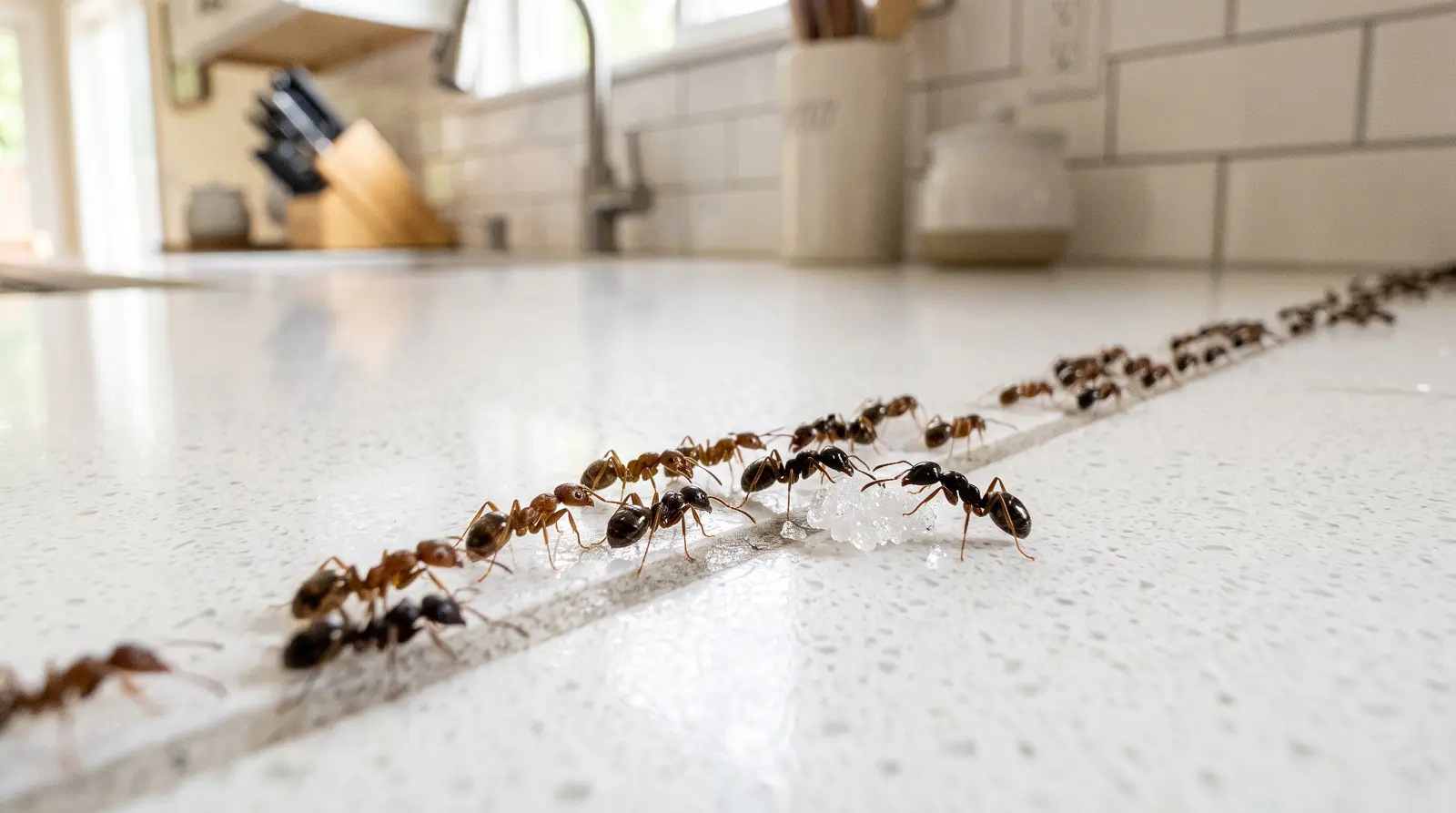
The first time I dealt with odorous house ants, I didn’t spot them. I smelled them. I’d wiped one off the kitchen counter and caught a whiff of something like rotten coconut crossed with old blue cheese.
That smell is the giveaway, and it’s where the name comes from. If you’ve got a thin line of dark little ants tracking along your baseboard, or you’re squinting at a much bigger black ant wondering if it’s about to chew through your house, this guide sorts out what you’re actually looking at and what to do next.
Table of Contents
What are odorous house ants?
Odorous house ants are small native ants, known to entomologists as Tapinoma sessile. People also call them sugar ants, stink ants, or coconut ants, and every one of those nicknames points back to the same thing: crush one, and it releases a sharp, sour smell that most people describe as rotten coconut, blue cheese, or something close to turpentine.
They’re one of the most common household ants across the country. According to Texas A&M’s urban entomology program, they range from southern Canada down into northern Mexico, and you’ll find them almost everywhere in the US except the driest parts of the desert Southwest, where they thin out. If a tiny brown-to-black ant has taken a liking to your kitchen, there’s a good chance this is your culprit.
How to identify odorous house ants
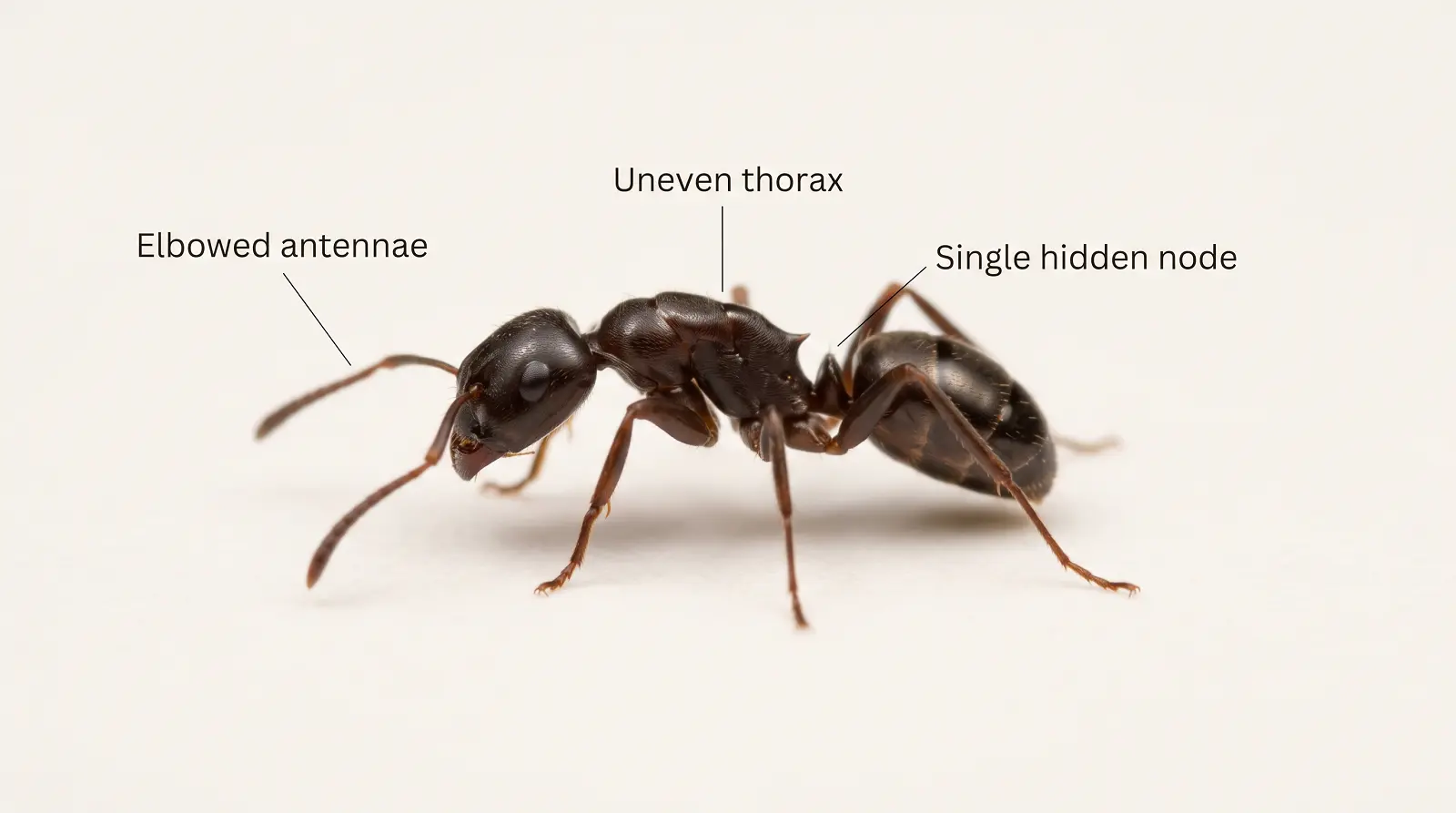
The fastest ID test costs you nothing: press one between your fingers and take a sniff. No other common house ant produces that rotten-coconut punch. Beyond the smell, here’s what you’re looking at up close.
- Size: Very small, about 1/16 to 1/8 inch (roughly 1.5 to 3.2 mm). Workers are all one size.
- Color: Brown to shiny black.
- Body: Smooth and hairless, with an unevenly shaped thorax when viewed from the side.
- Waist node: A single node on the petiole, tucked under and hidden by the abdomen. This one feature sets them apart from many lookalikes.
- Antennae: Elbowed, with 12 segments.
- Behavior when disturbed: Poke a trail, and the workers scatter in fast, jerky bursts, often lifting their rear ends into the air as they go.
The University of California’s Integrated Pest Management program flags that hidden single node and the uneven thorax as the reliable markers. If you can get a phone camera close enough for a macro shot, those two details plus the smell will confirm it nearly every time.
Are your “big black ants” actually carpenter ants?
Let me clear it up: odorous house ants are small. If you’re staring at a genuinely big black ant, you’re probably not looking at one of these at all.
In most US homes, a big black ant means a carpenter ant. The size gap is your first clue.
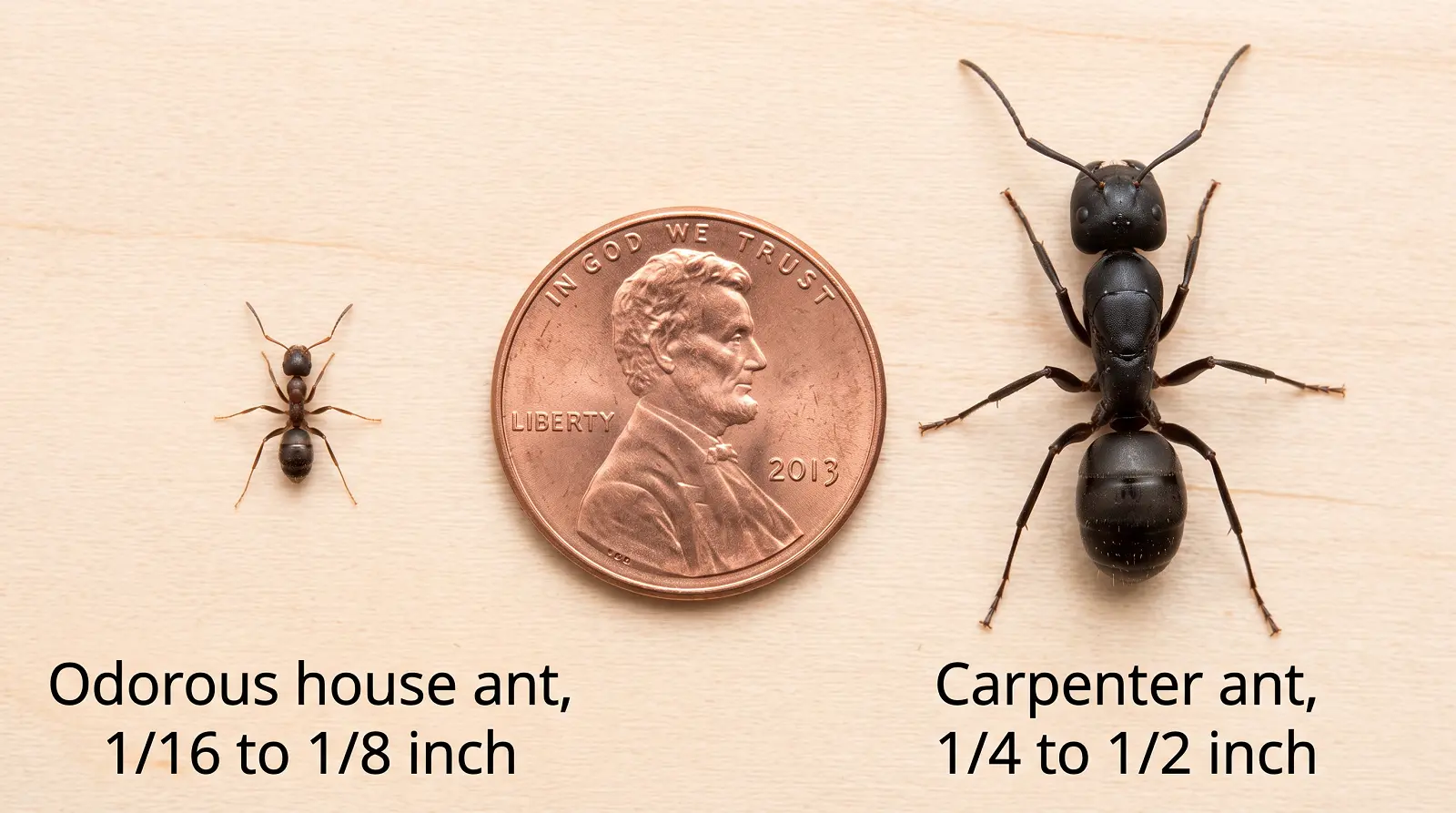
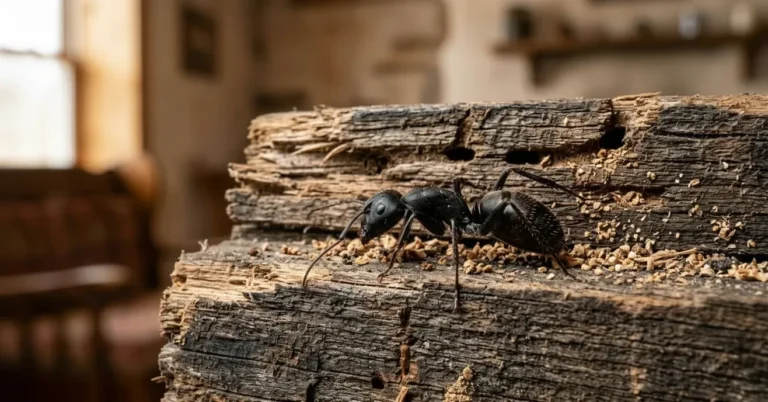
Carpenter ants stand out because they’re two to four times longer than the ants you usually see on the counter. They also carry a smoothly rounded thorax with no humps or spines, a single node, and elbowed antennae. The black carpenter ant (Camponotus pennsylvanicus) is the common one across the East and Midwest, while the western black carpenter ant (Camponotus modoc) shows up on the West Coast and into states like Idaho and Arizona. They don’t eat wood, but they hollow it out to nest, which is why finding them near damp framing or windowsills is worth taking seriously.
If your ant is big, black, and hanging around wood, our carpenter ant guide breaks down the ID and the damage risk in full. If it’s small and stinks when crushed, stay right here.
Where odorous house ants nest, indoors and out
Odorous house ants are opportunists, and their nesting habits are half the reason they’re so persistent. Outdoors, they build shallow nests in soil under stones, logs, mulch, firewood, and other debris. Indoors, they chase warmth and moisture.
Inside a house, the usual spots read like a tour of your home’s damp, warm corners:
- Wall voids next to hot water pipes and behind heaters
- Under carpet edges and beneath flooring
- Behind wall paneling and around leaky fixtures
- Inside wood already softened by termite or water damage
- In potted houseplants, and during dry spells, even under toilet lids
They move around a lot, too. These colonies are what scientists call polydomous, meaning one colony spreads across many nests, and they relocate readily, sometimes every few weeks and often right after rain. That’s a pattern the National Pest Management Association and UC IPM both note. Heavy rain washes away the honeydew they feed on outside, so a wet week often pushes them indoors looking for a new food source. Late winter and early spring are peak invasion times.
What odorous house ants eat
In one word: sweets. Odorous house ants are drawn to sugar, and outdoors their favorite is honeydew, the sugary liquid that aphids and scale insects leave behind on plants. Research summarized by UC IPM shows they’ll tend and guard those aphids like tiny livestock to keep the honeydew flowing.
When that outdoor supply drops off in autumn or after rain, they head inside. Indoors, they’ll take sugary spills, syrup, fruit, pastries, and pet food, and they’ll eat meats and dead insects when protein is on offer. Studies have found they prefer sucrose over other sugars, which matters a lot when you get to baiting them later.
Signs of an odorous house ant problem
Not sure if that’s what you have? Run through this quick checklist. A few of these together is a strong sign.
- Thin trails along baseboards, counter edges, carpet seams, and the outside of your foundation
- The smell test: a crushed ant gives off that rotten-coconut or blue-cheese odor
- Kitchen clustering around anything sweet, plus activity near sinks and other water sources
- A spike after rain, especially in late winter or early spring
- Erratic scattering when you disturb a trail, with rear ends raised
If you’re checking two or three of these boxes, you’re almost certainly dealing with odorous house ants rather than a lookalike.
Do odorous house ants bite or damage your home?
Good news on both counts. Odorous house ants don’t sting, and they aren’t real biters. They’re a subordinate species that leans on chemical secretions instead of aggression, so even if one nips, you’ll likely never feel it. The NPMA is clear that they don’t pose a public health risk.
They also don’t damage your house. Unlike carpenter ants, they don’t tunnel through wood or weaken structures. The actual problem is food contamination. When ants march across your counters and into the pantry, they can spread bacteria to food and surfaces, so the concern is hygiene, not injury or home repair. That’s the honest answer, and it’s why you can treat this as a nuisance to clean up rather than an emergency.
Odorous house ants with wings: swarmers or termites?
Every so often you’ll see winged versions and panic, wondering if they’re termites. Odorous house ants do produce winged reproductives, called swarmers, usually in the warmer months, and that’s simply how a colony spreads to start new nests.
Telling ant swarmers from termite swarmers is quick once you know the markers:
- Ant swarmers have a pinched, narrow waist, elbowed antennae, and two longer front wings paired with two shorter back wings.
- Termite swarmers have a thick, straight waist, straight antennae, and four wings of roughly equal length.
So if you spot a winged insect with an hourglass waist and mismatched wing lengths near a window, it’s an ant, not a termite. Still worth cleaning up, but not the structural scare a termite swarm would be.
Why odorous house ants keep coming back
This is the part that drives people up the wall, and almost nobody explains it well. You spray, they vanish for a day, then twice as many show up somewhere else. It feels like they’re immune. They aren’t. The issue is how their colonies are built.
Odorous house ant colonies are polygynous, meaning they carry many egg-laying queens, sometimes dozens. Combine that with those multiple nests spread around your property, and you get a group that’s hard to knock out in one shot. When you hit a trail with contact spray, you often kill the visible foragers while the queens keep laying somewhere out of reach. Worse, spraying can trigger budding, where a stressed colony splits, and queens carry off workers to start fresh nests elsewhere. That’s why the ant problem seems to multiply right after you attack it.
Once you understand that, the fix makes a lot more sense.
How to get rid of odorous house ants
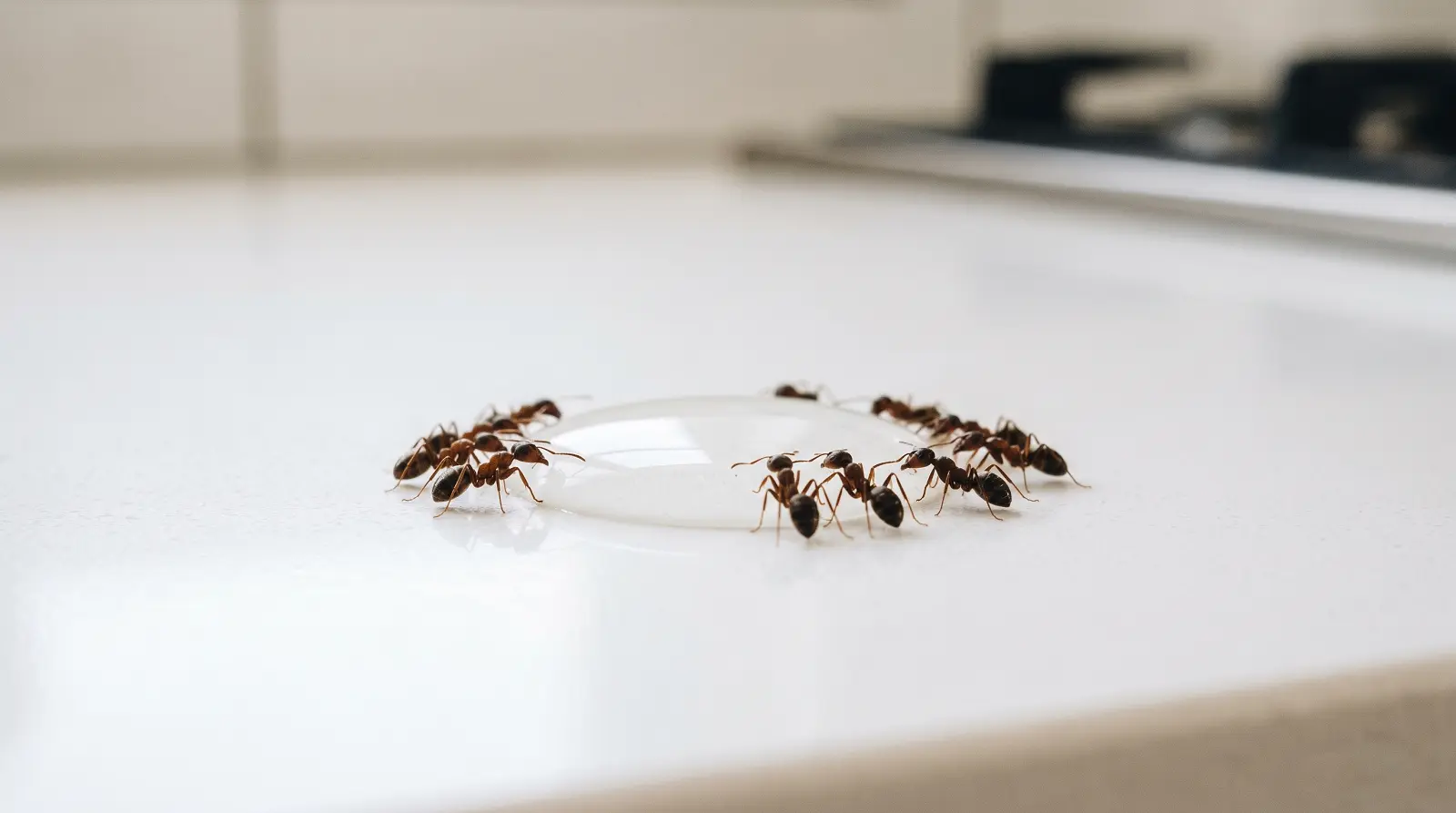
The move that works is bait, not spray. Because these ants love sugar, a sweet liquid bait (the kind sold under brands like Terro, which uses borax) plays right into their diet. Foragers carry it back and share it through the colony, reaching the queens you can’t see. Give it time. It looks counterintuitive when more ants swarm the bait at first, but that’s the bait doing its job.
A few pointers to make it land:
- Skip the contact sprays on trails. Killing foragers feels satisfying but leaves the queens alive and can cause budding.
- Place bait on the trails, near entry points and where you’ve seen the most traffic, then leave it undisturbed.
- Clean up competing food so the bait is the most appealing thing on the counter. Wipe down sugar spills and store sweets in sealed containers.
- Cut the moisture, since damp spots pull them in and support their nests.
- Be patient, as a full colony can take a couple of weeks to collapse.
If a well-established colony shrugs off the bait, or you’ve got several nests feeding the problem, that’s the point where a licensed pest control pro earns their fee with targeted treatment. Our full ant control guide covers the bait routine step by step if you want to work through it yourself first.
How to keep odorous house ants out for good
Getting rid of them is half the battle. Keeping them out is the other half, and it comes down to closing the doors and drying things out. These prevention steps come straight from extension service and NPMA guidance.
- Seal the gaps. Caulk or foam cracks, holes, and joints around the foundation, windows, and pipe entries, especially low to the ground.
- Fix the water. Repair leaks, clear standing water, and dry out damp spots under sinks and around fixtures.
- Trim the bridges. Cut back tree branches, shrubs, and plants that touch the house, since ants use them as on-ramps.
- Move the wood. Keep firewood, mulch piles, rocks, and building materials away from exterior walls so they can’t nest right against your home.
- Keep it clean. Wipe counters, sweep crumbs, and seal food so there’s nothing worth the trip inside.
Do these before peak season hits in late winter, and you’ll head off most of the trouble before it starts.
Final thoughts
Odorous house ants are more annoying than dangerous. They won’t hurt you or your house, but they will keep testing your patience if you only treat what you can see.
The two things worth holding onto: the smell test confirms the ID in seconds, and bait beats spray every time because it reaches the queens you’ll never spot.
If your “ants” turned out to be much bigger and black, loop back to the carpenter ant question, because that’s a different problem with real stakes. Otherwise, a little cleanup, some sweet bait, and a few sealed cracks will get your kitchen back.
Frequently asked questions
Are odorous house ants hard to get rid of?
They’re not tough as individuals, since most ant baits work on them. What makes them frustrating is their many queens and multiple nests. Caught early and treated with sugar bait, a colony can be knocked down in days. Ignored, or hit with spray that causes budding, it can drag on for weeks.
Can odorous house ants bite?
Not in any way you’d notice. They don’t sting and rarely bite, relying on chemical secretions instead of aggression. They’re harmless to people. The real concern is food contamination, not injury.
Does Terro work on odorous house ants?
Yes, and it suits them well. Terro’s sweet borax-based liquid bait matches their strong preference for sugar, so foragers carry it back and pass it to the colony, including the queens. Place it on trails and let them feed without spraying nearby.
Where do odorous house ants nest?
Outdoors, they nest in shallow soil under stones, wood, and mulch. Indoors, they favor warm, damp spots: wall voids near hot water pipes, behind heaters, under carpets, near leaky fixtures, and inside houseplants.
What do odorous house ants smell like when you crush them?
Most people describe it as rotten coconut or old blue cheese, sometimes closer to turpentine. That odor is the single easiest way to confirm you’ve got odorous house ants and not a similar-looking species.
Are odorous house ants the same as big black ants?
No. Odorous house ants are tiny, about 1/16 to 1/8 inch. The big black ants people see indoors are usually carpenter ants, which run 1/4 to 1/2 inch and can damage wood. If yours is large and black, check for carpenter ants instead.