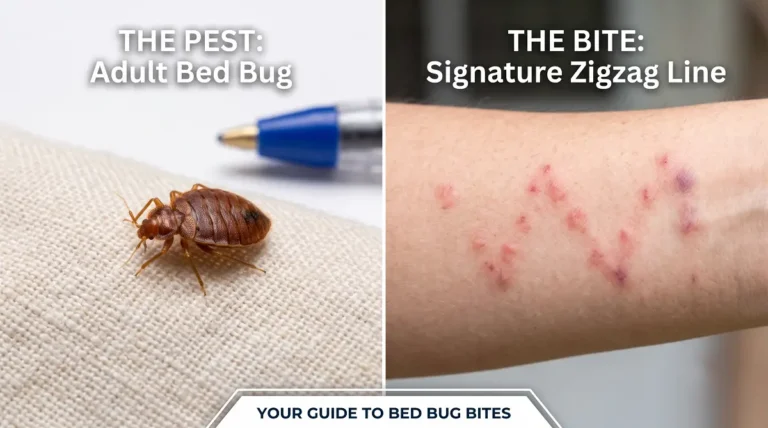
Baby Bed Bugs, Eggs and Shells: What You Found and What It Means
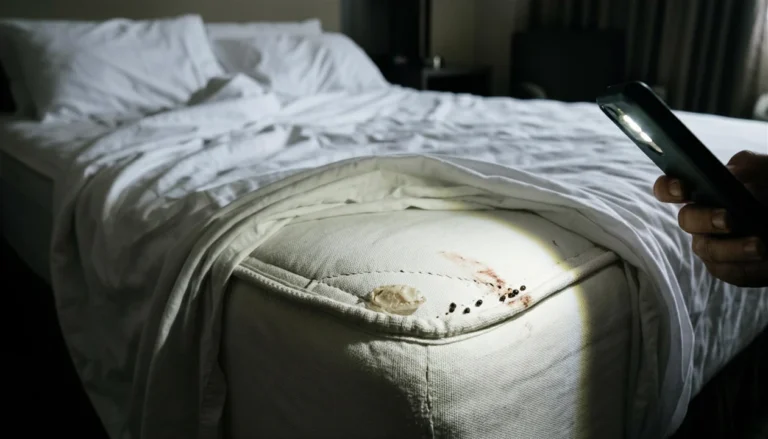
The first time you think you might have bed bugs, you don’t go looking for a textbook. You grab your phone, turn on the flashlight, and start squinting at a mattress seam at some awful hour of the night.
You pull back the sheet and there it is. A pale speck that moves. A papery little husk. A white dot stuck in the seam. I’ve read enough panicked messages from readers to know the worst part is never the bug itself. It’s not knowing what you’re looking at.
That moment is what this guide is for. Below you’ll find what every bed bug life stage looks like by size, how to tell eggs from lint, how to read shed skins and dead bugs, which lookalikes fool people most, and what to do next.
At a Glance
- Bed bugs grow through three phases: egg, nymph and adult. The nymph phase has five stages, called instars. There is no larva stage. Young bed bugs are called nymphs.
- Eggs are about 1 mm long (pinhead size) and pearl-white. After about five days you may see a dark eye spot.
- Baby bed bugs (nymphs) run from about 1.5 mm to 4.5 mm. They are translucent to whitish-yellow and look like miniature adults. They turn reddish after a meal and browner with each molt.
- Shells (shed skins) are hollow, translucent copies of a nymph, left behind when it molts. Nymphs molt five times. Adults do not molt.
- Wings: bed bugs cannot fly or jump. Adults have only tiny wing pads.
- Nests: bed bugs do not build nests. They gather in hiding spots near where people sleep.
- One shell or one nymph means bed bugs have been feeding nearby. It does not tell you how big the problem is.
Found Something? Let’s Start: 5-Minute Check
Before you read anything else, do this. It takes five minutes and it will save you from most wrong guesses.
- Don’t crush it. A squashed bug is hard to identify and leaves a stain. Trap it under clear tape, or drop it in a sealed bag or jar.
- Take sharp photos. Put a coin or ruler next to it for scale. Shoot close, in bright light, from above.
- Note where you found it. Bed bug evidence clusters around sleeping areas. A single bug in a bathroom tells you less than one in a mattress seam.
- Look for what it usually travels with: tiny dark specks like pen dots (droppings), rusty stains, shed skins, and eggs.
- Get it confirmed. The EPA suggests asking your state cooperative extension office for identification help. A licensed pest professional can also confirm it in minutes.
Bed Bug Life Stages at a Glance
Bed bugs (Cimex lectularius) belong to the family Cimicidae, a group of insects that feed only on blood. For their habits, hiding spots and control options, see our complete bed bug guide. They grow in a straight line: egg, then five nymph stages, then adult. Each nymph stage is called an instar, and the bug has to drink blood and shed its skin to move up to the next one. Here is the size chart, using the EPA’s measurements.
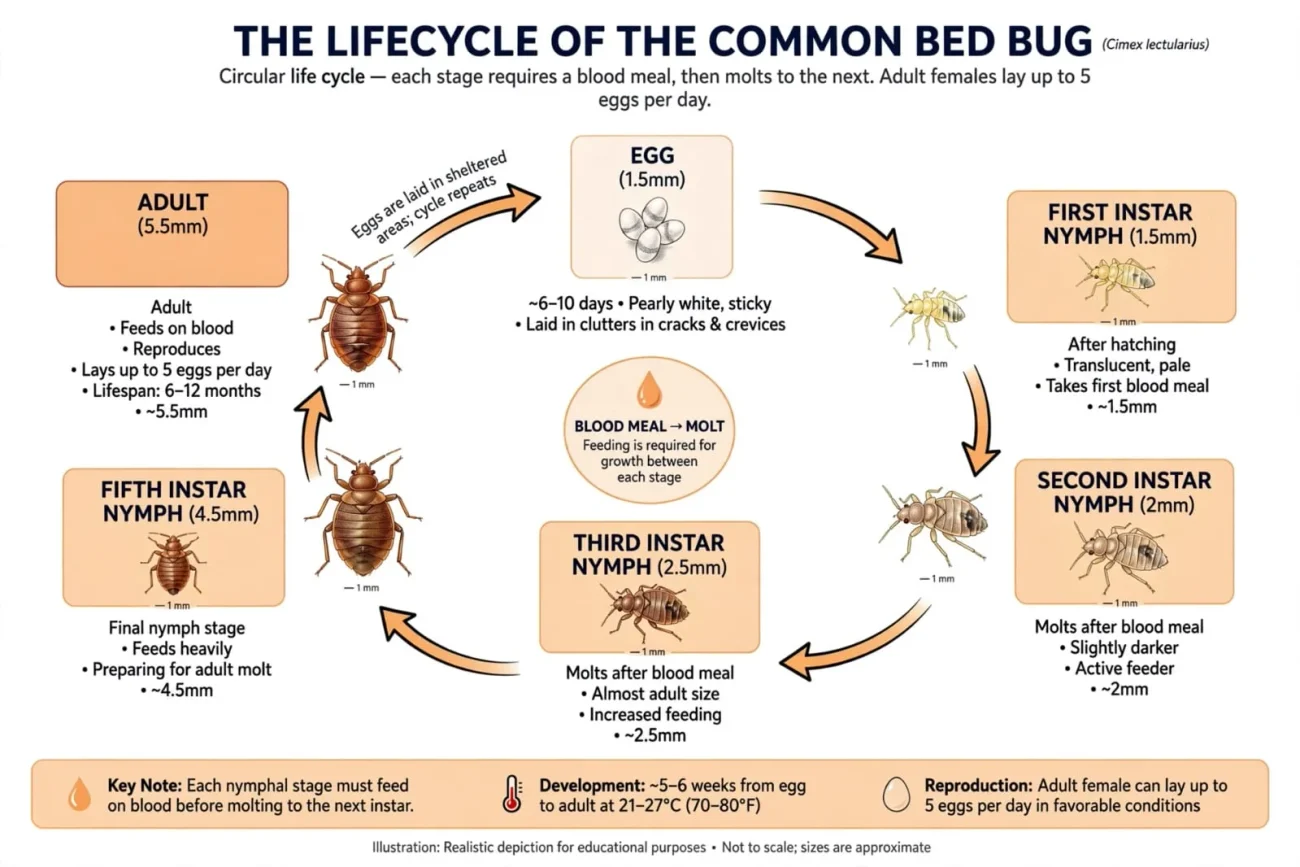
Professional circular infographic of bed bug life cycle (Cimex lectularius) showing seven stages: egg 1mm, 1st stage nymph 1.5mm, 2nd stage 2mm, 3rd stage 2.5mm, 4th stage 3mm, 5th stage 4.5mm, and adult 5-7mm. Includes blood meal and molt concept with development timeline and key notes about reproduction.
| Stage | Length | What it looks like | Everyday comparison |
|---|---|---|---|
| Egg | 1 mm | Pearl-white oval. Eye spot after about 5 days. | Pinhead |
| 1st stage nymph | 1.5 mm | Nearly clear to whitish-yellow. Blood shows through after a meal. | Poppy seed |
| 2nd stage nymph | 2 mm | Pale yellow, still very faint. | Grain of salt |
| 3rd stage nymph | 2.5 mm | Slightly darker and more solid. | Just under a sesame seed |
| 4th stage nymph | 3 mm | Amber to light brown. | Sesame seed |
| 5th stage nymph | 4.5 mm | Brown, close to adult shape. | Small apple seed |
| Adult | 5 to 7 mm (3/16 to 1/4 inch) | Brown, flat and oval. Reddish and puffy after feeding. | Apple seed |
Do Bed Bugs Have Larvae?
No. Bed bugs go from egg to nymph to adult. Insects like carpet beetles and moths do have larvae, which look like tiny worms, and that is often what people are actually seeing when they search “bed bug larvae.” A young bed bug is a flat, oval, six-legged nymph. If what you found is soft, worm-shaped, and fuzzy or segmented like a caterpillar, it is not a bed bug. Bed bugs at every stage have legs and the same flat, oval body plan.
What Do Bed Bug Eggs Look Like?
Eggs are small, but not microscopic. A bed bug egg is tiny, oval and pearl-white, about the size of a pinhead or a grain of rice cut in half. It sits in cracks, seams and crevices, singly or in small groups. Females cement eggs in place with a sticky coating, so they tend to stay put when you brush past them. On white sheets and pale mattresses, eggs hide in plain sight because the colors match. Look along the piping and seams of the mattress, the folds near the head of the bed, and the corners of the box spring. An egg older than about five days has a tiny dark eye spot, which is one way to tell it apart from a random fleck.
How Can You Tell a Live Egg?
A live egg looks smooth, shiny and slightly translucent. Once it is about five days old, the EPA notes you may see a small dark eye spot, which is the developing nymph. Under normal room temperatures, eggs usually hatch in about 6 to 10 days.
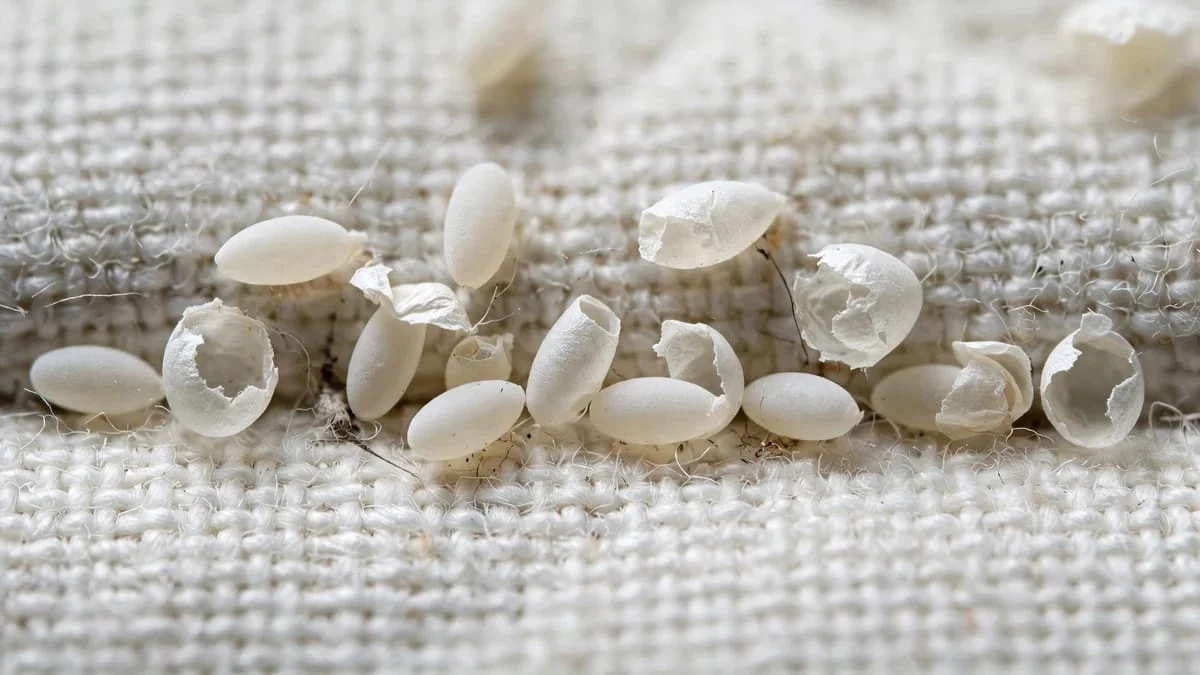
Ultra-realistic macro photo of empty bed bug eggshells on white mattress fabric. The shells are pearly-white, translucent, 1mm long, with a delicate collapsed papery texture and ragged open lids where nymphs hatched. They are irregularly cemented between cotton threads in a seam, showing true scale and natural messy clustering. Shallow depth of field, natural daylight.
What Does an Empty Egg Shell Look Like?
After a nymph hatches, the empty shell stays behind. It looks flat, clear and dry, with the cap end open. Pest professionals often find these next to live eggs and shed skins in the same crack. A hatched shell means a nymph has already come out and started looking for a meal.
What Do Dead Eggs Look Like?
Dead eggs are often described as shriveled, dry, yellowish or darker, and without the shine of a live egg. You usually can’t tell for sure without magnification, so treat any egg-like cluster as a warning until a professional says otherwise.
Bed Bug Egg Shells on Sheets: What Are They Really?
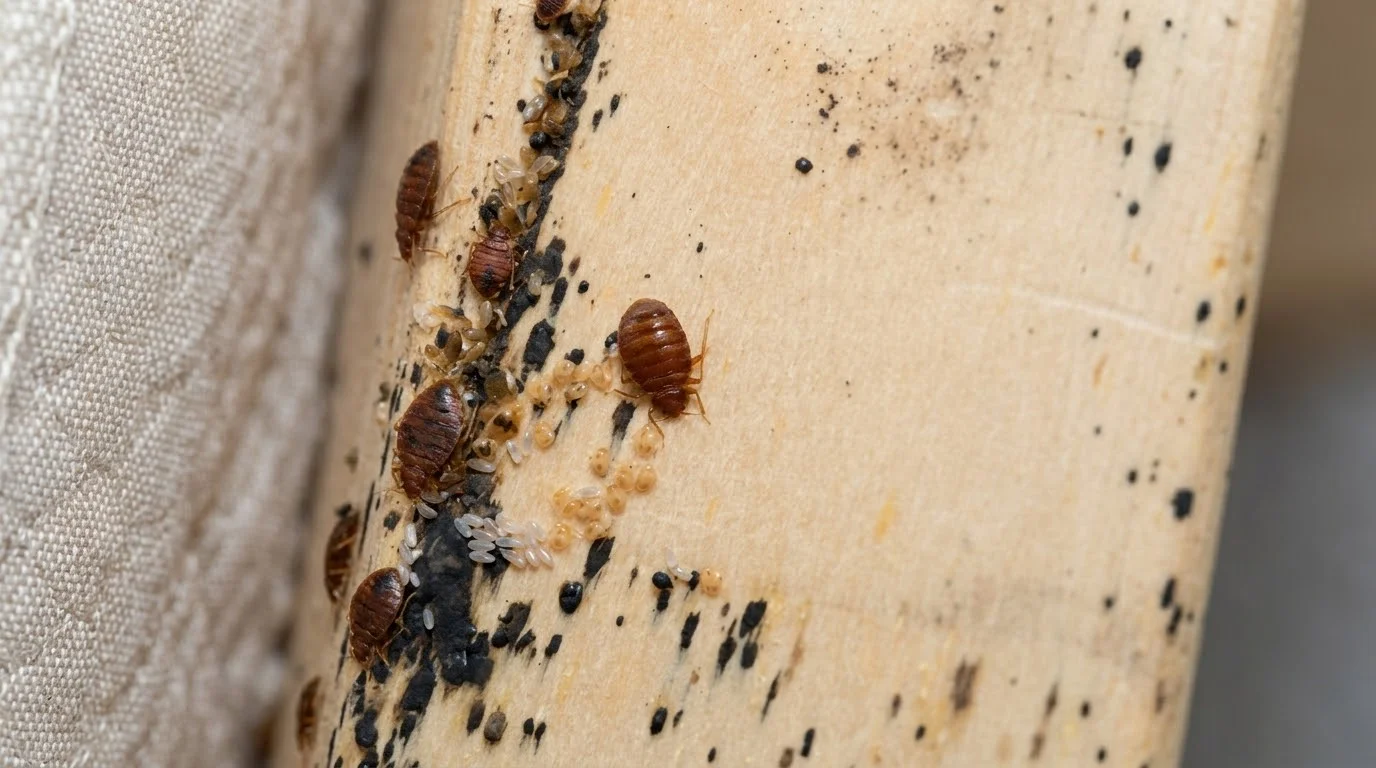
Bed bugs lay eggs in seams and cracks more than on open fabric. If you find white specks scattered loose on a sheet that flick off easily, lint, laundry residue or another insect’s eggs are more likely. If the specks are cemented into a mattress seam, piping or a crack in the bed frame, look closer with a flashlight and magnifier.
What Does a Baby Bed Bug Look Like?
A baby bed bug is a nymph. It has the same body plan as an adult: six legs, two antennae, and a flat, oval body. It is just smaller and paler. The EPA describes young nymphs as translucent or whitish-yellow, and says an unfed nymph can be nearly invisible to the naked eye because of its size and color.
What Does an Unfed Bed Bug Nymph Look Like?
Almost see-through. Before its first meal, a newly hatched nymph is about 1.5 mm and whitish-yellow. You may only notice it when it moves. Look for a tiny, pale speck crawling on a light mattress or sheet.
How Does a Nymph Look After It Feeds?
Different. The body swells and becomes more balloon-shaped, and the blood inside shows through as a bright red or dark red patch. As the blood digests, the color darkens and fades. This is why the same nymph can look pale in the morning and red at night.
How Fast Do Baby Bed Bugs Grow?
Faster than most people expect, as long as they can feed. According to Virginia Cooperative Extension, every nymph needs a blood meal to molt. At typical indoor temperatures above 70°F, most nymphs move to the next stage within about five days of feeding. A nymph that feeds within a day of molting stays in that stage for roughly five to eight days before molting again. At 50 to 60°F, a stage can take two or three days longer.
The whole trip from egg to adult usually takes about five to ten weeks, depending on temperature and how often the bugs can feed. Without a meal, a nymph simply stays in its current stage until it eats or dies.
How Long Can Baby Bed Bugs Live Without Feeding?
Not long compared with adults. Newly hatched nymphs are the most fragile. Virginia Cooperative Extension notes that a first-stage nymph can die of dehydration before its first meal if the egg was laid too far from a host. In a Virginia Tech lab study of four bed bug strains (Polanco, Miller and Brewster, published in the journal Insects in 2011), first-stage nymphs survived about 14 to 36 days on average without feeding. Adults are tougher. University of Maine Cooperative Extension says bed bugs can live from months to over a year without feeding, which is why leaving a home empty rarely solves the problem.
Do Baby Bed Bugs Bite?
Yes. Every nymph stage feeds on blood, and University of Maine Cooperative Extension notes that nymphs start feeding at the first opportunity. Their bites can look the same as adult bites, so our guide to what bed bug bites look like applies to both. Bed bugs are not known to carry disease, according to University of Maine Cooperative Extension, but bites can itch badly and some people react strongly. See a doctor if you notice signs of infection or an allergic reaction.
Bed Bug Shells, Casings and Shed Skins
A bed bug shell is the exoskeleton a nymph leaves behind when it molts. People also call it a casing, a cast skin, a shed skin or, more precisely, exuviae. Like all insects, bed bugs wear their skeleton on the outside, and it doesn’t stretch. To grow, a nymph has to split the old one and climb out.
What Does a Bed Bug Shell Look Like?
Like a see-through, hollow copy of the bug. It keeps the flat oval body outline, the head, and often the leg shapes, but it has no body inside. Fresh ones are pale tan, golden or straw-colored. Older ones can darken and turn opaque as they age or pick up dirt.
Because a shell matches the size of the nymph that left it, expect roughly 1.5 to 4.5 mm. Two quick tests:
- Bed bug shells are thin and papery. If what you found is hard, glossy or uniform like a seed, it is probably not a shell.
- Bed bug shells are smooth. Carpet beetle shed skins are fuzzy or bristly.
Do Bed Bugs Shed Their Skin?
Yes, five times. Nymphs shed once at each of the five stages before becoming adults. After that, adults keep the same exoskeleton for the rest of their lives. So a shell always came from a nymph, never from an adult.
What Does a Shell Tell You?
More than most people think. Because every molt requires a blood meal, a shell means a nymph fed close to where you found it. Shells tend to appear in clusters, near sleeping areas, alongside dark droppings and sometimes eggs. One shell can be a hitchhiker. A cluster in a mattress seam points to an active population.
How to Tell a Bed Bug Shell from Lookalike Shells
| What you found | Texture | Shape | Where |
|---|---|---|---|
| Bed bug shell | Smooth, papery, no hairs | Flat, oval, six legs visible | Mattress seams, bed frame, near sleeping areas |
| Carpet beetle larva shed | Fuzzy, covered in bristles | Elongated, tapered | Near carpets, wool, fabric, stored items |
| Cockroach nymph shed | Darker, firmer | Larger, more curved, may show spiny tail parts (cerci) | Kitchens, bathrooms, near food |
| Seed, lint or dust | Solid, or fuzzy clumps | No leg outline | Anywhere |
Dead Bed Bugs: What They Look Like and What They Mean
A dead bed bug has the same length as a live one, but it looks thinner and more shriveled as the body dries out. It may be darker or even black after a week or more. The easiest clues are curled legs and no movement when you nudge it.
How Do You Tell a Dead Bed Bug from a Shell?
Look at the middle. A shell is hollow, light and translucent, with no blood inside. A dead bug has a solid, colored body, even if it is dried up. If you can see through it, it’s a shell.
Does Finding a Dead Bed Bug Mean They’re Gone?
Not by itself. If you have had a professional treatment, dead bugs can keep turning up for weeks. That is normal as the infestation dies off. If you haven’t treated, a dead bug more likely means others are alive nearby, especially if you also find shells, droppings or eggs. If you only ever find one dead bug and nothing else after a careful search, keep monitoring for a few weeks with fresh eyes and a flashlight.
Do Bed Bugs Have Wings?
Not working ones. The EPA describes bed bugs as true bugs with wings that are not used for flying. In adults, those wings survive only as tiny flaps behind the head, called wing pads (or hemelytral pads). Bed bugs cannot fly, and they cannot jump like fleas.
They crawl. If a small bug flew at you or hopped off your mattress, it wasn’t a bed bug.
Do Bed Bugs Build Nests?
No. Bed bugs don’t build nests. What people call a “bed bug nest” is an aggregation, a cluster of live bugs, eggs, shed skins and dark droppings packed into a hiding spot. They pick spots close to where people sleep, like mattress seams, box springs, headboards and bed frame joints, then spread to cracks in nearby furniture, baseboards and behind trim.
If you have heard they live in wood nests or picture frames, that’s a mix-up. They will hide in wood cracks and behind frames, but they don’t build anything.
Is It Really a Baby Bed Bug? Common Lookalikes
The EPA warns that many bugs look like bed bugs and that a wrong ID can lead to costly treatment for the wrong pest. Here is how the usual suspects differ.
| Lookalike | How it differs from a bed bug nymph |
|---|---|
| Carpet beetle larva | Fuzzy or bristly, elongated, wormlike. Bed bug nymphs are smooth and flat. |
| Cockroach nymph | Longer antennae, spiny legs, faster, usually near food or water. |
| Bat bug | Nearly identical to a bed bug. Clue: bats in an attic or wall. Needs a close look by a professional. |
| Booklice | Much smaller and softer, found in damp or dusty spots. |
| Flea | Jumps. Bed bugs cannot. |
| Tick | Nymph and adult ticks have eight legs. Bed bugs have six. |
| Spider beetle | Rounder, harder body. Bed bug nymphs are flat. |
Where to Look, and What to Bring
Bed bug hiding spots follow a pattern. Use a bright flashlight and a magnifier, and check these in order:
- Mattress seams, piping and tags
- Box spring, especially the fabric underneath and the corners
- Headboard and bed frame joints
- Baseboards, behind outlet covers and behind picture frames near the bed
- Upholstered chairs and sofas where you nap
- Cribs, bassinets and playpens, if you have them
Look for shells, eggs, dark specks and rusty smears. Photograph what you find before you touch anything.
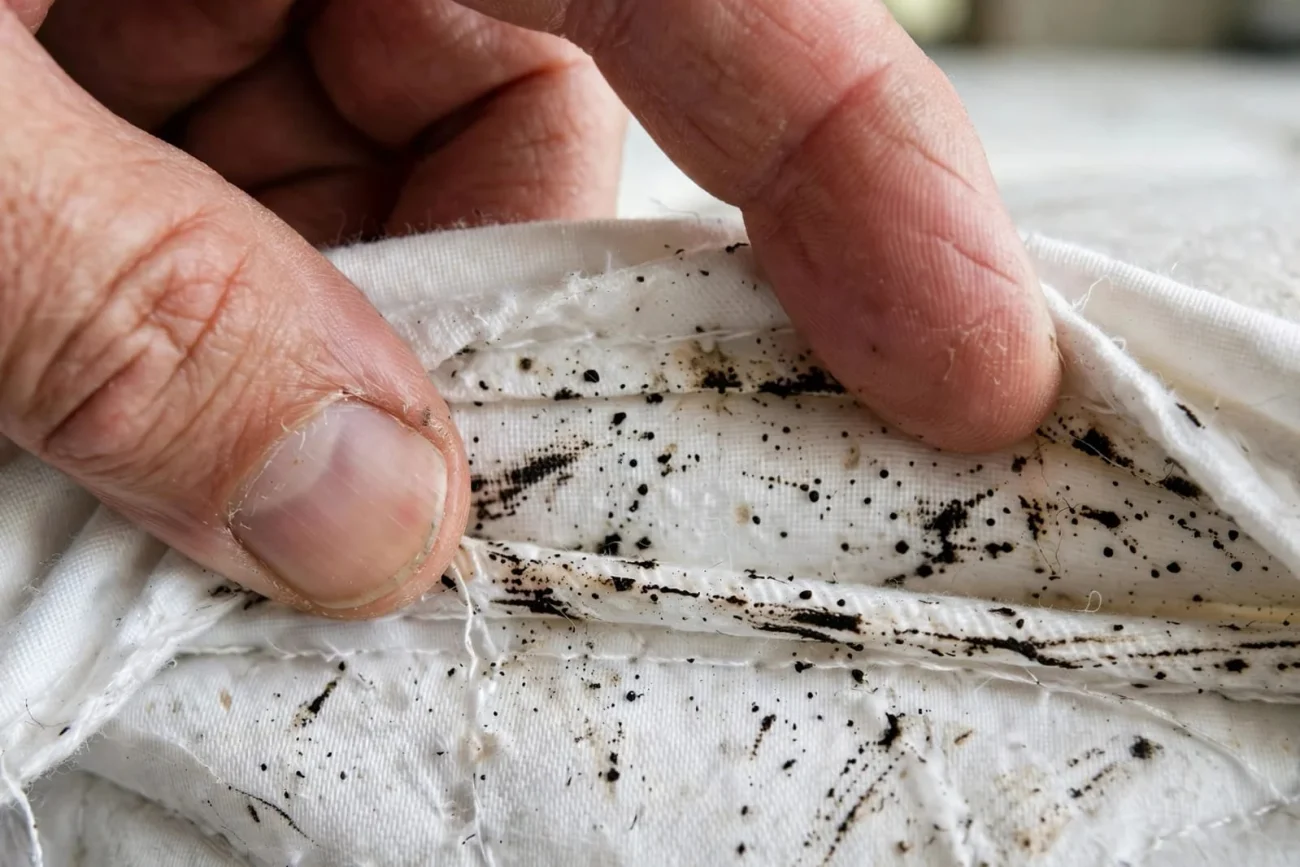
Dark fecal spots and smears along a mattress seam, one of the most reliable signs of bed bugs. The marks bleed into the fabric like ink, which helps tell them apart from loose specks that brush off.
What to Do After You Find One
Do:
- Trap a sample and take clear photos.
- Wash and dry bedding on a hot dryer cycle.
- Put a zippered bed bug encasement on the mattress and box spring. University of Maine Cooperative Extension notes that quality encasements seal bugs inside, where they eventually starve, and keep new ones out.
- Call a licensed pest professional if you find live nymphs, several shells, or eggs.
Don’t:
- Throw out the bed in a panic. Moving infested furniture can spread bugs and eggs through your home, and the bugs usually aren’t only in the mattress.
- Use foggers or leftover pesticide. Most professionals advise against them, and they rarely reach the cracks bed bugs use.
- Use unlabeled or imported pesticides indoors, ever.
- Assume you’re safe because you found a single shell or a dead bug.
Why Do Baby Bed Bugs Show Up After You Removed the Bed?
Because eggs hatch about 6 to 10 days after they’re laid, and they’re hidden well. A quick clean-out can kill adults while leaving eggs in the frame, baseboard or a nearby chair. Nymphs then emerge days later, which feels like the bugs are “returning.” They never left. This is also why professionals schedule follow-up visits.
Are Shells After Treatment a Bad Sign?
Not necessarily. Treatment kills bugs, but it doesn’t remove old shells, and dead bugs can appear for weeks. Live nymphs are the warning sign. If you see those a couple of weeks after treatment, tell your technician.
Where Bed Bugs Are Reported Most in 2026
Bed bugs show up in every state. Orkin’s 2026 Bed Bug Cities List, released July 7, 2026, ranks metro areas by how many bed bug treatments Orkin performed between May 12, 2025 and May 12, 2026. It isn’t a census, but it shows where treatment demand is highest.
- Top five: Chicago, Los Angeles, Detroit, Cleveland and Indianapolis
- Ohio had six cities in the top 50, including Cleveland, Columbus and Cincinnati
- Newcomers: vacation destinations Tampa and Myrtle Beach joined the list
Orkin ties travel to the list: many high-ranking cities host big concerts, festivals and sporting events, and bed bugs hitchhike home in luggage and belongings. If you’re staying in a hotel or short-term rental, lift the sheets and check the mattress seams before you unpack. When you get home, inspect your bags before they go into your bedroom.
Does Climate or Season Matter?
Only a little indoors. University of Maine Cooperative Extension says 70 to 80°F is ideal for bed bug development, and most homes stay in or near that range all year. Cooler rooms slow development but don’t stop it. Apartment and condo living adds another factor: bed bugs can move through gaps in walls, floors and ceilings into neighboring units, so shared-wall buildings often need coordinated treatment. Tenant and landlord rules vary by state and city, so check your local housing rules or ask a tenant advocate.
Bottom Line
Baby bed bugs are tiny, pale and easy to miss. The best evidence is usually not the bug itself but what it leaves behind: shells, eggs, dark specks and rusty stains near where you sleep. Match what you found to the size chart, rule out the lookalikes, and get it confirmed before you spend money on treatment.
Next steps:
- Not sure what you have? Run your find past our house bug identification guide and compare it against the common lookalikes.
- Confirmed bed bugs? Our complete bed bug guide covers hiding spots, treatment options and how to keep them from coming back.
- Want to check the rest of the room? Use our early signs of bed bugs Guide to search your bedroom or hotel room step by step.
Frequently Asked Questions
What does a baby bed bug look like?
A baby bed bug is a nymph between 1.5 and 4.5 mm long. It is flat, oval and six-legged like an adult, but paler: nearly clear to whitish-yellow at first, then browner with each molt. After feeding, its body swells and shows red blood inside.
Do bed bugs have larvae?
No. Bed bugs go from egg to nymph to adult. They have no larval stage. Wormlike or fuzzy “larvae” in your home are usually carpet beetle or moth larvae, not bed bugs.
How big is each bed bug nymph stage?
According to the EPA, nymphs measure about 1.5 mm, 2 mm, 2.5 mm, 3 mm and 4.5 mm across the five stages. Eggs are about 1 mm, and adults are 5 to 7 mm.
What do bed bug eggs look like?
Bed bug eggs are about 1 mm long, oval, pearl-white and slightly shiny. After roughly five days you may see a dark eye spot. They are often stuck in seams and cracks and are easier to see with a flashlight and magnifier.
What do bed bug shells or shed skins look like?
They look like hollow, see-through copies of a nymph. They are thin, papery and smooth, in pale tan or golden tones, and roughly 1.5 to 4.5 mm long. Carpet beetle skins are fuzzy, and cockroach skins are darker and firmer.
Are bed bug shells a sign of infestation?
Yes. Each shell means a nymph molted, and molting requires a blood meal, so bed bugs have been feeding nearby. One shell is a warning. A cluster of shells with droppings and eggs points to an active infestation.
What do bed bug egg shells look like on sheets?
Empty egg shells are tiny, clear, flat and dry, with an open cap end. They are usually found in seams and cracks rather than loose on sheets. Loose white specks on fabric are often lint or laundry residue.
What does a dead bed bug look like?
It is the same length as a live bed bug but flatter, thinner, more shriveled and sometimes darker. Its legs curl under and it doesn’t move when touched. A shell, by contrast, is hollow and see-through.
Do dead bed bugs mean they are gone?
Not always. Dead bugs can appear for weeks after a professional treatment, which is normal. Without treatment, a dead bed bug often means live ones are nearby. Look for shells, droppings and eggs.
Do bed bugs have wings?
Not functional ones. Adults have small wing pads behind the head, but bed bugs cannot fly or jump. They only crawl.
Do bed bugs build nests?
No. They gather in hidden clusters near where people sleep, like mattress seams, box springs and bed frames. These clusters contain live bugs, eggs, shed skins and dark droppings.
How long can baby bed bugs live without feeding?
Much less time than adults. In a Virginia Tech lab study, first-stage nymphs lasted about 14 to 36 days on average without a meal. Adults can live months to over a year without feeding, so an empty home rarely clears an infestation.
References
- U.S. EPA: Bed Bugs Appearance and Life Cycle (epa.gov)
- U.S. EPA: Bed Bugs: Get Them Out and Keep Them Out (epa.gov)
- Virginia Cooperative Extension: Bed Bug Biology and Behavior (vt.edu)
- University of Maine Cooperative Extension: Bed Bugs (maine.edu)