Baby Roaches and Eggs: 5 Proven Signs What Do They Look Like
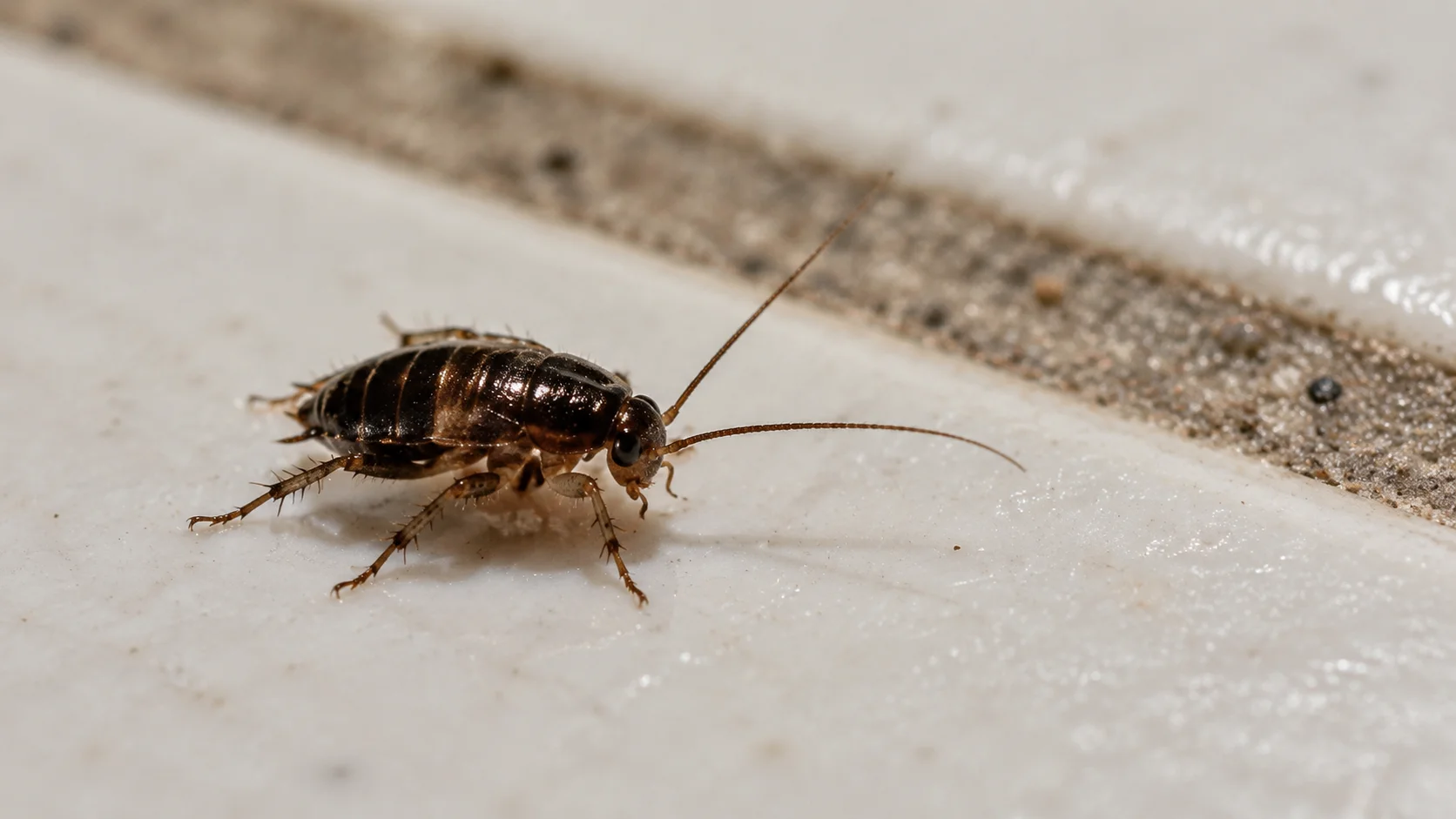
Table of Contents
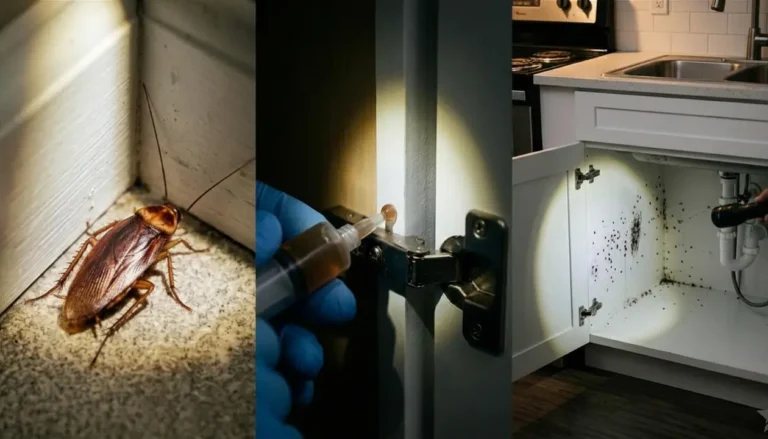
Baby roaches and eggs are often found together in dark, damp places. If you are wondering what baby roaches and eggs look like, this guide will help you identify them with real size, color and photos.
The first time a reader sent me a blurry phone photo captioned “please tell me this is not what I think it is,” I knew exactly what I was looking at. It was a German cockroach nymph, about the size of a sesame seed, sitting on a white bathroom tile. She had seen three in two days and was convinced her apartment was ruined.
She was not wrong to worry, but she was wrong about why. Finding a baby cockroach is not the problem. It is the receipt for a problem that started weeks earlier, somewhere you cannot see. This guide shows you how to read that receipt correctly, because what most people identify as a baby roach turns out to be something else entirely about half the time.
What is a baby cockroach, actually?
A baby cockroach is called a nymph. Cockroaches do not have a larval or caterpillar stage the way moths and beetles do. They hatch straight out of the egg case already looking like a roach, just smaller and without working wings.
A nymph grows by molting. It splits its old shell, climbs out soft and pale, then hardens and darkens over a few hours. German cockroach nymphs go through five or six of these molts before adulthood, according to NC State Extension.
That white stage is where most confusion starts. People see a pale insect, assume it is a different species or a mite, and move on. It is the same roach it was yesterday, caught in the few hours after a molt.
If you are not sure which species you are dealing with at all, start with our wider guide to cockroaches in the house and come back here once you have narrowed it down.
What every cockroach nymph has in common:
- A flat, oval or oblong body that sits low to the surface
- Two long antennae, nearly as long as the body, pointing forward
- Six spiny legs with small claws at the tips
- Two short appendages at the rear called cerci
- No usable wings, though late-stage nymphs show small wing pads
What do baby cockroaches look like by species?
This is the table I wish existed when I started. All figures come from UC Integrated Pest Management, NC State Extension, and Texas A&M AgriLife Extension.
| Species | Nymph size | Nymph color and markings | Adult size |
|---|---|---|---|
| German | About 3 mm at hatch | Dark brown to near black, two dark stripes running lengthwise down the back | About 1/2 inch |
| American | About 1/4 inch early on | Grayish brown, reddening after the first few molts, pale halo behind the head later | 1 1/2 to 2 inches |
| Oriental | About 1/4 inch early on | Uniform reddish brown to near black, no banding or stripes | About 1 1/4 inches |
| Brown-banded | About 1/8 inch early on | Two pale bands running crosswise over the back | About 1/2 inch |
| Smoky brown | Up to 3/8 inch at later stages | Black with two white bands and white antenna tips, fading to reddish brown with age | 1 1/4 to 1 1/2 inches |
| Turkestan | Small, varies by stage | Dark brown to black with reddish head, thorax and legs | About 1 inch |
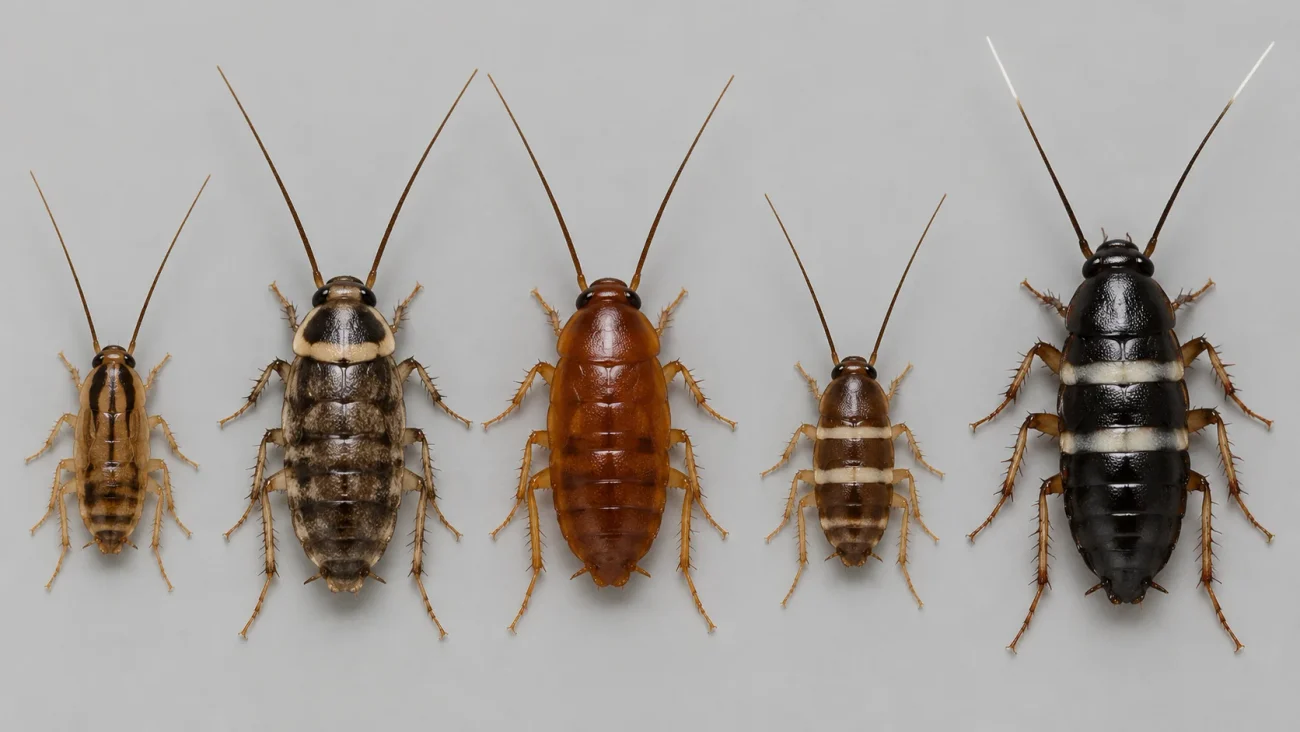
Turkestan cockroaches deserve a mention because they are spreading through the Southwest and most big pest sites still have no photo of them. They turn up in water meter boxes, compost, potted plants, and sidewalk expansion joints.
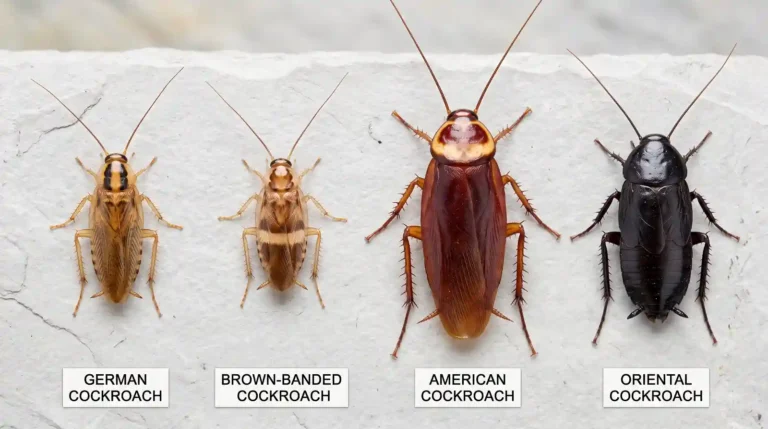
Adults look different enough from nymphs that people often think they have two separate pests. Our breakdown of the types of roaches found in homes covers what each species looks like full grown.
Wait. Is it a baby, or just a small roach?
Not every small cockroach is a nymph. Some species are small as full adults, which makes them easy to mistake for babies.
The three-lined cockroach reaches only about a quarter inch at maturity and is wingless its whole life. A wingless quarter-inch roach reads as a baby to almost everyone. It is not. It is a grown adult, and it is an outdoor species that wanders in.
The field cockroach looks so much like a German cockroach that even pest techs slow down on it. Both are about half an inch, both tan, both with two dark stripes on the back. The difference is a dark stripe between the eyes on a field cockroach. German cockroaches do not have it. Field cockroaches live outdoors and come inside during dry heat, so finding one does not mean you have a breeding population in your kitchen.
Here is the fast check. If the small roach has fully formed wings that reach the end of its body, it is an adult of a small species, not a nymph. Baby cockroaches never have working wings.
What do cockroach eggs look like?
Cockroaches do not lay eggs one at a time. The female produces a hard protective capsule called an ootheca, and all the eggs for that batch sit inside it in two neat rows.
An ootheca looks like a dried bean, a seed pod, or a tiny brown purse. Size ranges from about a quarter inch to three eighths of an inch depending on species. Color runs from light beige through reddish brown to near black.
The detail that matters most is the seam. One edge of every ootheca has a raised, ridged, crimped line running along it. That is where the capsule splits open when the nymphs hatch. If the object you found has that ridge, you are almost certainly holding a roach egg case.
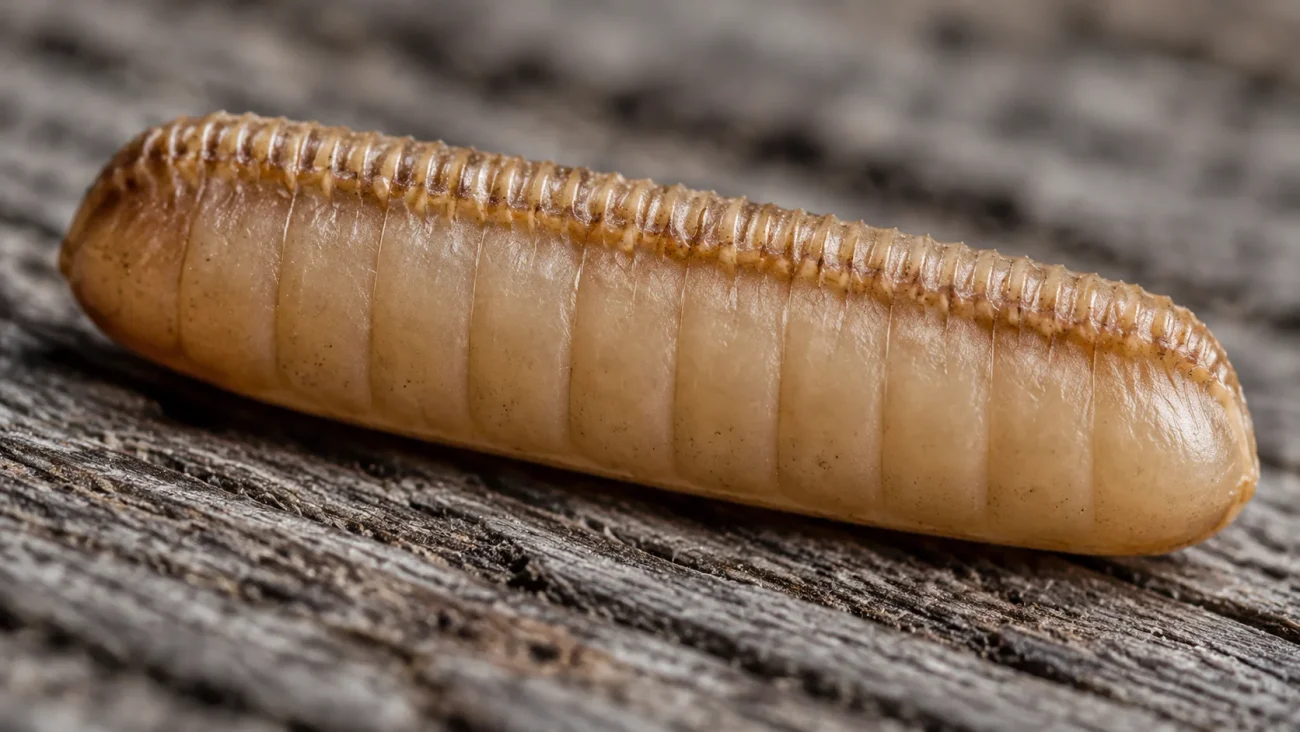
Egg cases by species, and where each one ends up
| Species | Case size and color | Eggs per case | Carried or placed | Incubation |
|---|---|---|---|---|
| German | About 1/4 inch, light beige to tan | 30 to 40 | Carried until 1 to 2 days before hatching, sometimes hatches while attached | 20 to 30 days |
| American | About 3/8 inch, brown then near black within a day or two | 12 to 15 | Carried about 6 days, then cemented to a protected surface | About 2 months or longer |
| Oriental | About 3/8 inch, dark reddish brown to blackish | About 16 | Dropped in debris, food, or a sheltered damp spot | Weeks to months |
| Brown-banded | About 1/4 inch, light brown, slightly curved | 10 to 18 | Glued to ceilings, under furniture, inside closets, often several together | Several weeks |
| Smoky brown | About 3/8 inch, dark brown to black | 40 to 45 | Carried about a day, then dropped | About 24 days warm, up to about 70 days cool |
Two numbers are worth holding onto. A German female produces five to eight cases over her life, totaling 200 to 250 eggs. And the brown-banded habit of gluing cases to closet shelves and the undersides of furniture is why people find them far from the kitchen.
Is this egg case empty or still alive?
This is one of the most common searches on the topic, and almost nobody answers it properly.
A hatched, empty case is split open along the ridged seam, so the capsule looks cracked or hinged apart along one long edge. It feels light and papery. The color is often faded.
An intact case is sealed shut with no gap along the seam. It feels solid and slightly heavy for its size, and it holds its shape when you press it.
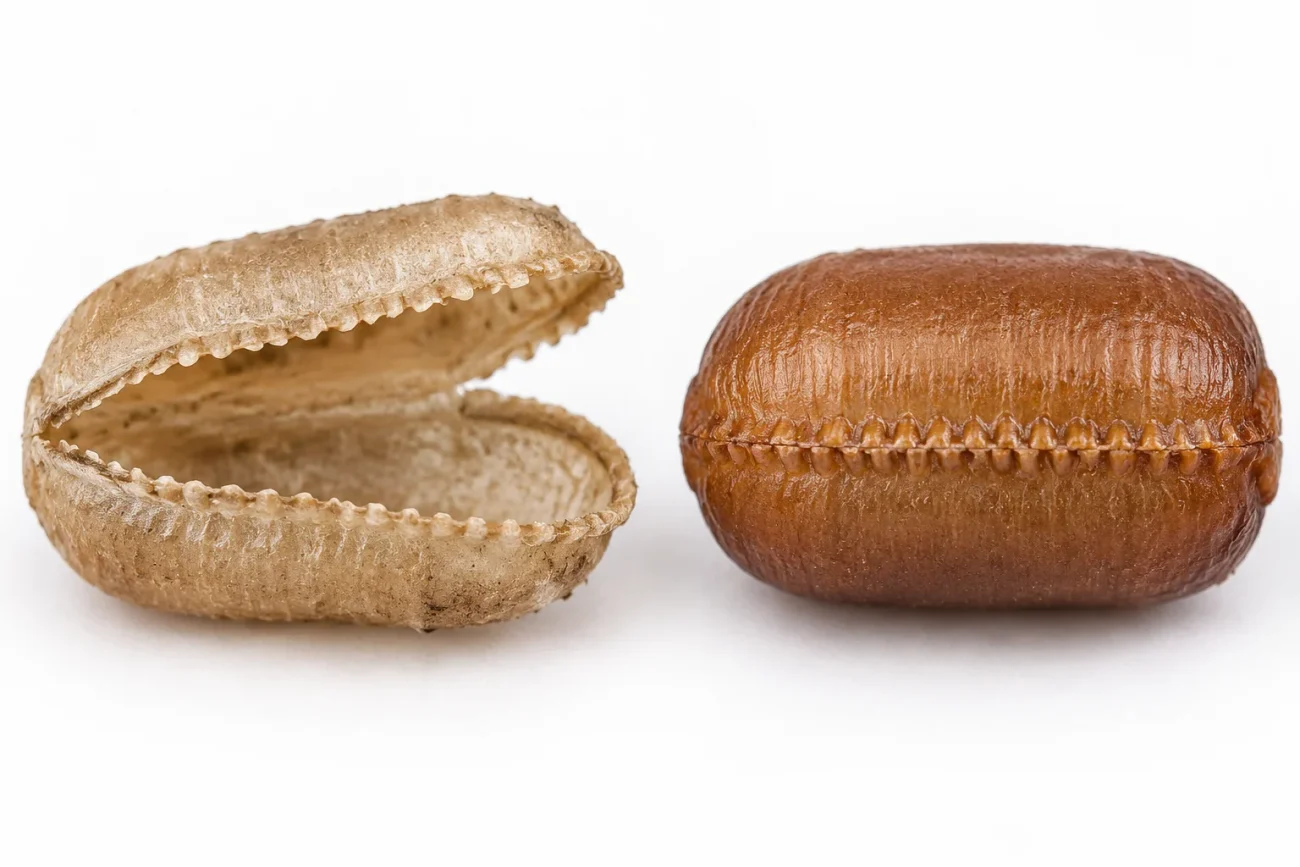
Here is what people get wrong. An empty case is not good news. It means that batch already hatched, and 30 to 40 nymphs went somewhere in your home. An intact case means the hatch has not happened yet, which is the one scenario where you still have time to act before the population jumps.
Either way, do not crush it on the floor. Pick it up with tape or a tissue, seal it in a bag, and put it in an outdoor bin.
Things people mistake for baby cockroaches
Bed bug nymphs. The most common mix-up by far. Bed bug nymphs have short antennae that stick out to the sides, prominent dark eyes, and a short rounded body shaped like a flaxseed. Roach nymphs have long antennae pointing forward, eyes you can barely see, and a longer body shaped more like a grain of rice. Location helps too. Bed bugs stay near where you sleep.Roach nymphs head for food, water, and warmth.
If the evidence is pointing toward bed bugs instead, compare what you found against bed bug eggs, nymphs and shed shells.
Fleas. Fleas are flattened side to side, so they look narrow from above and tall from the side. Roach nymphs are flattened top to bottom, so they look wide and low. Fleas also jump. Cockroaches do not jump at all, despite what a few product sites claim.
Carpet beetle larvae. These are fuzzy or bristly with visible hairs. No cockroach nymph is hairy.
Young ground beetles and drugstore beetles. Beetles have hard wing covers meeting in a straight line down the back, and short antennae. Roach nymphs have no wing covers and very long antennae.
Things people mistake for cockroach egg cases
Housefly pupae. This is the big one, and not a single major pest site mentions it. Fly pupae are smooth, rounded, capsule shaped, and have no seam or ridge anywhere. Roach oothecae are squared off, purse shaped, and always have that ridged edge. If you found dozens of small brown capsules near a drain or a forgotten bin and they are smooth, you have a fly problem, not a roach problem.
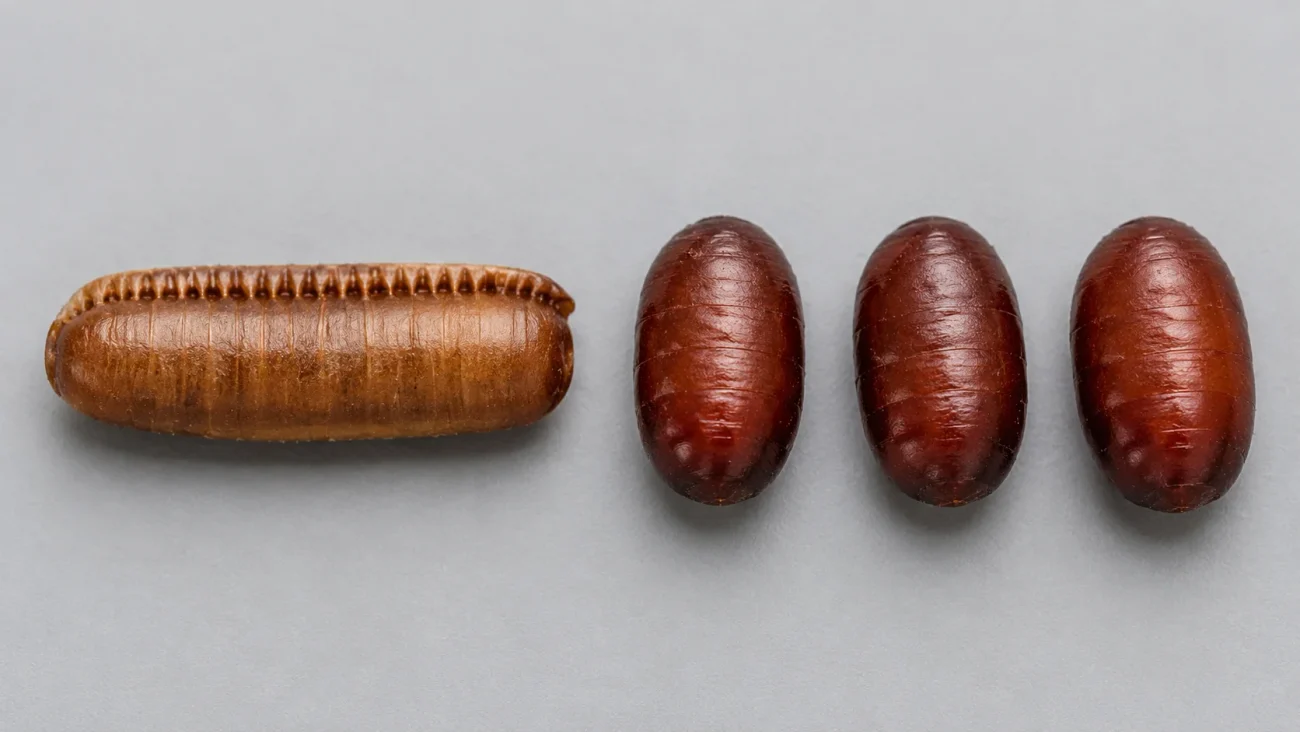
Mouse droppings. Darker, softer, pointed at the ends, and they crumble. An ootheca is hard and will resist a fingernail.
Seeds and plant debris. Common in potted plants and near pet food. Seeds have no seam.
Where do roach egg cases turn up in a house?
Female roaches pick places that stay warm, hold humidity, and nobody disturbs. In order of how often I hear about them:
- Behind and underneath the refrigerator, especially around the motor
- Inside the cabinet under the kitchen sink
- Along the backs of drawers and inside cabinet corner joints
- Behind and inside dishwashers and washing machines
- Inside cardboard boxes and paper bags in storage
- Kitchen sponges and dish cloths left damp overnight
- Behind bathroom vanities and around pipe penetrations
- Under furniture and on closet ceilings, which is brown-banded territory
Cardboard deserves a special mention. It is absorbent, it holds warmth, and the corrugated channels inside are almost exactly the crevice width German roaches prefer. Texas A&M notes that German cockroaches spend around 75 percent of their lives in cracks between one thirty-second and three sixteenths of an inch wide. A corrugated box is a purpose-built roach hotel.
I am seeing babies but no adults. What does that mean?
This question comes up constantly in homeowner forums, and the answers people get are mostly panic.
Here is the actual explanation. In any established population, nymphs outnumber adults heavily, so statistically you are more likely to see one. Nymphs are also smaller, which means they fit into more places and get pushed out into open areas sooner when the harborage gets crowded.
Adults are more cautious about crossing open floor, and they are better at staying hidden during daylight. So the pattern of all babies and no adults is not strange at all. It is the normal way an infestation shows itself first.
What it does tell you is important. Nymphs cannot arrive on their own. A nymph in your kitchen means either an egg case hatched inside your home, or one was carried in on a box, a bag, or secondhand furniture and then hatched. Either way, reproduction is happening on your side of the wall.
Why your bait has not worked yet
This is the complaint I see constantly. Someone applies a quality gel bait, and three weeks later they are still finding nymphs. They assume the product failed.
Usually it did not. Two things are happening.
Egg cases are built to survive. That hardened protein capsule is a shield. Most surface sprays and baits do not reach the eggs inside it. So a treatment can wipe out the roaches you can see while a dozen sealed capsules sit behind the fridge, right on schedule.
Pregnant females barely eat. UC Integrated Pest Management notes that females carrying egg cases feed very little and stay out of open spaces. Bait works by being eaten. A female who is not eating is a female the bait reaches slowly, if at all, and she is carrying the next 40 roaches.
This is why a German cockroach problem usually needs a second wave of treatment timed about three to four weeks after the first, to catch the nymphs that hatch from capsules laid before you started.
The trap question nobody answers
If you catch a live female on a glue board and she is carrying an egg case, that case can still hatch on the trap. German females carry to within a day or two of hatching, so the eggs are viable even after she is stuck or dead.
Do not leave it sitting there to see what happens. Fold the glue board closed, seal it in a plastic bag, and put it in an outside bin the same day.
Regional patterns across the US
Which nymph you are looking at depends heavily on where you live, and the national pest sites flatten this out.
Gulf Coast, Florida, and the Deep South. Smoky brown, American, and Australian cockroaches thrive in the heat and humidity. These are largely outdoor species that come in through gaps, so finding nymphs often points to an entry problem rather than a kitchen sanitation problem. Palm fronds, mulch beds, and soffits are common outdoor harborage.
Texas and the Southwest. Turkestan cockroaches have spread widely here and live in irrigation boxes, compost, and expansion joints. American cockroaches come up through floor drains, which is why Texas A&M recommends keeping P-traps filled with water.
Northeast and Midwest apartments. German cockroaches dominate, and they move between units through shared plumbing chases and wall voids. If you rent, a neighbor’s problem becomes yours regardless of how clean you keep your own unit.
Cooler basements anywhere north. Oriental cockroaches like damp, cool, ground-level spaces. Sump areas, crawl spaces, and unfinished basements are their range.
The health side, especially if someone has asthma
This is the part most pest pages skip in one sentence, and it deserves more.
Cockroach allergen is a recognized indoor asthma trigger. Research published through the National Institutes of Health has linked household cockroach allergen exposure to higher asthma morbidity in children, with the burden falling hardest on urban and multi-unit housing.
The allergen does not come mainly from live roaches walking around. It comes from droppings, shed skins, and body fragments that dry out, break down, and mix into household dust. Since nymphs molt five or six times each, a population of babies produces a large amount of that material.
Two practical points follow from this. First, cleaning up after a roach problem matters as much as killing the roaches. Second, use a vacuum when you remove egg cases, droppings, and shed skins, because UC Integrated Pest Management notes vacuuming removes all three at once. Empty the canister or bag outside immediately.
What to do right now
If you have found nymphs or egg cases, here is the order I would work in.
- Identify the species before buying anything. German roaches need a different approach than American or smoky brown. Stripes lengthwise means German. Bands crosswise means brown-banded. White antenna tips means smoky brown.
- Put down glue boards and read them. Place traps at floor and wall junctions, in room corners, behind large appliances, and inside cabinets. Number each one. Check them daily for several days. Most of what you catch shows up in the first 24 hours, and the trap with the highest count tells you where the harborage is.
- Remove every egg case you find. Vacuum them up or lift them with tape. Seal and bin outside.
- Cut the cardboard. Break down boxes and get them out. Replace paper storage with sealed plastic bins. Stop leaving damp sponges in the sink overnight.
- Close the crevices. Caulk gaps along baseboards, around pipe penetrations, and inside cabinet corners. You are taking away the one thirty-second to three sixteenths inch spaces they rely on.
- Plan for a second round. Whatever treatment you use, assume capsules are waiting. Expect to repeat in three to four weeks.
- Call a professional if nymphs keep appearing after two treatment cycles, if you live in a multi-unit building, or if anyone in the home has asthma. A shared-wall infestation cannot be solved from inside one apartment.
Frequently asked questions
How big is a baby cockroach? German nymphs start around 3 mm at hatch, roughly a pinhead. American and Oriental nymphs start closer to a quarter inch. Smoky brown nymphs can reach three eighths of an inch at later stages.
Can baby cockroaches fly? No. Nymphs never have working wings. Late stages grow small wing pads, but those do not function. Any small roach flying around your home is an adult.
Do baby cockroaches bite? Bites are very rare and not a normal concern with nymphs. Their mouthparts are built for scavenging food residue.
How fast do baby cockroaches move? Almost as fast as adults, which is why they are hard to photograph. A nymph that darts straight for the nearest dark gap when a light comes on is behaving exactly like a cockroach.
How long does it take a cockroach egg to hatch? German cases take 20 to 30 days. Smoky brown cases take about 24 days in warm conditions and up to about 70 days when cool. American cases take about two months or longer.
How long until a baby cockroach becomes an adult? American cockroaches take around 600 days from egg to adult under normal conditions. Oriental cockroaches range from about 300 to 800 days depending on temperature. Smoky brown development runs about 320 days on average.
How many eggs are in one cockroach egg case? Roughly 30 to 40 for German, 12 to 15 for American, around 16 for Oriental, 10 to 18 for brown-banded, and 40 to 45 for smoky brown.
Does one baby roach mean an infestation? One nymph means reproduction happened nearby, because nymphs cannot travel in from outside the way a wandering adult can. It does not always mean a large population, but it does mean you should set traps and check.
Can roach eggs survive in clothes, shoes, or a purse? Brown-banded females glue cases inside closets and under furniture, so it is possible. Run washable items through a hot wash and dry cycle. For shoes and bags, inspect seams and inner linings, then seal them in bags for a few weeks and check for hatched cases.
Will spray kill cockroach eggs? Generally no. The capsule shields the eggs from most surface products. This is why removal by vacuum or tape works better, and why a follow-up treatment three to four weeks later matters.
What do empty cockroach egg cases mean? They mean a batch already hatched. The case will be split along its ridged seam and feel light. Treat it as evidence that nymphs are now somewhere in the home.
Are baby cockroaches dangerous to kids? Not through bites. The concern is allergen. Shed skins and droppings from nymphs contribute to indoor dust allergen that research has tied to asthma symptoms in children, which is why thorough cleanup belongs in the plan.
A final word
I have spent years looking at reader photos of small brown insects on bathroom tile, and the pattern never changes. People panic about the wrong thing and then miss the thing that actually matters, which is almost always an egg case sitting behind an appliance.
If you take one habit away from this guide, make it the seam check. Ridged edge means roach. Smooth capsule means fly. That single look saves people weeks of treating the wrong pest.
And if you are still finding nymphs after two full rounds of treatment, that is not failure on your part. That is a population being replenished from capsules you have not found yet, and it is the right moment to bring in a licensed professional.
That is the right moment to bring in a licensed professional. Our overview of residential pest control services explains what a roach treatment plan should actually include. Now you know how to identify baby roaches and eggs easily.
References
content.ces.ncsu.edu/biology-and-behavior-of-the-german-cockroach
ipm.ucanr.edu/PMG/PESTNOTES/pn7467.html
urbanentomology.tamu.edu/cockroaches/german-cockroach/
ohioline.osu.edu/factsheet/HYG-2092 (Cockroaches and asthma)