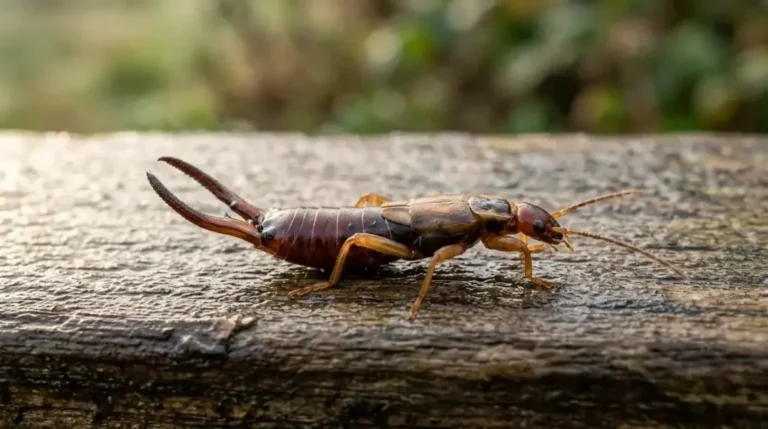
Stop an Earwig Infestation and How to get rid of Earwig
Table of Contents
You open the dishwasher and one scurries out. You pull back the shower curtain and there’s another on the tile. Last night, one fell off the ceiling onto your pillow. In this complete earwig infestation guide, I’ll show you how to fix it for good. Homeowners from Wisconsin to Kentucky to California have been dealing with the same thing, and 2026 has been a particularly rough year for earwig populations across most of the US.
This guide walks you through exactly how bad your earwig infestation actually is, what is causing it, which earwig killers work (and which ones waste your money), and a room-by-room plan to get your home back. We also cover the yard, the garden, 12 homemade traps with real recipes, and when it is finally time to call a pro.
What Does an Earwig Infestation Really Look Like?
Here is the uncomfortable truth most pest control sites will not tell you: finding two or three earwigs in your home does not mean you are infested. Earwigs are what entomologists call “occasional invaders,” meaning they live and breed outside and only wander in by accident or when conditions push them indoors. A real earwig infestation has specific signs, and knowing them helps you stop panicking and start solving.
8 Clear Signs You Have an Earwig Problem
Watch for these in combination. One sign on its own is usually nothing; three or more means you have work to do.
- Multiple sightings inside the house in the same week, especially at night or early morning
- A sharp, musty, almost rotten smell in an area where you see them (this is their defense secretion when crushed or threatened)
- Small black pellet droppings, called frass, near baseboards, plant pots, or along window sills
- Tiny, almost translucent shed skins, the exoskeletons they leave behind as nymphs mature
- Clusters under mulch, firewood, flowerpots, or stones when you lift them in daylight
- Irregular, ragged holes chewed in plant leaves and flower petals in your garden, especially on marigolds, dahlias, lettuce seedlings, strawberries, and corn silks
- Shallow gouges or small deep holes in soft fruit like apricots, peaches, or raspberries
- Earwigs showing up in unusual places: dishwashers, sugar bowls, underwear drawers, bathtubs, and water bottle lids are all real cases homeowners have reported this year
If you are seeing four or more of these, you have an actual infestation. If you are seeing one or two of the first six signs, you likely have a small intrusion that will resolve with basic prevention.
Earwig Infestation Severity Scale
This is the kind of straight answer nobody else on the internet is giving you. Use the table below to figure out where you really stand.
| Severity | Indoor sightings per week | Trap catches per night | Plant damage | Action needed |
| Incidental | 1 to 3 | 0 to 5 | None or minor | Sanitation + sealing entry points |
| Mild | 4 to 10 | 5 to 15 | Some leaf holes | Traps + dehumidifier + perimeter cleanup |
| Moderate | 10 to 25 | 15 to 40 | Visible garden damage | Full DIY protocol + perimeter spray |
| Severe | 25+ or daily sightings in multiple rooms | 40+ per trap | Seedlings destroyed, fruit damaged | Professional treatment + full outdoor overhaul |
Trap catches are measured using the buried tuna oil can method described later in this guide. If you are catching 40 or more per trap per night, you are looking at thousands of earwigs on your property, and DIY alone will not catch up.
Is It Earwigs or Something Else?
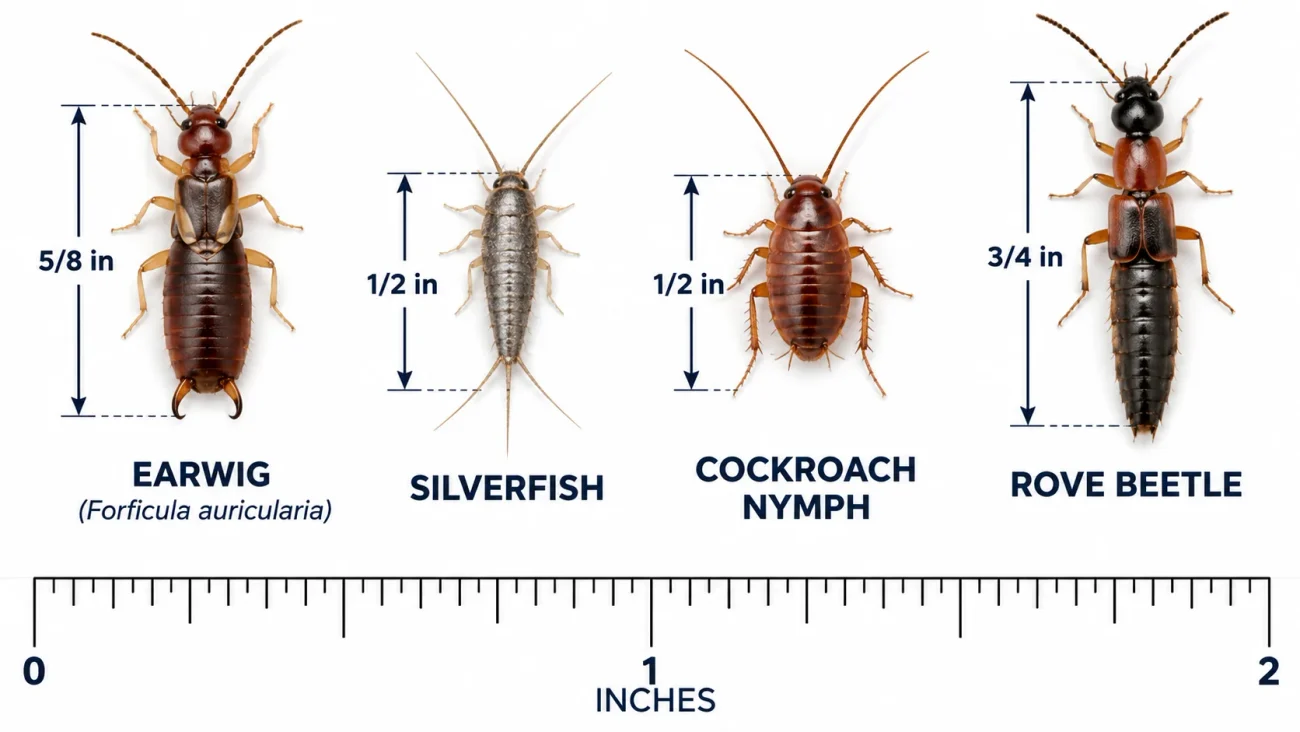
People confuse earwigs with silverfish, cockroaches, and a few other pests. Correctly identifying an earwig infestation is the first step, because silverfish and cockroach treatments don’t work on earwigs. Quick ways to tell:
- Earwig: Earwig: Dark reddish-brown, flat, about 5/8 inch long (some larger species reach 3/4 inch), with the signature forceps or pincers on the back end. Male pincers curve; female pincers stay straight.
- Silverfish: Silvery-grey, teardrop-shaped, three tail filaments at the back. No pincers.
- Cockroach nymph: Oval, shiny, with long antennae. No pincers.
- Rove beetle: Similar body shape but no pincers and often has visible wing covers.
Plant damage is also a useful tell. Earwig damage shows up as ragged, irregular holes. Slug damage leaves slime trails. Caterpillar damage usually comes with visible frass or silk webbing. Cutworm damage severs stems at the base. If you want to be certain, go out at night with a flashlight. Earwigs are nocturnal and you will catch them in the act.
The Best Earwig Killers in 2026
Not every spray can stop a real earwig infestation, so we tested which killers actually work. Most of them will technically kill an earwig if you spray one directly. That is not the same as solving an infestation. Earwig killers fall into five real categories, and each one has a specific job:
- Contact sprays kill on contact but have no lasting effect. Good for the earwig you see right now, useless for the 500 you don’t.
- Residual barrier sprays leave an invisible chemical film that keeps killing for 30 to 90 days. These are what pest control pros actually use for perimeter work.
- Granular baits lie on the soil, get eaten, and kill from the inside over a few days. Best for yards and garden beds.
- Dusts cling to cracks, crevices, and damp spots where sprays wash away. The one tool that still works in wet conditions.
- Organic and natural products use iron phosphate, spinosad, soap, or essential oils. Slower but safer around kids, pets, and vegetable crops.
Why Your DIY Spray Feels Like It Isn’t Working
This is the complaint I hear more than any other: “I sprayed inside twice, I sprayed outside twice, I am still finding them everywhere.” Here is what’s actually happening.
The main reason most products fail to stop an earwig infestation is that they are repellent, not non-repellent. Most store-bought sprays are repellent pyrethroids. The earwig detects them and avoids the treated surface. That protects the area you sprayed but pushes the earwigs deeper into wall voids, under siding, and into untreated soil, where they keep breeding and come out somewhere you didn’t spray. We explained the same issue in our odorous house ants guide.
Earwigs also don’t live in the open. They spend 90% of their time wedged into cracks, under mulch, or in the top inch of damp soil. A spray that only hits visible surfaces misses most of the population.
Three fixes:
- Use a non-repellent insecticide outside. Fipronil (Taurus SC) and dinotefuran (Alpine WSG) don’t tip the earwigs off. Note that these are professional-grade products and availability for homeowner purchase varies by state. If you cannot buy them, a licensed pest control technician can apply them for you. They walk right through the treated zone, pick up the dose, and die back in their harborage.
- Add a dust where sprays can’t reach. Delta Dust in weep holes, wall voids, crawl space vents, and around utility penetrations covers the places a sprayer cannot.
- Treat the harborage, not just the house. Sluggo Plus or Niban bait broadcast across the yard, especially along the dripline and under mulch beds, kills the earwigs where they actually live.
Miss any of these three and a liquid spray alone will feel like it isn’t working, because it isn’t.
How to Get Rid of Earwigs Inside Your House (Room by Room)
The right way to treat an earwig infestation changes from room to room, so don’t use the same spray everywhere. Chasing them with the same spray in every room wastes time and product. Here is what to do in each space where they actually show up.
Bedroom and Bed
Finding an earwig in your bed is the worst version of this problem. People lose sleep over it, literally. Nothing in standard pest control advice addresses it, so here’s a real protocol:
- Pull the bed away from the wall by at least 4 inches. Earwigs usually reach beds by walking up the wall and dropping from the ceiling or climbing up a bedskirt.
- Remove the bedskirt if you have one. It is a ladder straight onto your mattress.
- Put each bed leg in a shallow dish of mineral oil or soapy water. This creates a moat an earwig cannot cross.
- Vacuum the mattress seams, box spring, and headboard once a week.
- Run a dehumidifier in the bedroom if humidity stays above 50%. A cheap hygrometer tells you.
- Place a cotton ball soaked in peppermint essential oil on each nightstand and under the bed. Reapply every 3 days. Not a magic bullet, but earwigs genuinely avoid the smell.
- Check window sills every morning for a week. If you see one or two there daily, that is your entry point. Seal it and caulk around the window frame.
Bathroom
Bathrooms give earwigs the two things they love most: moisture and dark cracks. They usually come up through drains, through gaps around pipes under the sink, or from a vent fan opening.
- Pour 1 cup of white vinegar down every drain (sink, tub, shower, floor drain). Follow with hot water. Do this weekly for a month.
- Keep drain stoppers closed overnight or use silicone drain covers.
- Caulk the gap between the countertop and backsplash, and around any pipe penetration under the sink.
- Run the vent fan during and for 20 minutes after every shower.
- Dust Delta Dust into the gap behind the toilet base, inside the vanity cabinet along the back wall, and around any pipe collar. The dust stays put even when the room gets humid.
- Check the weatherstripping on the door. A quarter-inch gap under the bathroom door is a highway.
Kitchen
Earwigs in the kitchen usually mean one of two things: they are coming in under the sink from a wet cabinet, or they are hitching in on produce and groceries from the garden.
- Empty the cabinet under the sink. Check for water staining, run a fingertip along pipe joints, and tighten anything weeping. One slow drip under the sink is a 5-star earwig hotel.
- Caulk around the base of the dishwasher. It is a common entry gap people forget.
- Store dry goods in airtight glass or hard plastic, not paper bags or the original cardboard. Sugar bowls, flour canisters, and oat containers should all seal.
- Dust a thin line of diatomaceous earth behind the fridge, dishwasher, and oven once a quarter. These are warm, dark, rarely-cleaned zones.
- Inspect fruit, flowers, and herbs before bringing them in from the garden. Earwigs love to tuck under strawberry caps and inside corn husks.
- Rinse the kitchen sink every night and run the garbage disposal with cold water for 15 seconds. A moist disposal chamber is irresistible to them.
Basement and Crawl Space
This is where small earwig problems become big earwig problems. A damp basement is a year-round nursery.
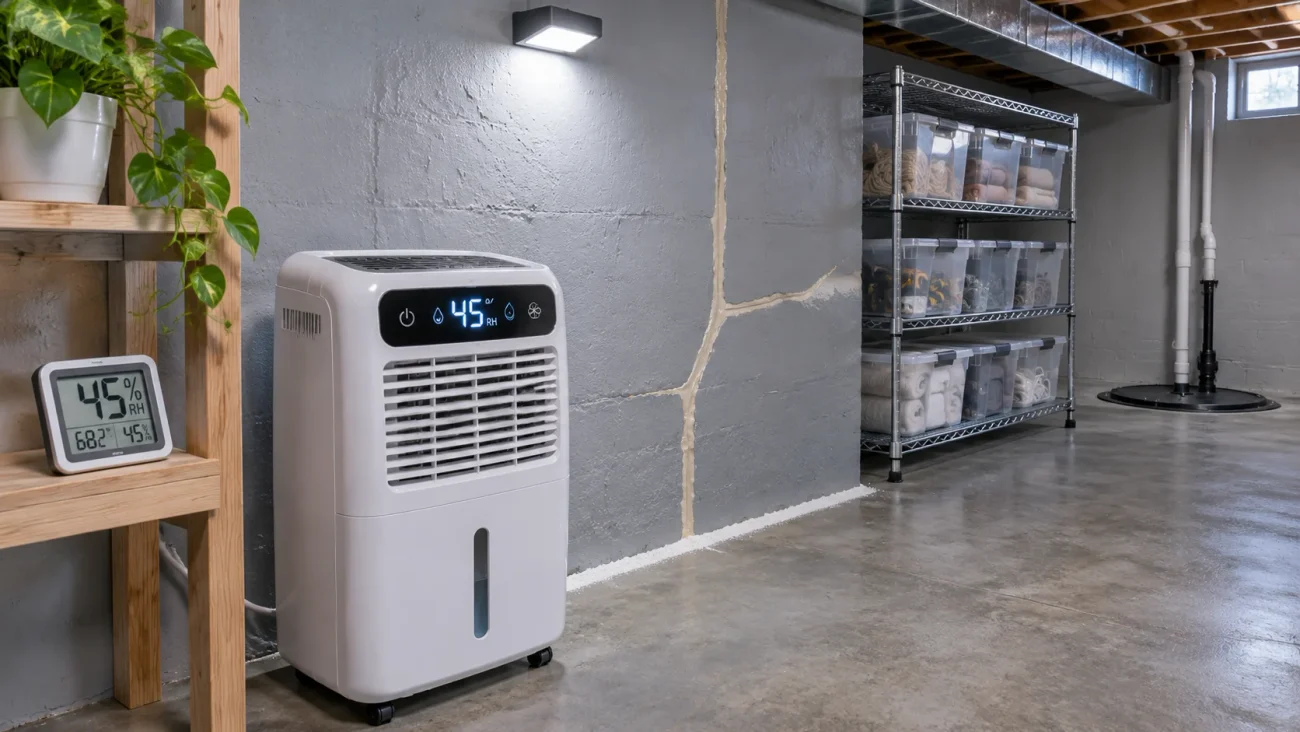
- Run a dehumidifier aiming for 45 to 50% relative humidity. Anything higher invites them to stay.
- Seal foundation cracks with hydraulic cement or polyurethane caulk. Pay special attention to where pipes and conduit enter the wall.
- Clear leaves, debris, and vegetation from window wells. These fill up with earwigs and feed them straight into the basement.
- Dust crawl space vents and the inside perimeter with Delta Dust. It survives the moisture a regular spray can’t.
- Check the sump pump pit weekly. Earwigs love it and will climb out as water levels drop.
- Install or repair a vapor barrier on the crawl space floor if there isn’t one. Bare dirt is a water source.
Laundry Room
Washer hoses, dryer vents, and utility sinks all create moisture and entry points.
- Check the dryer vent hose where it exits the exterior wall. Replace the louvered flap if it is cracked or stuck open, and add a pest cover.
- Inspect the washer supply line and drain hose for drips, and look at the shut-off valves on the wall.
- Pull the washer and dryer out once a year and clean behind them. Dust diatomaceous earth lightly along the baseboard before pushing them back.
- Fix any floor drain that smells or has a dry trap. A dry drain is an open door.
Potted Plants and Houseplants
Earwigs ride into your home inside pots, and the soil keeps them fed and watered for weeks. If you bring potted plants in for the winter, assume at least one is carrying passengers.
- Submerge the entire pot in a bucket of room-temperature water for 15 to 20 minutes. Any earwig inside will float to the surface.
- Top-dress the soil with a thin layer of food-grade diatomaceous earth or horticultural sand. Earwigs avoid crossing it.
- Let the top inch of soil dry out between waterings. Overwatering is how indoor plants turn into earwig farms.
- Inspect drainage saucers every couple of days. Standing water is the biggest giveaway.
- Quarantine new plants and plants coming in from outside for a week on a hard surface where you will spot any movement.
Garage, RV, and Shed
These are the three most-forgotten earwig breeding grounds. Cool, damp, dark, and usually loaded with cardboard.
- Toss or replace cardboard storage boxes with clear plastic bins. Cardboard holds moisture and smells like food to earwigs.
- Sweep and dust the garage perimeter every 60 days with diatomaceous earth or a bifenthrin granular bait.
- Keep the garage door bottom seal in good shape. A torn or flat seal is the biggest single entry point in most homes.
- In the RV, pull slide-outs fully in before storing, check the water heater bay and the generator compartment, and leave a few DE-dusted rolled newspapers inside as traps between trips.
- Keep the shed floor clear. Hang tools, elevate the lawn mower on blocks, and don’t stack pots directly on the ground.
How to Get Rid of Earwigs Outside (Yard, Garden, Perimeter)
Every earwig inside your house came from outside. Until you fix the yard, you are bailing water out of a boat with a hole in it. Outdoor control is where this problem actually gets solved.
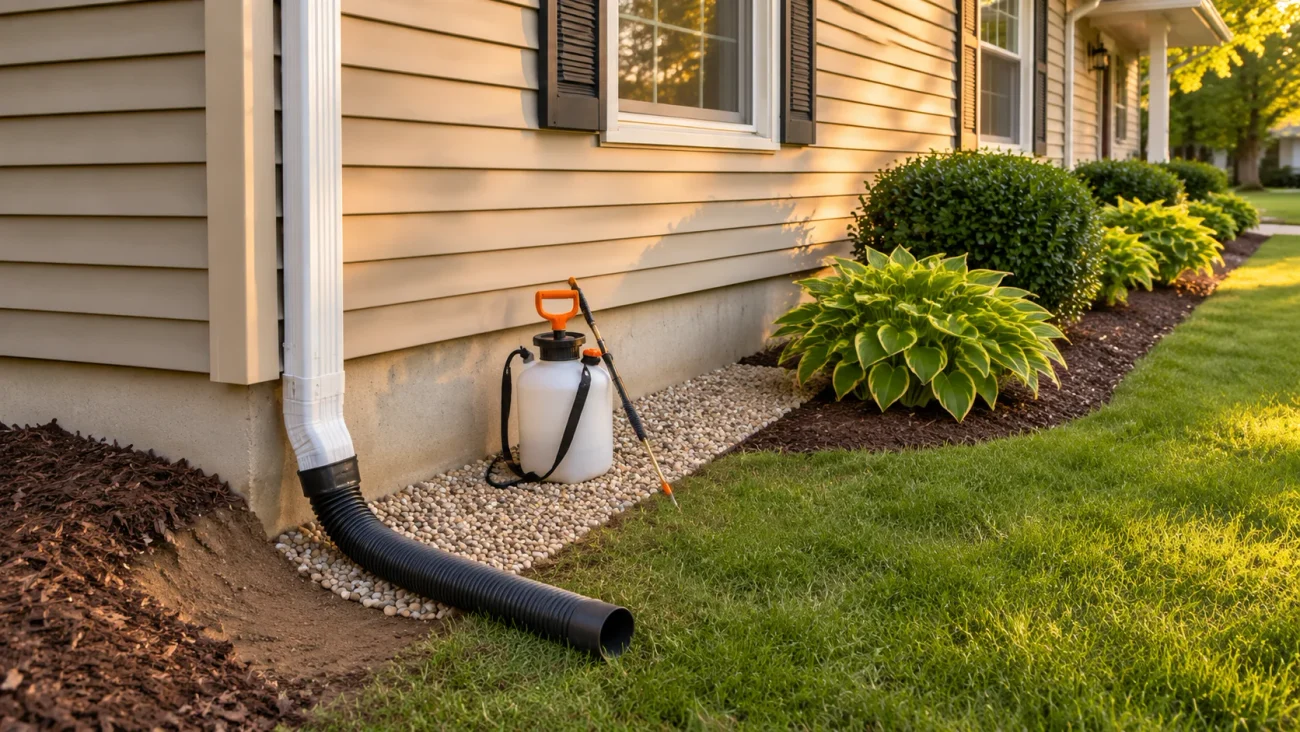
Create a Dry Sanitation Zone
The single most effective outdoor change you can make is keeping a 6 to 12 inch dry, bare perimeter around your foundation.
- Pull back mulch, leaf litter, and ground cover so nothing organic touches the siding.
- Switch the mulch within 3 feet of the house from wood or bark to pea gravel, river rock, or rubber mulch. Organic mulch holds the moisture earwigs need.
- Clear out leaves from gutters, window wells, and basement stairwells. A clogged gutter dumping water next to the foundation is an earwig invitation written in neon.
- Trim shrubs back at least 12 inches from the wall and prune low branches that touch the siding.
- Move firewood, lumber, and pots at least 20 feet from the house and stack firewood off the ground.
Build a Trap Grid
One trap catches a few earwigs. Twenty traps catch thousands. A proper trap grid is what finally turns the population curve downward.
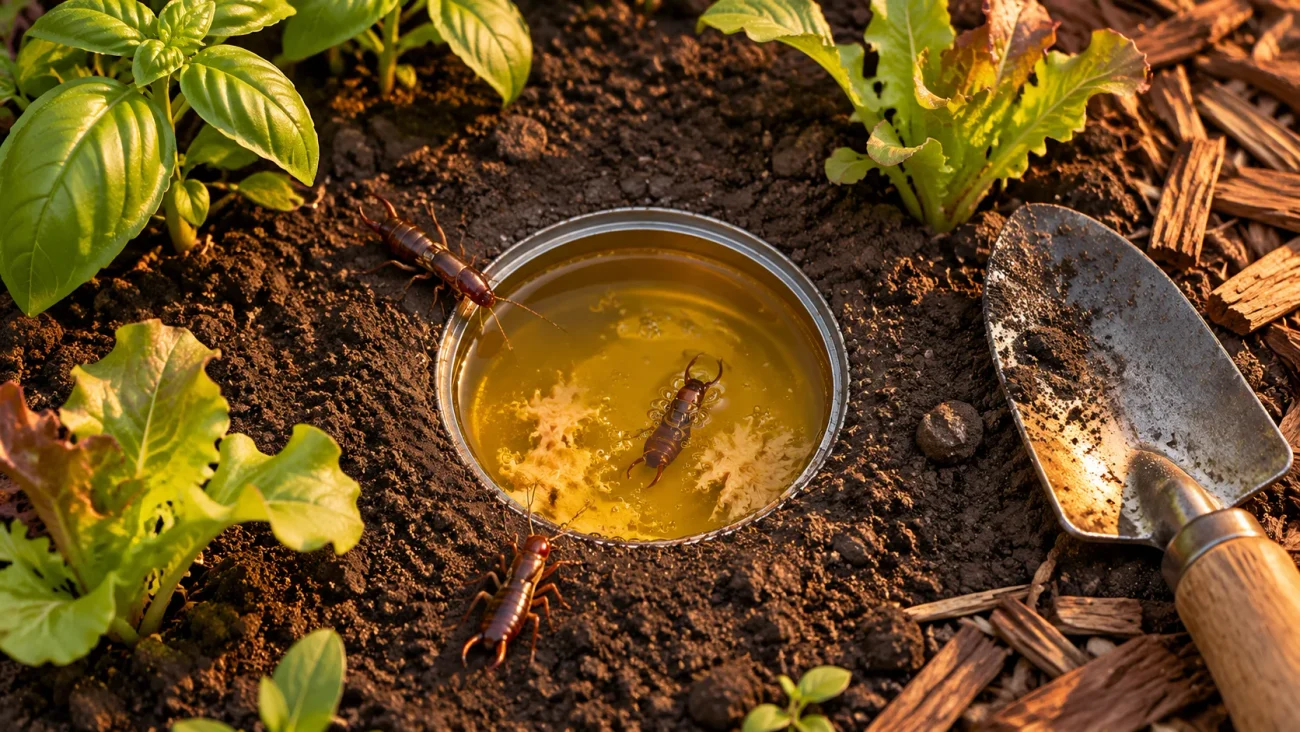
- Space tuna oil cans every 6 to 10 feet along the dripline of garden beds, around the foundation, and near any plant showing damage.
- Bury each can so the rim is flush with the soil. Earwigs walk in, cannot climb out.
- Check every morning, empty the catch into soapy water, and refill with fresh oil.
- Run the grid every night for 2 weeks at minimum. Longer in a severe infestation.
- In vegetable beds, add rolled newspaper traps between rows. Shake into soapy water at sunrise.
In a heavy infestation year, homeowners running 20 to 50 cans have reported catches in the thousands over a single season. Scale your trap grid to match what you are catching, not what you expect.
Apply a Perimeter Barrier Spray
For moderate to severe infestations, a chemical barrier is the backbone of control. Done right, it works for 90 days.
- Pick a bifenthrin or deltamethrin product (Ortho Home Defense Max for DIY, Talstar P or Suspend PolyZone for pro-grade).
- Spray a continuous band 3 feet up the foundation and 3 feet out onto the ground, all the way around the house.
- Hit doorway thresholds, window frames, dryer vents, hose bibs, utility penetrations, and weep holes with extra attention.
- Spray at dusk when earwigs are becoming active and bees have gone in.
- Reapply after heavy rain or every 60 to 90 days, whichever comes first.
- For non-repellent coverage in congregation zones, add a Taurus SC or Alpine WSG application once a quarter. Earwigs walk through it without avoiding it and die back in their harborage.
Protect Fruit Trees
Earwigs climb fruit trees at night and leave by dawn. Stop the climb and you stop the damage.
- Wrap the lower trunk with a 4-inch band of Tanglefoot Pest Barrier or a sticky horticultural barrier.
- Remove tree suckers, weeds, and ground cover within 2 feet of the trunk base.
- Thin heavy fruit sets so ripening fruit isn’t touching leaves or other fruit (earwigs use those bridges).
- Harvest ripening stone fruit as soon as it is ready. Overripe fruit is an earwig buffet.
- For older trees, scrape loose bark off the lower trunk where earwigs shelter during the day.
Change Your Outdoor Lighting
Bright white porch and patio lights pull earwigs straight to your doors.
- Swap white bulbs for warm yellow LED or sodium vapor bulbs in porch lights, garage lights, and patio fixtures. Yellow light is far less attractive to earwigs and most other insects.
- Move the bug zapper away from the house. If you want one, hang it 25 to 30 feet from the door. Close to the door, it just lures more bugs toward your entry.
- Turn off landscape lighting closest to doors and windows once you notice earwig activity. Even one week dark can break the pattern.
12 Homemade Earwig Killers That Actually Work
Store-bought products have their place, but a well-placed DIY trap costs pennies and catches earwigs by the hundred. Here are the twelve that consistently work, with exact recipes.
1. Tuna Oil Can Trap (the gold standard) Take a cat food or tuna can, fill it with 1/2 inch of vegetable oil, add a few drops of oil drained from a can of tuna packed in oil. Bury it so the rim is level with the soil. Earwigs climb in, cannot climb out.
2. Soy Sauce and Oil Trap Mix equal parts soy sauce and vegetable or olive oil (about 1/4 cup each) in a plastic container. Punch 4 to 5 pencil-sized holes in the lid. Bury or set in problem areas. The soy sauce lures, the oil drowns.
3. Rolled Newspaper Trap Roll a section of damp newspaper loosely into a 2-inch tube, secure with a rubber band. Place in garden beds or dark corners just before dark. Shake the next morning into soapy water.
4. Corrugated Cardboard with Oat Bait Punch pencil holes along the bottom edge of a shoebox-sized piece of cardboard. Sprinkle a tablespoon of rolled oats or bran inside. Lay out at dusk, collect at dawn.
5. Bamboo Tube Trap Cut 8 to 10 inch lengths of bamboo (both ends open). Lay horizontally in the garden. Shake earwigs out into soapy water each morning.
6. Garden Hose Section Trap Same principle as bamboo: cut 8 to 10 inch pieces of old garden hose, scatter in problem areas, collect daily.
7. Beer Trap Sink a shallow dish (yogurt cup, tuna can) with the rim at soil level. Fill with cheap beer. Earwigs and slugs both drown in it. Change every 2 to 3 days.
8. Rubbing Alcohol Spray (contact kill) Mix 1 part 70% isopropyl alcohol with 1 part water in a spray bottle. Spray earwigs directly. Kills on contact. Test on plant leaves first because it can scorch tender foliage.
9. Dish Soap Spray Mix 1 tablespoon of liquid dish soap into 1 quart of water. Spray directly on earwigs. Breaks their waxy cuticle and dehydrates them. Rinse plants after a few hours to prevent leaf burn.
10. Diatomaceous Earth Perimeter Dust Use food-grade DE only. Wear a dust mask when applying. Dust a thin, even line (not a pile) around the foundation, along baseboards, in cracks, and in a ring around vulnerable plants. Reapply after rain or watering, because wet DE stops working.
11. Boric Acid Sugar Bait Mix 1 part boric acid powder with 3 parts white sugar. Sprinkle in thin lines along baseboards, under sinks, and in basement corners. Keep away from kids and pets. Works slowly over 1 to 2 weeks.
12. Vinegar Drain Flush Pour 1 cup of white vinegar down every drain weekly, followed by hot water.Kills earwigs lurking in drain traps and disrupts the moisture layer they live in.
Are Earwigs Dangerous to People, Kids, and Pets?
While a large earwig infestation is creepy, earwigs are not dangerous to people, kids, or pets. Long answer with the parts that actually matter:
Do Earwigs Bite?
Earwigs don’t bite in the way a mosquito or spider bites. They can pinch with their rear forceps if you grab one or squeeze them in clothing. The pinch feels like a sharp nip, rarely breaks the skin, and transmits no venom. Wash with soap and water. If the area swells or you see signs of infection a few days later (rare), see a doctor.
Do Earwigs Actually Crawl in Your Ears?
The name is Old English: “ēarwicga,” meaning “ear insect.” The myth that they tunnel into brains is pure folklore. In reality, any small insect can wander into a sleeping person’s ear occasionally, and earwigs are no more likely to do so than roaches, gnats, or beetles. There are a handful of documented cases historically, but they are extremely rare and the insect is easily removed by a doctor. Earwigs do not seek out ears, do not burrow into brains, and do not lay eggs in people.
Are Earwigs Harmful to Dogs or Cats?
No. Dogs and cats sometimes eat earwigs with no ill effect. The defense secretion smells bad and may cause mild mouth irritation or drooling, but it is not toxic. If your pet eats one and acts normal, you don’t need to do anything. If they are around treated areas (perimeter sprays, baits), always follow the product label’s re-entry time before letting pets back in.
Why do earwigs smell so bad when you squish them?
Several species, including the European earwig, carry scent glands that release a yellow-brown quinone liquid when the insect is startled or crushed. It is a defense chemical, closely related to what bombardier beetles spray. The smell is why you should pick them up with a vacuum or a paper towel, not your fingers.
What If One Lands on My Baby or in the Crib?
Remove it with a tissue, check the crib and bedding for more, and inspect the room for entry points, especially window screens, closet vents, and under-crib storage. One earwig isn’t dangerous, but if you are finding them repeatedly near a baby’s crib, treat it as a moderate infestation and act on the room-by-room protocol above.
Should You Actually Kill Them? The Beneficial Side
It feels obvious that the answer is yes. In some yards, it isn’t.
Earwigs are omnivores. They eat decaying plant matter, and they also eat aphids, mites, and insect eggs, which makes them a useful predator in certain gardens. The UC IPM program has documented their role in biological aphid control.
Use this quick decision guide:
- If your yard is mostly lawn, trees, and woody ornamentals, leave them alone. They are doing more good than harm.
- If you grow vegetables, soft fruit, or seedlings, control them. They will destroy young plants in a night.
- If you are seeing them indoors in multiple rooms, control them regardless. Indoor earwigs offer you zero benefit.
- If you grow flowers like dahlias, marigolds, or zinnias, control them selectively around those plants while leaving populations elsewhere alone.
The goal is management, not extinction. Reduce them where they damage what you care about, tolerate them where they help.
Frequently Asked Questions
What kills earwigs instantly?
Direct contact with rubbing alcohol spray (1:1 with water), insecticidal soap, or a pyrethroid spray like Raid or Ortho Home Defense kills earwigs within seconds. For infestations, instant kills don’t matter much; residual sprays like bifenthrin or deltamethrin, which keep working for 60 to 90 days, do.
Do earwigs bite humans?
Not really. They can pinch with their rear forceps if you grab one, but the pinch rarely breaks skin and transmits no venom. They do not bite in the mosquito or spider sense.
Do earwigs crawl in your ears?
Almost never. The myth comes from the Old English word “ēarwicga” (ear insect) and has no basis in earwig behavior. They do not seek out ears and do not burrow into brains.Almost never.
Does Dawn dish soap kill earwigs?
Yes. One tablespoon of dish soap in a quart of water, sprayed directly, breaks their waxy cuticle and dehydrates them. Rinse plants a few hours after spraying to prevent leaf burn.
Does vinegar kill earwigs?
White vinegar poured down drains kills earwigs living in the trap and makes the area less attractive. Sprayed directly on earwigs it works but burns plants, so use it on hard surfaces, not foliage.
What smells do earwigs hate?
Peppermint, eucalyptus, lavender, tea tree, citrus, cinnamon, and basil essential oils. Dilute 10 drops in 8 ounces of water and spray around entry points. Reapply every few days.
How long does it take to get rid of an earwig infestation?
Mild infestations clear in 7 to 14 days. Moderate infestations take 3 to 4 weeks of consistent trapping, sealing, and perimeter treatment. Severe infestations take 6 to 8 weeks or professional help.
Can earwigs survive winter inside?
Usually not. Indoor conditions are too dry for them to thrive long-term. Most indoor earwigs die within days if they can’t find moisture. They don’t breed in homes.
What is the best earwig killer for lawns?
For the garden, Sluggo Plus (iron phosphate and spinosad, OMRI-listed) is the gold standard. For the yard perimeter, a bifenthrin granular bait like Ortho BugClear or a perimeter spray of Talstar P works for 90 days.
Final Word
An earwig infestation feels like an invasion because the first ones you see are never the whole picture. They come from the mulch, the gutters, the woodpile, and the damp basement corner nobody checks. Kill the ones you see, yes. But fix the water and the hiding spots too, or they come back next July.
I have walked this plan through my own house twice. Both times, the sightings dropped to zero within 10 days. Most of the work was not spraying. It was moving mulch, extending a downspout, and running a dehumidifier.
Start with the outside. Trap the garden. Dehumidify the basement. Seal the drains. Follow this earwig infestation protocol, and your home will be earwig-free in 10 to 30 days. Save the chemicals for the perimeter, not the kitchen counter. That is the plan, and it works whether you are in Phoenix, Pittsburgh, or Portland.
“If the sightings do not drop in three weeks, call a local pest pro. There is no shame in it” and in 2026 the going rate is reasonable.
References
Ohio State University Extension — Earwigs (HYG-2068)
David J. Shetlar, Jennifer E. Andon, Grace Whitmore, Department of Entomology
https://ohioline.osu.edu/factsheet/HYG-2068
NC State Extension — Earwigs
Waldvogel, M. and Alder, P., Department of Entomology and Plant Pathology
https://content.ces.ncsu.edu/earwigs-2