House Bugs Identification Guide: Common Household Pests and What to Do Next
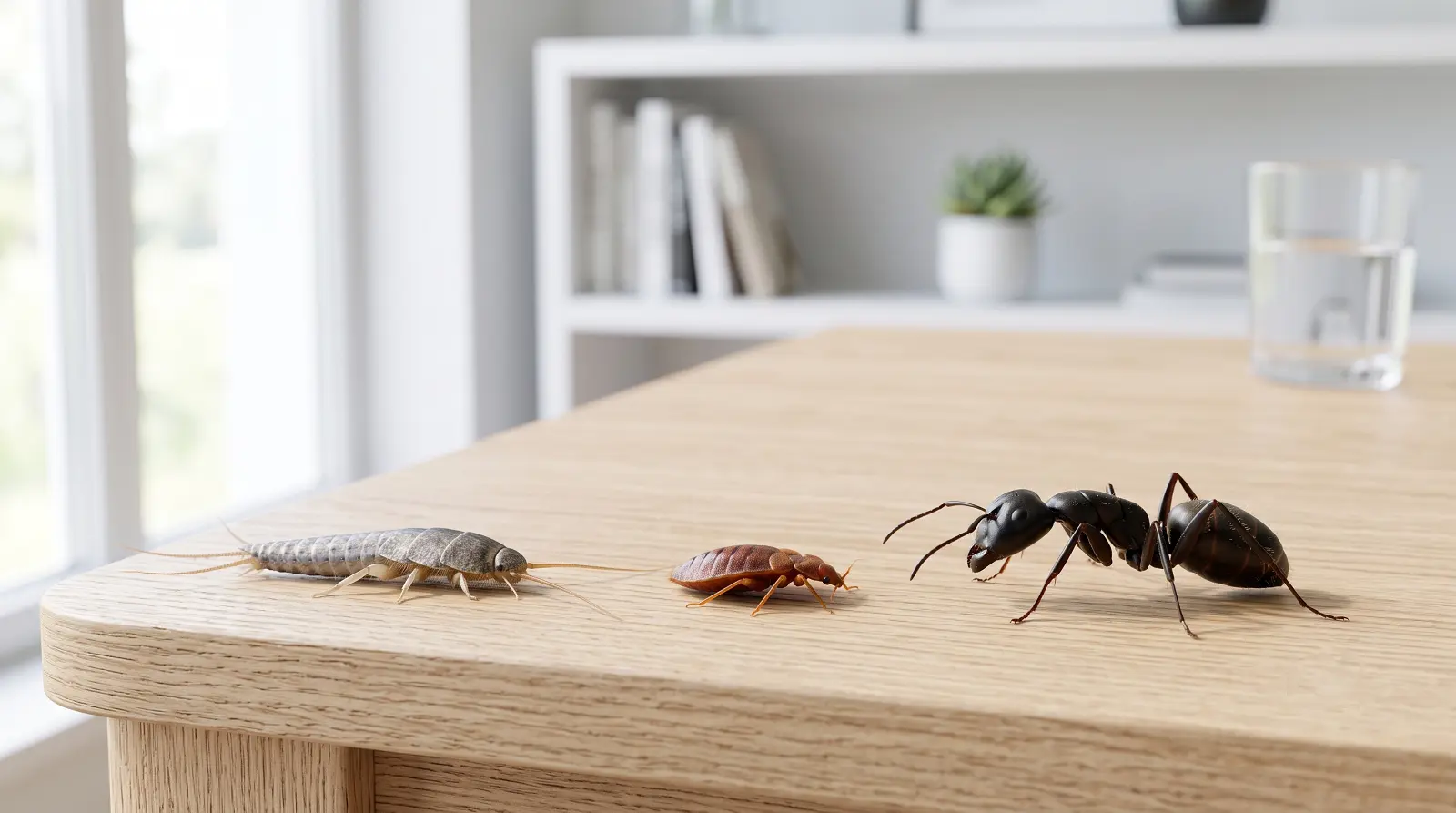
Discovering house bugs in your home is never pleasant, but identifying them correctly is the essential first step before taking action. Using the wrong pest control method wastes time and money and, in most cases, aggravates the real problem.
House bugs range from harmless nuisances, such as silverfish and ladybugs, to highly destructive insects like termites and carpenter ants. Each one must be dealt with in a completely different way.
This guide covers all the major kinds of house bugs you are likely to encounter in the US, how to quickly recognize them, which ones pose a genuine health or property concern, and what to do next.
Why It Is Important to Identify House Bugs Correctly
When most people see house bugs, they immediately reach for a spray can. This is usually the wrong first step.
Exposure to pesticides is much more hazardous indoors than outdoors because the chemicals do not decompose as quickly inside. They are not degraded by wind, rain, sunlight, or soil microorganisms. For this reason, the University of Maryland Extension strongly advises minimizing indoor pesticide use whenever possible.
Beyond health hazards, failing to identify house bugs correctly leads to choosing the wrong solution. Carpet beetles are often confused with bed bugs, and termites are frequently mixed up with flying ants. These are completely different issues that require completely different treatment methods.
Three Key Observations Before Identifying Any Bug:
- Size and shape
- Color and distinctive markings
- Where in the house you found it
Common House Bugs: Rapid Identification Table
The Most Common House Bugs Explained
1. Bed Bugs
Bed bugs (Cimex lectularius) are small, flat, reddish-brown insects roughly the size of an apple seed. Adults are 5 to 7 mm long. Young nymphs are pale, almost transparent, and hard to see unless they have recently fed.
They hide within 8 feet of where people sleep, coming out at night to feed on human blood. During the day, they squeeze into mattress seams, box springs, headboard crevices, and even screw holes.
Identification: Oval and flat before feeding; swollen and darker afterward. Transparent yellow-white nymphs; reddish-brown adults. Found hiding in tight seams, rarely out in the open.
Evidence of Infestation: Rust-colored blood spots on linens, dark fecal spots that bleed into fabric, discarded exoskeletons, and a sweet, musty odor in severe cases.
What to Do: Bed bugs usually require professional treatment. DIY sprays rarely reach all life stages. Heat treatment is currently the most effective method, killing bugs, nymphs, and eggs in all hiding spots at temperatures above 113°F (45°C).
2. Cockroaches
North America is home to 69 cockroach species, but the species found indoors almost always belong to four main types:
Cockroaches pose serious health risks. They carry bacteria such as Salmonella and E. coli, contaminate food surfaces, and shed skin particles that trigger asthma and allergies. Once inside, they release pheromones that attract more cockroaches.
Identification & Behavior: Oval, flat bodies with long antennae and six spiny legs. German cockroaches feature two parallel dark stripes on their pronotum (the shield behind the head). They move quickly and scatter immediately when lights turn on.
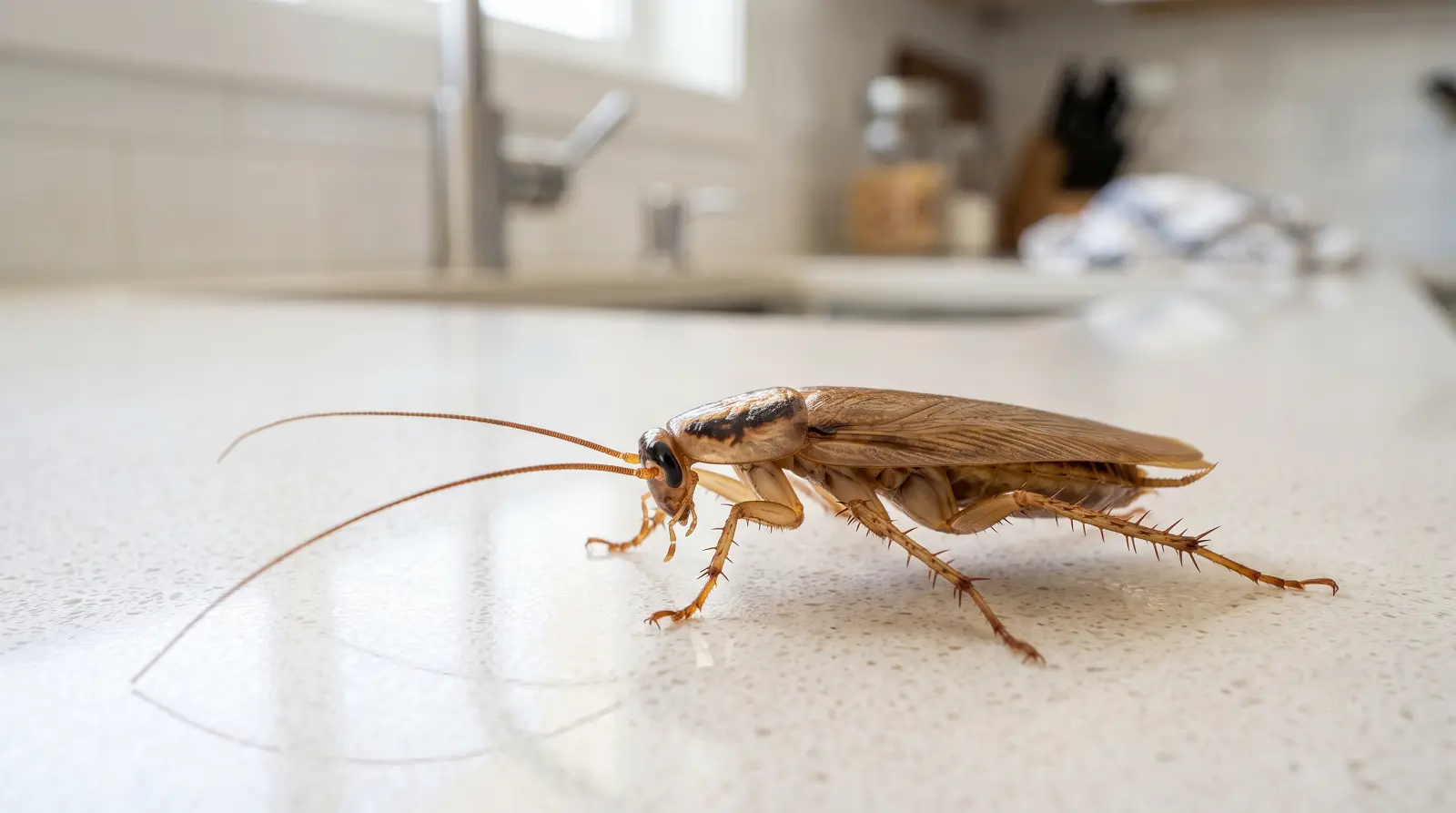
What to Do: Eliminate all food sources, repair plumbing leaks, and seal entry cracks. Place gel bait stations near cabinet hinges and under appliances. Professional treatment is recommended for anything beyond an isolated sighting.
3. Ants
Not all ants are created equal. Properly identifying the species completely alters your treatment strategy.
Carpenter Ants (Camponotus spp.): 6 to 13 mm long, black or reddish-black, with three body segments and elbowed antennae. They do not eat wood, but hollow it out to nest, creating smooth galleries. A key sign of their presence is sawdust-like frass near walls or window frames.
Fire Ants (Solenopsis invicta): Reddish-brown, 2 to 6 mm long, and aggressive. Their painful stings can trigger severe allergic reactions in sensitive individuals. They nest in outdoor mounds and enter homes searching for food.
Pavement Ants (Tetramorium caespitum): Dark brown to black, 2.5 to 3 mm long. They nest under concrete slabs and driveways, entering homes through foundation cracks and leaving small piles of dirt near entry points.
Odorous House Ants (Tapinoma sessile): Small (2 to 3 mm) and dark brown. They emit a distinct rotten coconut odor when crushed. They nest in wall cavities and under floors near moisture.
What to Do: For carpenter ants, find and repair any moisture issues first, as they target damp or rotting wood. Bait stations work far better than sprays for all ant species because workers carry the bait back to feed the entire colony.
4. Termites
In the US alone, termites cause over $5 billion in property damage annually. They are the most destructive household pest. Distinguishing between termites and flying ants is critical because swarming individuals look very similar.
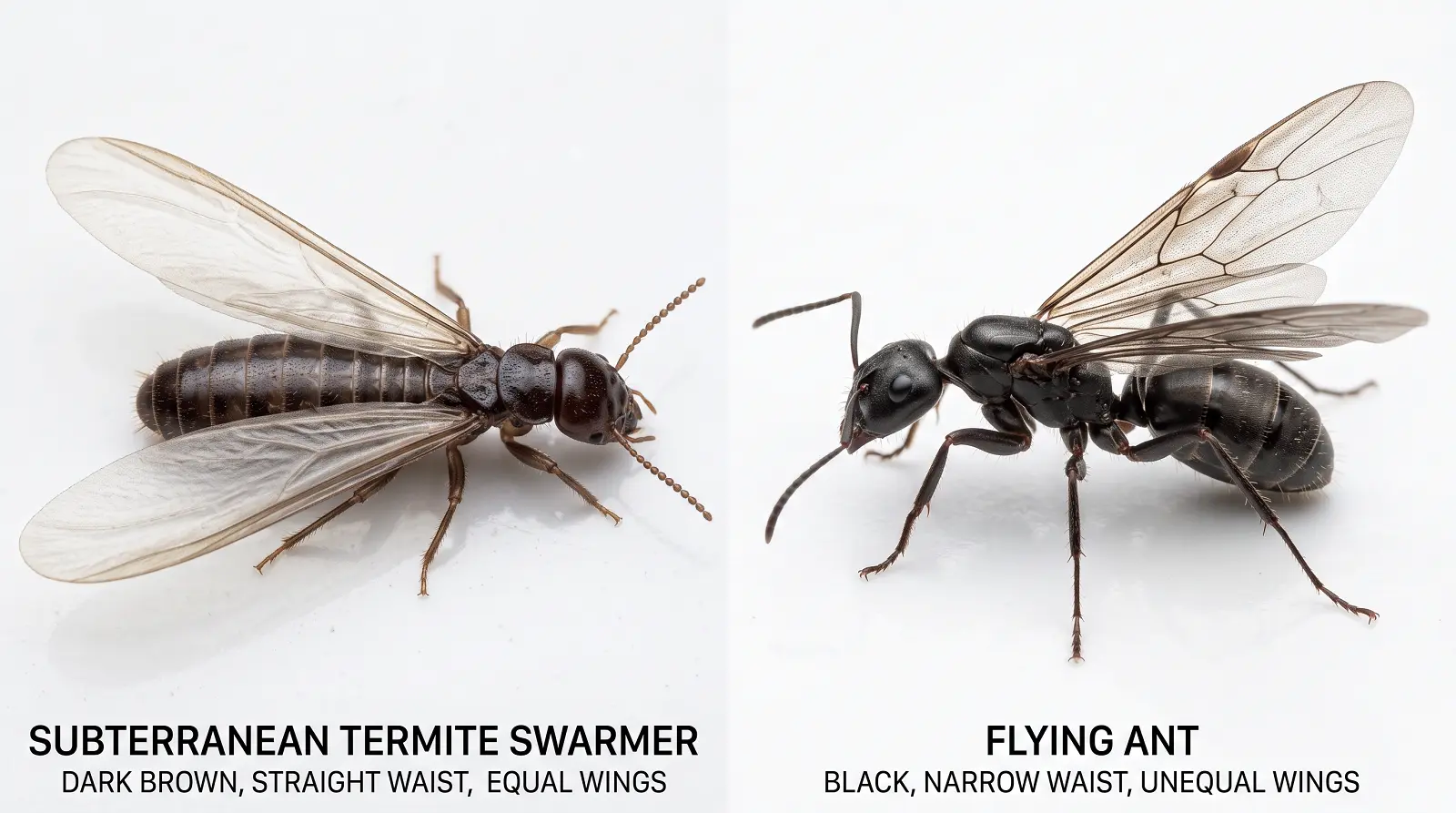
The subterranean termite (Reticulitermes spp.) is the most common species in the US. They live underground and build mud tubes along foundation walls to access wood. These pencil-sized mud tubes are the clearest indicator of an infestation. Drywood termites also leave behind small droppings called frass, which resemble piles of coffee grounds or sawdust near infested wood.
What to Do: Always hire a licensed pest control company. Termite control is not a DIY task. High-risk homes should have annual professional inspections.
5. Silverfish
Silverfish (Lepisma saccharina) are ancient insects, virtually unchanged for 400 million years. They are silver-gray, 12 to 19 mm long, and move with a distinct fish-like wriggle, featuring three long tail filaments.
They do not bite or transmit diseases, but they feed on starchy materials: paper, book bindings, wallpaper paste, clothing fibers, and cardboard packaging. Seeing one silverfish usually means more are nearby, as they reproduce quickly in damp environments.
Where They Live: Bathrooms, basements, under sinks, and inside wall cavities near plumbing. They require humidity levels above 75% to thrive.
What to Do: Dehumidify the space, fix moisture leaks, and store books and papers in sealed plastic containers. Use sticky traps to monitor and control their numbers.
6. Earwigs (Pincer Bugs)
Earwigs (Forficula auricularia, Order Dermaptera) are dark brown, 14 to 20 mm long, and easily identified by the prominent curved pincers on their abdomen. Despite their intimidating appearance, these pincers are used for defense against other insects, not humans. Earwigs are harmless, do not spread disease, and rarely pinch hard enough to break skin.
In fall, they move indoors seeking warmth, favoring damp areas near drains, potted plants, and appliances.
What to Do: Seal gaps around doors and foundation cracks, reduce indoor moisture, and place sticky traps near entry points. Professional treatment is rarely necessary.
7. Stink Bugs (Brown Marmorated Stink Bug)
The brown marmorated stink bug (Halyomorpha halys) is an invasive species now found across most of the continental US after first being spotted in Pennsylvania in 1996. Measuring 14 to 17 mm long, they have a distinctive shield-shaped body with a mottled brown-gray pattern and alternating light and dark bands along the edges of their abdomen.
They do not bite, sting, or cause structural damage. Their main nuisance factor is the foul odor they release when crushed or disturbed. (Their secretions can cause mild respiratory irritation in asthmatics.)
In late September and October, these house bugs gather on warm exterior walls and slip inside homes to overwinter in wall voids, attics, and behind baseboards.
What to Do: Before autumn, seal gaps around windows, doors, and utility penetrations. Never crush them indoors; instead, vacuum them up, seal the vacuum bag immediately, and dispose of it in an outdoor trash bin.
8. Carpet Beetles
Carpet beetles are frequently mistaken for bed bugs because both are small, oval, and found near fabrics.
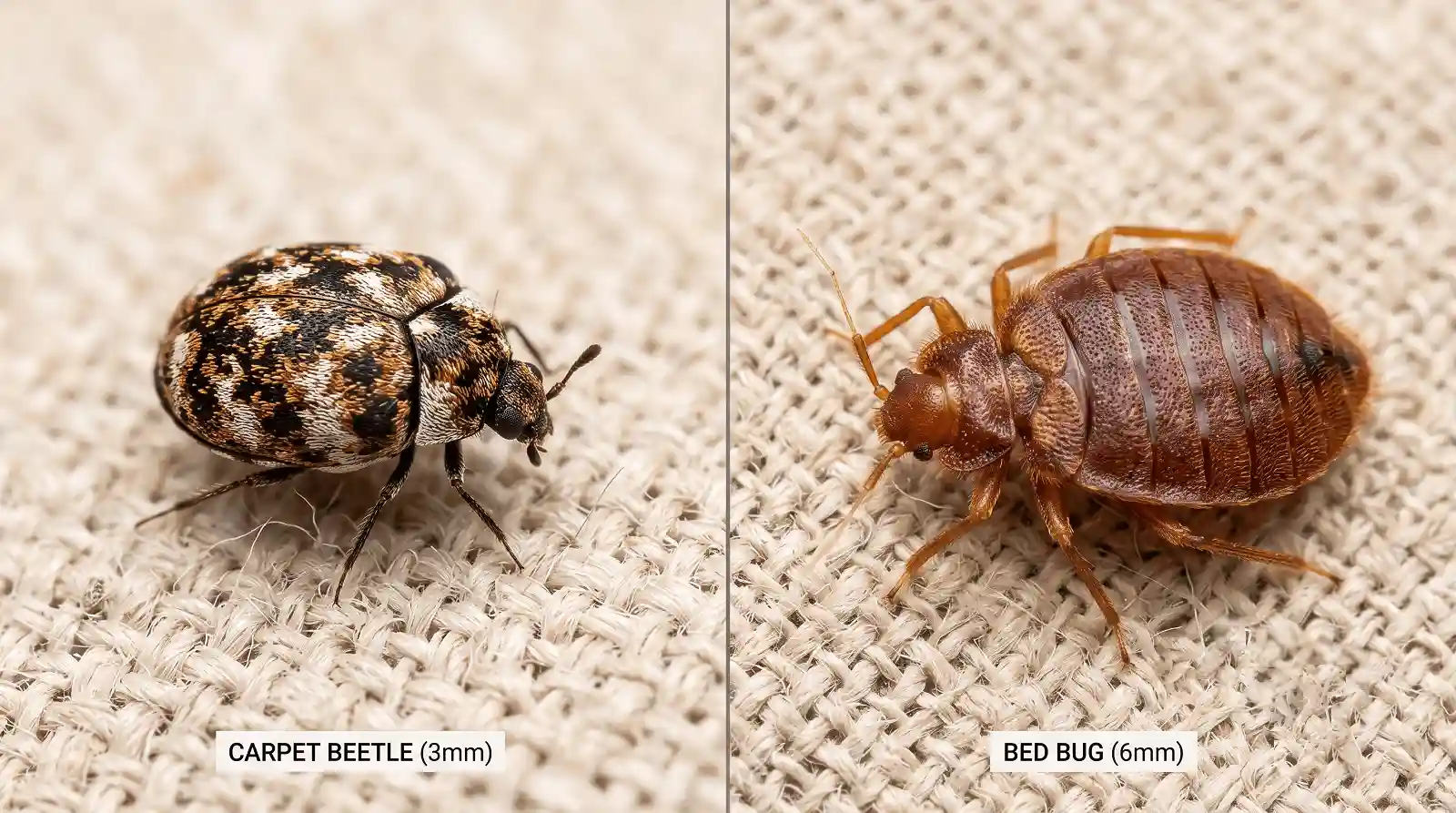
Carpet beetles (Anthrenus spp. and Attagenus spp.) do not bite, but their bristled larvae cause skin reactions (carpet beetle dermatitis) resembling bug bites.
The larvae feed on natural animal fibers like wool, silk, leather, feathers, and fur. They also feed on stored spices, dried flowers, and old bird or animal nests in attics.
What to Do: Thoroughly vacuum carpets and upholstered furniture. Store woolens in airtight containers or cedar chests. Dispose of infested items, and inspect attics or wall voids for old bird or rodent nests.
9. Clothes Moths
Webbing clothes moths (Tineola bisselliella) are small, buff-colored moths with a wingspan of about 12 mm and a body length of 9 to 13 mm. Unlike most moths, they avoid light and are weak fliers, often seen fluttering weakly in dark closets.
Adult moths do not damage fabric; the destruction is caused entirely by their larvae. These creamy white caterpillars feed on keratin, a protein found in natural animal fibers like wool, cashmere, silk, and feathers.
Signs of Damage: Irregular holes in clothing, silky tubes or webbing patches on fabric, and larval casings tucked into seam folds.
What to Do: Vacuum closet floors and walls, and wash or dry-clean susceptible garments in hot water. Store clean woolens in sealed containers. Note that cedar only repels moths; it will not kill an active infestation.
10. Fleas
Fleas (Order Siphonaptera) are tiny (1 to 3 mm), dark brown, and flattened side-to-side. They cannot fly, but they can jump up to 150 times their body length, allowing them to spread rapidly.
Pets are the primary source, but pet-free homes can acquire fleas through wild animals nesting in attics, crawlspaces, or chimneys.
How to Identify: Small insects hopping on carpets, pet bedding, or socks. Bites typically appear in clusters or lines around ankles and lower legs, unlike bed bug bites, which usually occur on exposed upper body skin during sleep.
What to Do: Treat pets immediately using veterinarian-approved products. Vacuum all carpets, rug borders, and upholstered furniture daily. Apply an insect growth regulator (IGR) containing methoprene to prevent eggs and larvae from maturing, and always dispose of vacuum bags outdoors.
11. Spiders
Spiders are arachnids, not insects. They have two main body segments and eight legs. Most household spiders are harmless and beneficial because they prey on other house bugs.
Common Harmless Species:
- Cellar spiders (Pholcus phalangioides): Long, slender legs; loose, messy webs in corners. Completely harmless.
- Wolf spiders (Family Lycosidae): Large, hairy, and fast-moving. Intimidating, but harmless to humans; they hunt actively without webs.
- Common house spiders (Parasteatoda tepidariorum): Small, brown, building tangled webs around window frames and corners.
Species of Concern:
- Black widow (Latrodectus spp.): Shiny black body with a distinctive red hourglass marking on the underside of the abdomen. Venom is potent; seek prompt medical attention if bitten.
- Brown recluse (Loxosceles reclusa): Light brown with a dark, violin-shaped mark on its cephalothorax and six eyes arranged in pairs. Bites can cause tissue necrosis. Common in the South and Midwest US.
What to Do: Reduce indoor insect populations to starve spiders out. Seal gaps and cracks around doors and windows. For black widows or brown recluses, contact a professional pest control service.
12. Pantry Pests (Indian Meal Moths and Grain Beetles)
These are two distinct pests that cause the same problem: infested stored food.
Indian meal moths (Plodia interpunctella) measure 16 mm with reddish-copper wing tips, often seen fluttering around kitchens or pantries. Their larvae spin silky webbing through grains, cereal, dried fruit, nuts, and pet food.
Sawtoothed grain beetles (Oryzaephilus surinamensis) are tiny (2.5 mm), flat, brown beetles with saw-like projections along the sides of their thorax. They infest flour, pasta, cereal, and packaged goods.
What to Do: Find and discard all infested food packages. Store uninfested dry goods in airtight glass or hard plastic containers. Vacuum cabinet shelves thoroughly. Note that pantry pests rarely travel far from their food source.
13. Drain Flies
Drain flies (Family Psychodidae) are small (2 mm), gray, fuzzy, moth-like flies commonly found hovering near sinks, shower drains, and floor drains. Their larvae feed on the organic slime that builds up inside drain pipes.
They do not bite or spread disease; their presence simply indicates a buildup of organic matter in your plumbing.
What to Do: Clean drains using an enzyme-based drain cleaner to break down organic buildup, and scrub the inside of drain traps with a pipe brush. The issue typically resolves within a week of thorough cleaning.
14. Springtails
Springtails (Order Collembola) are tiny (1 to 2 mm), gray-to-white organisms that leap when disturbed. They thrive in damp locations like houseplant soil, bathrooms, basements, and near floor drains.
They do not bite, cause structural damage, or infest food. They feed on mold, fungi, and decaying organic matter.
What to Do: Springtails are an indicator of high humidity or moisture. Use a dehumidifier, fix water leaks, and avoid overwatering houseplants. Populations naturally die off as humidity levels drop.
Bugs by Room: Household Pest Locations
Why House Bugs Enter Your Home: The Three Main Drivers
All house bugs enter for one of three reasons: food, water, or shelter. Understanding which driver is at play shapes your prevention strategy.
Food-seeking pests: Ants, cockroaches, pantry moths, and grain beetles. Eliminate open food sources, store dry goods in sealed containers, and clean up crumbs and spills immediately.
Moisture-seeking pests: Silverfish, drain flies, springtails, earwigs, and camel crickets. These pests require high humidity to survive. Fixing plumbing leaks and running a dehumidifier is usually all it takes to clear them out.
Shelter-seeking pests: Stink bugs, cluster flies, boxelder bugs, and certain spiders move indoors during autumn to overwinter. The best defense is sealing exterior gaps before cool weather sets in.
Some pests, like cockroaches and carpenter ants, are drawn by all three factors, which is why they are among the hardest pests to eliminate.
What to Do When You Find House Bugs in Your House
Step 1: Identify before acting. Record the bug’s size, color, shape, number of legs, presence of wings, and where you found it. Take a clear photo if possible.
Step 2: Check for signs of infestation. Single house bugs do not always mean an infestation. Inspect the area for droppings, eggs, shed skins, material damage, or unusual odors.
Step 3: Eliminate food and moisture sources. Addressing these root causes often resolves pest issues without needing chemical sprays.
Step 4: Use low-risk, targeted treatments. Sticky traps, bait stations, and gel baits are much safer indoors than perimeter sprays. For fabric pests, washing items at high temperatures is far more effective than chemicals.
Step 5: Call a professional when necessary. Termite activity, severe cockroach infestations, bed bugs, and venomous spiders are situations where professional pest control is essential, not a last resort.
Final Thoughts
When dealing with unwanted house bugs, acting fast without identifying the threat is the biggest mistake homeowners make. Rushing to spray off-the-shelf chemicals often leads to wasted money, unnecessary health risks, and failure to solve the root cause.
Effective management of house bugs isn’t about throwing chemicals at the problem; it’s about taking a targeted, systematic approach:
- Identify First, Treat Second: Accurately identifying house bugs ensures you use the correct product and locate the hidden nest or entry point.
- Prioritize Low-Risk Solutions: Simple moisture control, deep sanitation, and targeted DIY products are usually all you need.
- Know When to Call an Exterminator: Some infestations pose serious structural or safety risks. Save professional pest control services for high-risk invaders like termites, bed bugs, carpenter ants, and venomous spiders.
Frequently Asked Questions
What are the tiny insects in my house that I can barely see?
Insects smaller than 2 mm are usually springtails, mold mites, or grain beetles. Springtails jump when disturbed, grain beetles are found in stored pantry food, and mold mites look like moving dust on damp walls. None of these pose a direct health hazard.
What are the small brown bugs in my house?
Depending on where you find them, small brown bugs are most commonly carpet beetles, German cockroach nymphs, drugstore beetles, or sawtoothed grain beetles. Carpet beetles are found near fabrics and rugs, grain beetles infest pantry items, and cockroach nymphs scatter quickly when lights turn on.
What other bugs are commonly found in beds?
Carpet beetle larvae are sometimes found on beds because they feed on natural fibers in wool blankets or feather pillows. Dust mites also live in mattresses, but they are microscopic. Additionally, bird or rodent mites can enter bedrooms from nearby outdoor nests, causing itchy bites.
Are house bugs dangerous?
Most common house bugs are harmless to humans. The few that pose genuine risks include cockroaches (disease transmission and allergens), black widow and brown recluse spiders (venomous bites), termites (structural damage), and carpenter ants (wood destruction). Bed bugs do not transmit disease, though their bites cause severe skin irritation.
How can I keep house bugs from getting into my house?
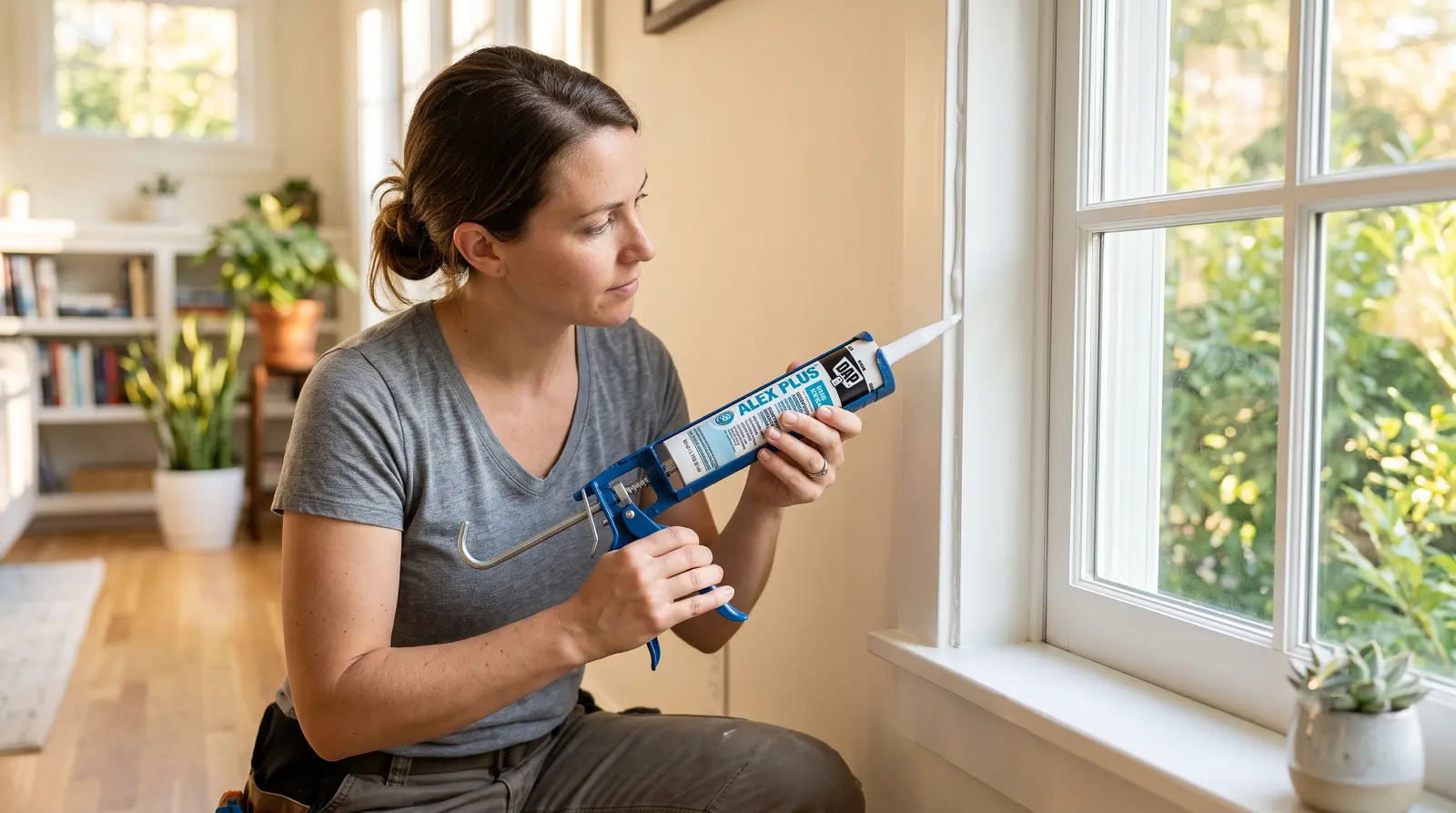
To keep house bugs from getting into your home, seal gaps around windows, doors, and utility penetrations. Install door sweeps on all exterior doors, repair damaged window screens, eliminate standing water near the foundation, and keep firewood stored away from the house.
Which house bugs are the most widespread indoor pests in the US?
The most frequently reported house bugs in the US are ants, cockroaches, and spiders. In urban areas, bed bug populations have also risen significantly over the past two decades due to travel and pesticide resistance.