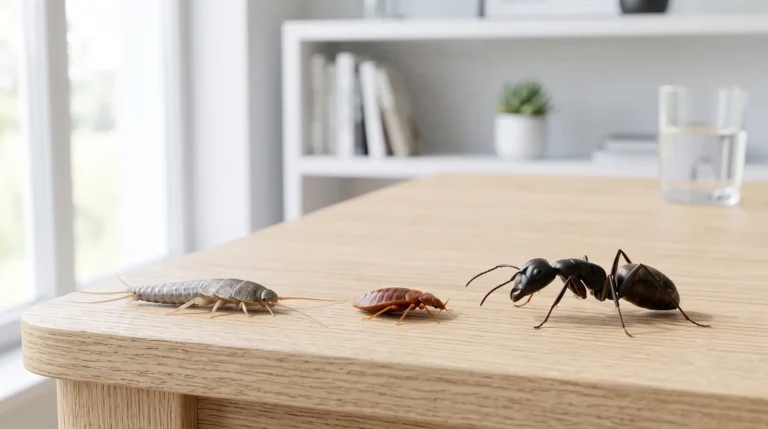
Types of Cockroaches in Homes: German Cockroach, American, Oriental, Wood Roaches, and Common Look-alikes
Introduction
I still remember the night I found my first german cockroach. it was past midnight. I went to the kitchen for a glass of water. I flipped on the light; and something dark and fast disappeared under the refrigerator before I could even process what I saw
I told myself it was probably nothing. A cricket, maybe. A beetle. Anything but what I knew it actually was.
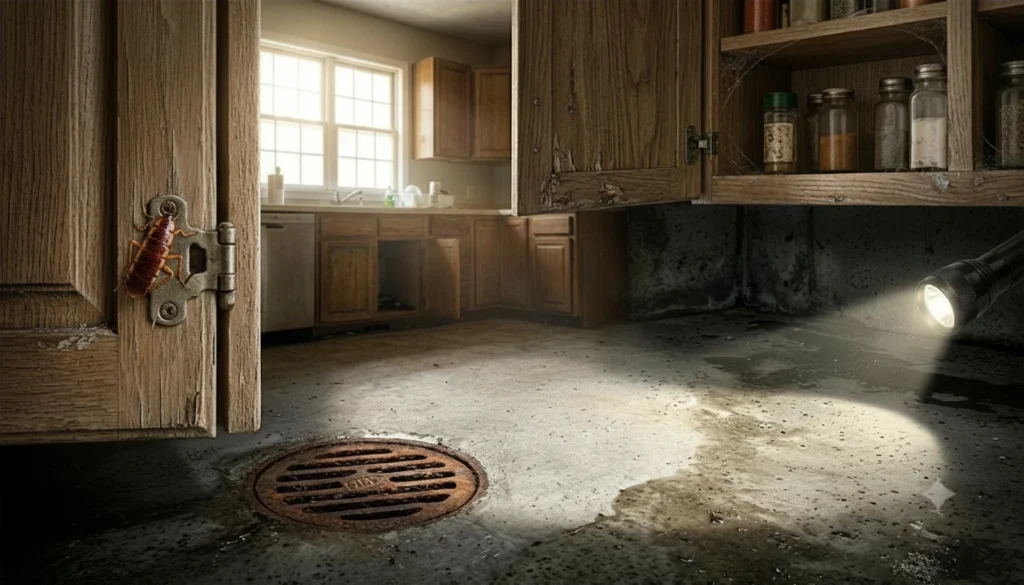
I did not sleep that night.
By morning, I had convinced myself of three things. First, that it was just one bug. Second, that one bug means no big deal. Third, that a can of spray from the hardware store would fix everything by the weekend.
I was wrong on all three counts.
What followed was six weeks of failed DIY treatments, money wasted on the wrong products, and a growing sense that the problem was getting worse; not better. The pest control professional I finally called took one look at the situation and asked me a question I could not answer:
“Do you know what species you are dealing with?”
I did not. I had been treating the wrong German cockroach in the wrong way the entire time.
That experience is the reason this guide exists.
Over the years of running this pest and insect blog, I have heard the same story from hundreds of readers. A roach spotted in the kitchen. Immediate panic. A trip to the store. A few sprays. A few days of quiet. Then the roaches come back; often worse than before.
The single most common mistake people make is skipping the identification step. They see a roach and they react. But not every roach you find in your home is the same species. Not every species needs the same response. And not every dark bug scurrying across your floor is even a german cockroach at all.
I have spent years researching german cockroach species, cross-referencing entomology resources, consulting licensed pest control professionals, and learning from the mistakes of real homeowners; including my own. What you are about to read is the guide I wish I had on that sleepless night in my kitchen.
By the end of this article, you will know exactly which german cockroach species is which. You will understand the lookalikes that fool most people; including palmetto bugs, water bugs, wood roaches, and beetles. And you will know what to do the moment you identify what you are dealing with.
Let’s start with the species you are most likely looking at right now.
At a Glance What This Guide Covers
- The 5 most common types of german cockroaches in homes and how to tell them apart
- Less common species you may encounter in southern states
- A quick identification table you can scan in under 30 seconds
- Every major lookalike comparison; palmetto bug, water bug, wood roach, beetle, and more
- A step-by-step decision guide to identify your exact species
- Signs of infestation including droppings and egg cases by species
- Why treatment differs completely depending on the species you have
The 5 Most Common Types of Cockroaches in Homes
Most german cockroach infestations in the United States come down to five species. Each one looks different. Each one behaves differently. And each one needs a completely different response from you.
Here is everything you need to know about all five.
1. German Cockroach; The Most Dangerous Indoor Roach
If you have a German cockroach problem indoors, there is a very good chance this is your culprit. The German cockroach is the most common house cockroach in the United States by a wide margin.
What it looks like
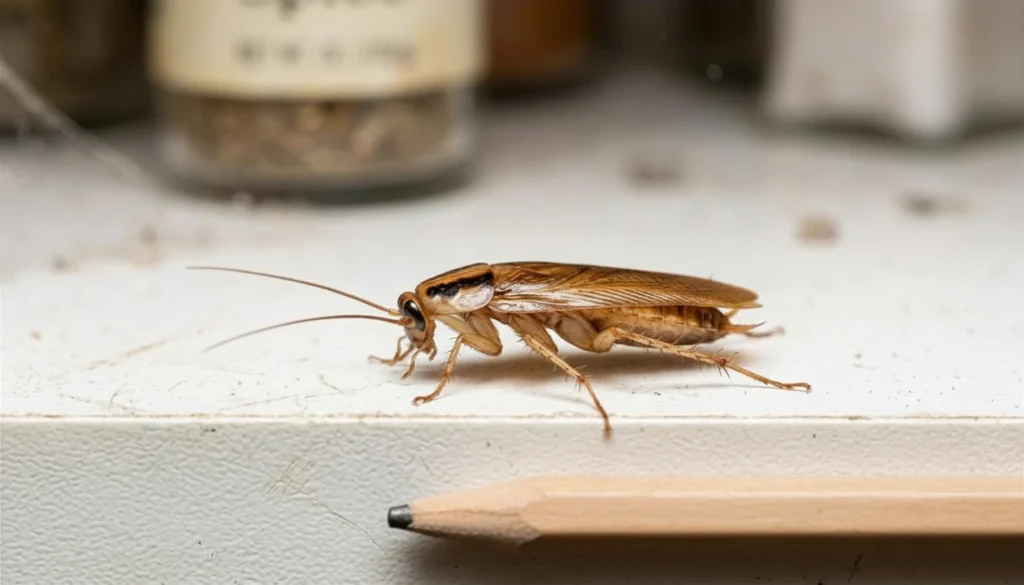
Adult German cockroaches are small. They grow to about half an inch to five-eighths of an inch long. Their body is tan or light brown. The clearest sign? Two dark parallel stripes running down their back, right behind the head. If you see those two lines; you are looking at a German cockroach.
Where it hides
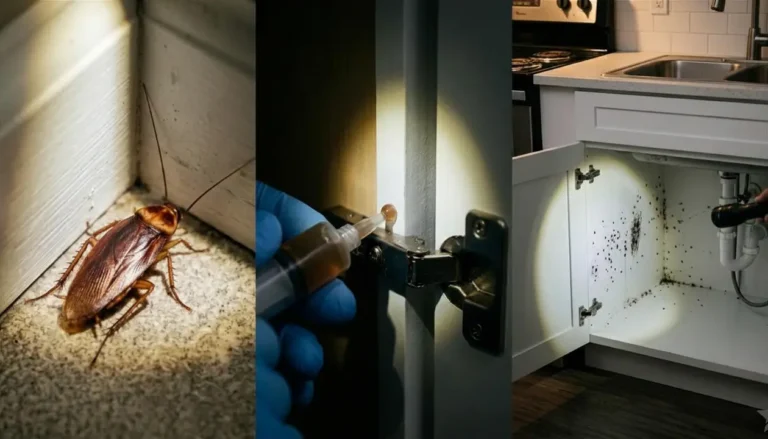
German cockroach stay close to food and water. You will find them in kitchens and bathrooms almost exclusively. They hide behind refrigerators, under stoves, inside cabinet door hinges, and around dishwasher seals. They almost never go outside. They are full-time indoor pests.
Why it is so dangerous
This species reproduces at a terrifying speed. One female produces 30 to 48 eggs per egg case. She carries each case on her body until just 24 to 48 hours before hatching; which means most eggs survive. A female produces 5 to 8 egg cases in her lifetime. Counting her offspring also breeding, one single female German cockroach can be responsible for over 30,000 descendants in a single year.
A small problem turns into a massive infestation faster than most homeowners realize. German cockroach spread bacteria like Salmonella and E. coli. Their shed skin and droppings trigger asthma and severe allergic reactions; especially in children.
What you should do
Do not wait. Even one sighting during daylight means a hidden colony is already growing behind your walls or appliances. Call a pest control professional immediately. Gel bait treatments and insect growth regulators are the most effective tools for this species. Spraying aerosol only scatters the colony and makes things worse.
2. American Cockroach; The Big Reddish-Brown One
The American cockroach is the largest roach species you will commonly find in a home. Despite its name, it actually originated in Africa. It arrived in North America on ships in the 1600s.
What it looks like
Adults grow up to 1.5 to 2 inches long. Their body is reddish-brown. Look for a yellowish figure-eight pattern on the back of their head; that is the key identification feature. Both males and females have wings. They can fly; but usually only when temperatures rise above 85°F.
Where it hides
American cockroaches love dark, damp places. Basements, sewers, floor drains, steam tunnels, and crawl spaces are their favourite spots. After heavy rain, they often come up through sewer systems. Outdoors, they shelter under mulch, leaf piles, and near trash cans.
Why it matters
American cockroaches carry dangerous bacteria including E. coli and Salmonella. They can live for about a month without food. But they only last about a week without water. That is why cutting off moisture is the first and most important step in controlling them.
What you should do
Seal all entry points around plumbing and drain lines. Fix every leak immediately. Reduce moisture in your basement with a dehumidifier. Use boric acid or gel bait in harbourage areas. For persistent problems, professional perimeter treatment is the most reliable solution.
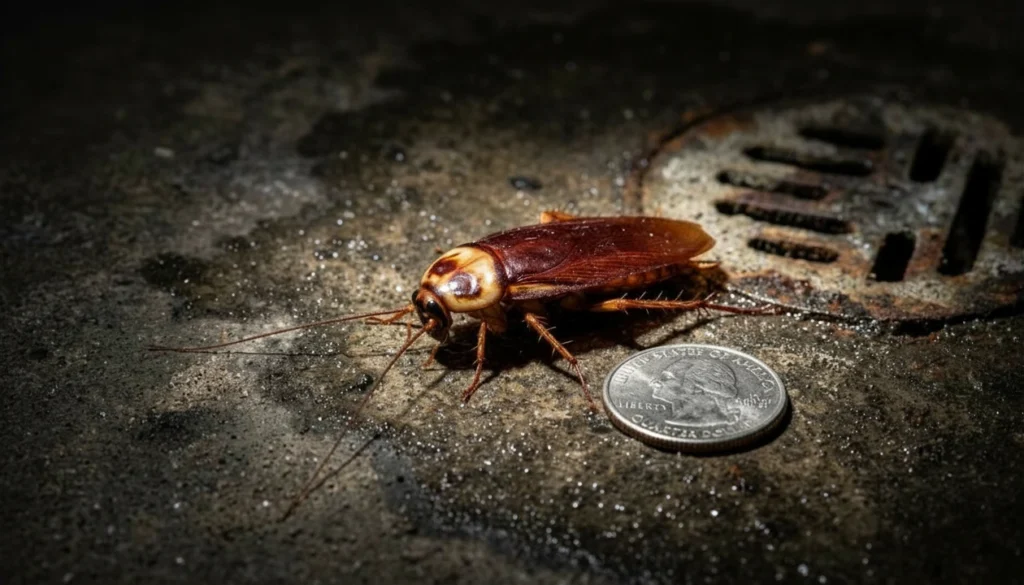
Quick note: In the southeastern United States – especially Florida, South Carolina, and Georgia – people call the American cockroach a “palmetto bug”. More on that in the look-alikes section below.
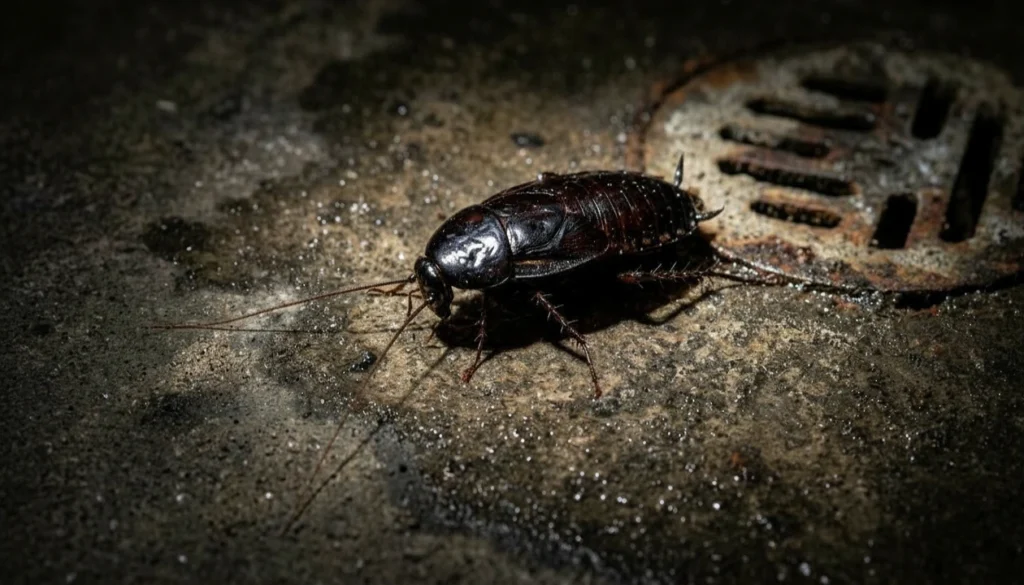
3. Oriental Cockroach The “Water Bug” in Your Basement
The Oriental cockroach is one of the most misidentified insects in America. Homeowners in the Northeast and Midwest spot this dark, shiny roach near drains and convince themselves it must be something other than a cockroach. It is not. It is very much a cockroach and a serious one.
What it looks like
Oriental cockroaches are about one inch long. They are shiny dark brown or nearly black. Female Oriental cockroaches look almost completely wingless. Males have short wings that do not cover the full abdomen. Importantly, neither sex can fly at all.
Where it hides
This species loves cool, damp environments. Basements, crawl spaces, floor drains, utility rooms, and sewer lines are common hideouts. They travel along water pipes and may move between apartment floors. During summer, they also live outdoors near foundations, under mulch, or in piles of wet leaves.
Why it matters
Oriental cockroaches feed on decaying organic matter. They pick up and spread bacteria as they move through sewers and drains into your living space. Large populations produce a distinctly strong, musty odour. If your basement smells stale and unusual and you cannot find the source, check for Oriental cockroach activity.
What you should do
Fix every leaky pipe immediately. Run a dehumidifier in your basement. Apply boric acid dust along baseboards and behind appliances. For established colonies inside drain systems, professional treatment is the most effective approach.
4. Brown-Banded Cockroach The One Hiding in Your Bedroom
Most people assume cockroaches only live in kitchens and bathrooms. The brown-banded cockroach breaks that assumption completely. It prefers warm, dry arareas andides in spots most homeowners never think to check.
What it looks like
Brown-banded cockroaches are small; about half an inch long. They have two lighter yellow-brown bands crossing their dark brown body. Males have wings and can fly short distances. Females have shorter, non-functional wings.
Where it hides
Look in upper kitchen cabinets; bedroom dressers; closets; behind wall hangings; and inside electronics like clock radios and televisions. They prefer elevated, warm, dry spots far from water sources. That is what makes them so hard to find; and so hard to treat without a thorough whole-home inspection.
Why it matters
Brown-banded cockroaches spread bacteria and allergens throughout the entire home; not just the kitchen. Because they scatter widely across multiple rooms, infestations grow undetected for a long time. By the time you see one, the population is usually already significant.
What you should do
Inspect your entire home; not just food prep areas. Place bait stations in bedrooms, living areas, and closets. A professional inspection is strongly recommended because these roaches hide in places most people would never think to treat.
5. Pennsylvania Wood Cockroach; The Harmless Accidental Visitor
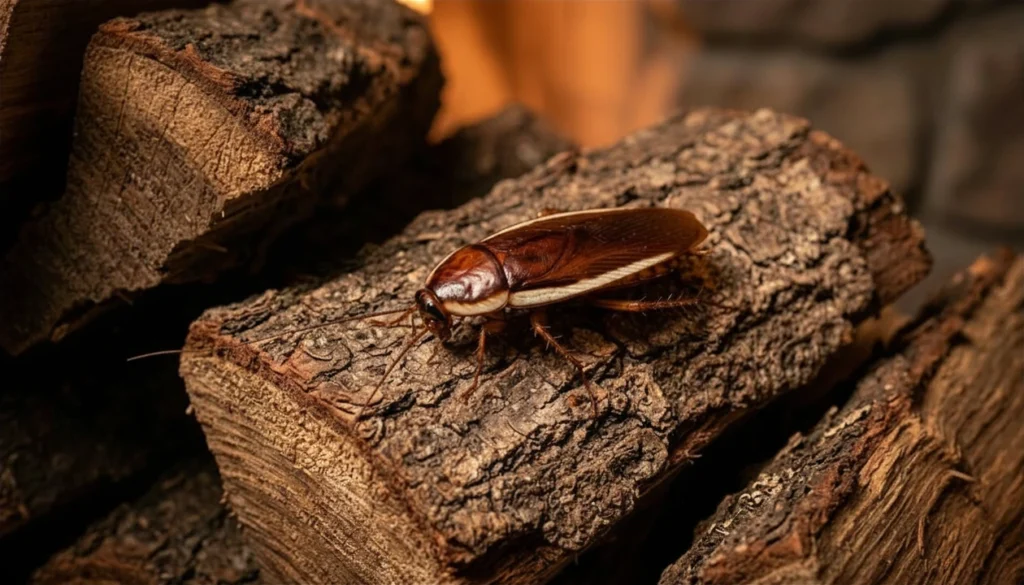
The Pennsylvania wood cockroach does not want to be inside your home. It is an outdoor insect. Most of the time, it ends up indoors completely by accident; and it is not a threat at all.
What it looks like
Adults are about one inch long and chestnut-brown in colour. Look for a pale, cream-coloured stripe along the outer edge of their wings; that is the clearest visual marker. Males are strong fliers. Females have much shorter wings and stay close to the ground.
Where it comes from
This species lives under tree bark, in hollow logs, woodpiles, and leaf debris. It is most active in spring during mating season. Male wood cockroaches fly toward porch lights, windows, and outdoor lamps at night. That is how they end up inside; they fly toward the light and squeeze through a gap.
Why it is NOT a real problem
Wood cockroaches pose zero health risk. They carry no known diseases. They cannot survive indoors. Most die within 48 to 72 hours because indoor air is too dry for them. They will not breed inside your home under any circumstances.
What you should do
Simply remove it. No chemical treatment is needed. To prevent more from entering, move firewood piles away from the house wall, seal gaps around windows and door frames, and turn off unnecessary outdoor lights during spring mating season.
Less Common But Real: Other Cockroach Species in the US
Beyond the five main species, a few others show up in parts of the United States. You are less likely to encounter these. But knowing them matters; especially if you live in southern or Gulf Coast states.
Smoky Brown Cockroach
The smoky brown cockroach is a common pest across the southeastern US – particularly in Texas, Florida, Louisiana, and Georgia. It grows to about 1.25 to 1.5 inches long. Its colour is a rich, uniform dark mahogany brown with a shiny surface.
Both males and females have fully developed wings. They are strong, capable fliers. They are strongly attracted to light at night, which is often how they end up on your porch or inside your home.
This species lives outdoors. It prefers gutters, tree holes, wood piles, and humid areas near mulch and shrubs. It enters homes through gaps around rooflines, attic vents, and eaves.
In the Deep South, people often call the smoky brown cockroach a “palmetto bug”; just like they do with the American cockroach. They are different species with different habits. But both need professional treatment.
Asian Cockroach
Here is one that trips up even experienced pest control professionals. The Asian cockroach looks almost exactly like the German cockroach. Same size. Same tan color. Same two dark stripes.
But there is one critical difference: the Asian cockroach can fly strongly and willingly. The German cockroach almost never does.
Asian cockroaches prefer outdoor environments. They are most common in gardens, lawns, and leaf litter; especially across Florida and other Gulf Coast states. They fly toward light at dusk and swarm in large numbers near outdoor fixtures.
If you see a “German-looking” roach flying around your porch light or coming in through screened windows at night, it is almost certainly an Asian cockroach, not a German one. This distinction matters enormously. German cockroach control focuses on indoors. Asian cockroach control focuses outdoors.
Surinam Cockroach
The Surinam cockroach is unusual in two specific ways. First, it is almost entirely female. This species reproduces without males; a rare biological process called ‘parthenogenesis’. Second, it is a serious greenhouse and houseplant pest that many homeowners unknowingly bring inside on potted plants.
It grows to about three-quarters of an inch. Its body is dark brown to black with a lighter-coloured area on the pronotum; the plate just behind the head.
Surinam cockroaches are common in Florida, Texas, and Louisiana. They live in moist soil, potting mix, mulch, and around plant root zones. They do not typically infest kitchens or bathrooms. But they can damage plant root systems and gradually spread to other areas of a warm home.
If you notice wilting houseplants and cannot figure out why; check the soil. You may have Surinam cockroaches living in the root zone.
Florida Woods Cockroach
The Florida Woods cockroach goes by many names. People call it the ‘stinkroach’, the ‘Florida skunkroach’, and occasionally a ‘palmetto bug’. The nicknames all point to one distinctive trait: this cockroach releases a foul-smelling defensive spray when disturbed.
It is a large, dark brown to black species. Adults grow to about 1.25 to 1.5 inches long. Unlike most cockroaches, it has very short, non-functional wing stubs. It cannot fly at all. It moves slowly and has a wide, flat body.
The Florida Woods cockroach lives primarily outdoors across Florida, coastal Georgia, and the Gulf Coast. It shelters in woodpiles, under loose bark, in leaf litter, and around the base of palm trees and shrubs.
It rarely invades the interior of a home. However, it frequently appears on porches, in garages, and in crawl spaces; especially after rain.
If you find a large, slow-moving, dark cockroach near your porch that releases an unpleasant smell when disturbed, this is almost certainly a Florida Woods cockroach. It poses no significant indoor health threat. However, its presence signals nearby outdoor conditions that may also be attracting more dangerous species, like American or smoky brown cockroaches.
Giant Burrowing Cockroach
You have probably seen photos of this one online and thought it looked terrifying. The giant burrowing cockroach is the world’s heaviest cockroach species. It reaches approximately 3 inches in length and can weigh over one ounce.
Here is the good news: this is not a US pest. It is native to Australia. It lives underground and feeds on dried eucalyptus leaves. It does not invade homes.
Some people keep them as exotic pets. If you spotted a large cockroach in your American home, it is almost certainly an American cockroach. Still a problem worth solving quickly.
Quick Identification Table; Find Your Roach in Seconds
| Species | Size | Color | Flies? | Key Marking | Found Where? | Treat It? |
| German Cockroach | ½–⅝ in | Tan/light brown | Rarely | Two dark stripes on back | Kitchen, bathroom | Yes — urgently |
| American Cockroach | 1.5–2 in | Reddish-brown | Yes (above 85°F) | Yellow figure-8 on head | Basement, sewer, drains | Yes |
| Oriental Cockroach | ~1 in | Shiny black/dark brown | No | No markings, greasy sheen | Basement, drains | Yes |
| Brown-banded | ~½ in | Brown with yellow bands | Males, yes. | Yellow cross-bands on body | Bedroom, cabinets, electronics | Yes |
| Pennsylvania Wood Roach | ~1 in | Chestnut-brown | Males, yes. | Pale cream wing edges | Firewood, windows in spring | No |
| Smoky Brown | 1.25–1.5 in | Dark mahogany | Yes, strong | Uniform dark, no markings | Gutters, tree holes, SE US | Yes, perimeter |
| Asian Cockroach | ½–⅝ in | Tan/light brown | Yes, strong | Two dark stripes (like German) | Outdoors, gardens, SE, US | Yes, outdoors |
| Florida Woods | 1.25–1.5 in | Dark brown/black | No | Wide flat body, wing stubs only | Porches, garages, Gulf Coast | Usually not. |
| Surinam Cockroach | ~¾ in | Dark brown/black | Rarely | Light pronotum plate | Potted plants, soil, SE US | Yes — plants/soil |
How to Spot a Cockroach Infestation Before You See One
Most people do not see a live cockroach until the infestation is already large. Cockroaches are nocturnal. They hide during the day and only come out when you are asleep.
The good news is that they leave behind clear evidence. Knowing what to look for lets you catch a problem early; before it becomes a serious one.
There are three things to look for: droppings, egg cases, and odor.
Cockroach Droppings: Your Earliest Warning Sign
Cockroach droppings are one of the most reliable early signs of an infestation. You will often find them long before you ever spot a live roach.
The appearance of the droppings depends on the species.
German cockroach droppings look like tiny specks of black pepper or dark coffee grounds. They are 1 to 2 millimetres long; very small. You will find them clustered inside cabinets, along countertop edges, inside drawer corners, and behind appliances. They may appear slightly shiny or sticky when fresh.
American cockroach droppings are larger and cylindrical. They are 2 to 4 millimetres long with blunt, rounded ends and faint ridges running along their length. People often mistake them for mouse droppings. The key difference: mouse droppings have pointed ends. Cockroach droppings are blunt on both sides and have visible ridges along the surface.
Oriental cockroach droppings look almost identical to American cockroach droppings in size and shape. However, you will find them specifically in damp areas; near basement floor drains, crawl space walls, and utility sinks.
Brown-banded cockroach droppings are tiny and pepper-like, similar to German cockroach droppings. But you will find them in unusual, elevated places: on high shelves, behind wall hangings, inside electronics, and on bedroom furniture.
One important safety note: cockroach droppings contain allergens. They trigger asthma attacks and allergic reactions, especially in children. Do not sweep or vacuum them while dry. Dampen the area first with a disinfectant spray before cleaning. This prevents allergen particles from becoming airborne.
Cockroach Droppings vs. Mouse Droppings: Quick ID
A lot of homeowners confuse the two. Here is how to tell them apart fast:
| Feature | Cockroach Droppings (Large Species) | Mouse Droppings |
| Length | 2–4 mm | 6–10 mm |
| Ends | Blunt on both sides | Pointed on both sides |
| Ridges | Yes; faint lines along length | No ridges |
| Color | Dark brown to black; stays dark | Dark brown; fades to gray |
| Location | Near drains, appliances, cabinets | Along walls, behind furniture |
If the droppings are blunt on both ends and found near a drain or inside a kitchen cabinet, you are almost certainly dealing with a cockroach, not a mouse.
Cockroach Egg Cases – What to Look for by Species
Cockroach egg cases are called oothecae. Each one is a hardened, capsule-shaped case that holds multiple developing eggs inside. Finding even one egg case in your home is a serious sign. It means a female cockroach has been actively breeding on your property.
German cockroach ootheca: Light tan or amber-brown. About 6 to 9 millimetres long; roughly the size of a small jellybean. The female carries it on her body until 24 to 48 hours before hatching. Each case holds 30 to 48 eggs. You will find empty casings near appliances, inside cabinet hinges, and along baseboards.
American cockroach ootheca: Darker reddish-brown to nearly black. About 8 millimetres long. Females deposit the case in sheltered areas shortly after producing it. Each case holds 14 to 16 eggs. Look for them under sinks, behind water heaters, and in basement corners.
Oriental cockroach ootheca: Very dark reddish-brown to almost black. About 8 to 10 millimetres long and slightly inflated. Each case holds approximately 16 eggs. Found in damp, sheltered spots near floor drains and basement walls.
Brown-banded cockroach ootheca: Small and light reddish-brown. About 5 millimetres long. Females glue these cases to surfaces in warm, dry, elevated spots; behind picture frames, inside drawer crevices, and behind loose wallpaper.
Finding egg cases in multiple rooms means the infestation has already spread beyond the kitchen. Finding one case means there are almost certainly others hidden nearby.
The Musty Odor; What It Tells You
A strong, oily, or musty smell in your home; especially in a basement, under a sink, or inside a cabinet; can signal a large cockroach colony.
This odour comes from cockroach pheromones and faecal matter accumulating in one area. German cockroaches produce it in kitchens and bathrooms when colonies grow large. Oriental cockroaches produce a particularly strong version in basements and crawl spaces.
If you smell something stale and unusual and cannot identify the source, check for cockroach activity in that area immediately. The odor gets stronger as the colony grows. A very strong smell usually means the infestation has been building for weeks or months.
Cockroach Look-alikes: Is That Really a Roach?
This is where things get genuinely confusing for most homeowners. Several insects; and even some bugs that go by entirely different names; are actually cockroaches. Others look like cockroaches but belong to completely different insect families.
Here is a clear breakdown of every major lookalike comparison.
Palmetto Bug vs Cockroach: What Is the Difference?
Short answer: a palmetto bug IS a cockroach. There is no real difference.
The term “palmetto bug” is a regional nickname. It is used mainly in the southeastern United States – particularly in Florida and South Carolina. The name came about because large cockroaches were commonly found hiding in and around palmetto trees in those areas.
In most cases, “palmetto bug” refers to the American cockroach. Sometimes it also describes the Smoky Brown cockroach or the Florida Woods cockroach. The exact species depends on who is using the term and where.
The nickname creates a real problem. When homeowners say “palmetto bug” instead of “cockroach”, they often treat the situation as less urgent. That is a serious mistake. The same bacteria are present. The same health risks apply. The same professional treatment is needed.
If someone in the South tells you they have palmetto bugs, they have cockroaches. Full stop.
Water Bug vs. Cockroach: Two Very Different Things
This confusion is widespread across the entire country. And it causes a lot of unnecessary panic and sometimes a dangerous amount of inaction.
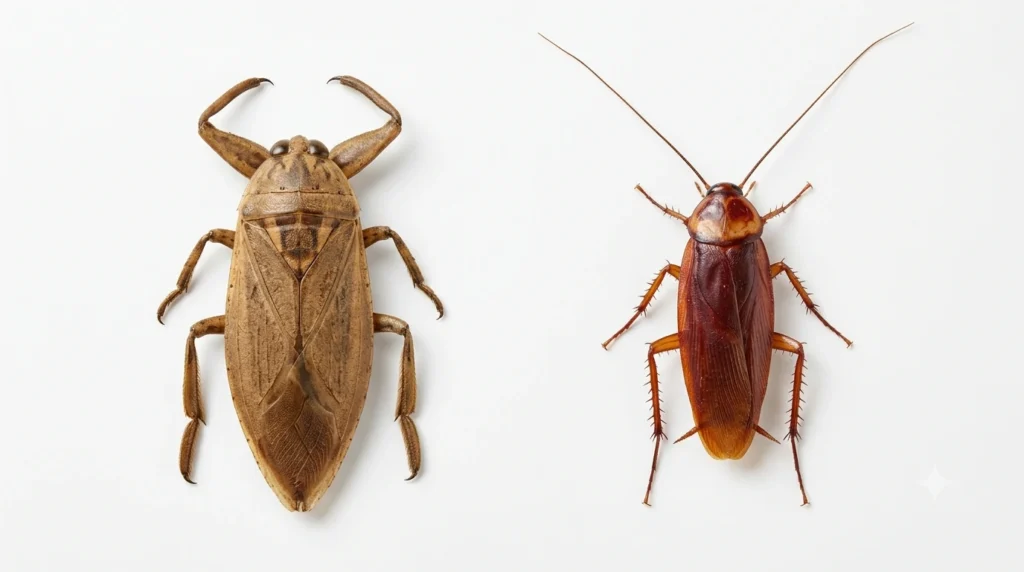
“Water bug” is used to describe two entirely different insects. You need to know which one people mean.
True water bugs belong to the insect family Belostomatidae. They are aquatic predators. They live in ponds, streams, marshes, and lakes. They can grow up to two to four inches long. Their front legs are pincer-like – built for catching prey, including tadpoles and small fish. They bite hard and painfully if you handle them, which is why they earned the nickname “toe-biters”.
Real water bugs do not infest homes. They may occasionally fly toward a pool or porch light on a summer night. But they are not the bug scurrying across your bathroom floor.
Cockroaches nicknamed “water bugs” are a completely different story. In the Northeast and Midwest, Oriental cockroaches are called water bugs because they love damp basements and floor drains. In the South, the same nickname gets applied to American cockroaches because they come up through sewer systems after heavy rain.
Here is a simple side-by-side to clear the confusion:
| Feature | True Water Bug | Cockroach Called “Water Bug” |
| Antennae | Very short or absent | Long, thin, and flexible |
| Front Legs | Pincer-like for grabbing prey | Standard running legs |
| Habitat | Ponds, lakes, streams; outdoors | Sewers, drains, basements; indoors |
| Bites? | Yes; very painfully | Rarely |
| Infests homes? | No | Yes |
| Wing shape at rest | Forms an X pattern | Lies flat across the body |
The bottom line: if you found it inside your home near a drain, under a sink, or in the basement; it is almost certainly a cockroach. Real water bugs stay in natural water sources.
Wood Roach vs. Cockroach; This One Completely Changes Your Response
This is the most important distinction in this entire article. Because the correct response is completely opposite depending on which one you have.
Wood roaches are completely harmless. They wander indoors by accident. They cannot survive inside. They carry no diseases. They do not breed indoors. They die within 48 to 72 hours because indoor air is too dry for them.
Indoor cockroaches are serious pests. They breed rapidly. They contaminate your food and surfaces. They spread bacteria. They need immediate professional treatment.
Here is how to tell them apart in seconds:
Wood roaches move slowly. They do not bolt when you turn on the lights. They look almost disoriented indoors; because they do not belong there.
Indoor cockroaches are lightning fast. The moment you flip the light switch, they scatter into cracks and disappear. That speed is pure survival instinct; they are completely adapted to living in homes and hiding from humans.
Wood roaches have pale, cream-coloured edges along their wings. No common indoor species has this marking.
Wood roaches appear mostly in spring during mating season. Indoor cockroaches are active and breeding year-round.
Finding one wood roach near the fireplace in April is completely normal. Finding one German or American cockroach near your sink at midnight is a warning sign. There are almost certainly dozens or hundreds more hiding nearby.
Beetle vs. Cockroach; Similar Look, Completely Different Problem
At first glance, some beetles and cockroaches look similar. Both are dark, oval, and six-legged. But once you know what to look for, telling them apart is straightforward.
Look at the wings first. Beetles have hard, rigid wing covers called elytra. These meet in a perfectly straight line running down the centre of their back. Cockroach wings are softer and overlap each other – they do not meet in a clean straight line down the middle.
Look at the antennae. Cockroach antennae are long, thin, and flexible – often as long as the entire body. Beetle antennae are noticeably shorter and vary in shape by species.
Watch the movement. Cockroaches are extremely fast runners. They dart and scatter when disturbed. Many beetles move at a much slower pace.
Look at the head. In cockroaches, the head points downward and is partially hidden under the pronotum; the shield-like plate just behind the head. In beetles, the head is clearly visible from above.
Common beetles mistaken for cockroaches include the ground beetle, the click beetle, and the Palo Verde beetle in Southwestern states.
If you see a hard, shiny bug with wings that meet in a perfect straight line down the back, it is likely a beetle. Most beetles need no pest control treatment. If the wings overlap, the antennae are long and thin, and it scatters instantly when the lights come on; it is almost certainly a cockroach.
What Is a “Black Cockroach”?
If you Googled “big black cockroach” after finding something in your basement, you almost certainly found an Oriental cockroach.
Oriental cockroaches have a dark, shiny exoskeleton that appears nearly black under normal indoor lighting. They are slow-moving, about one inch long, and found almost exclusively near floor drains, basement walls, and damp crawl spaces.
Less commonly, a smoky brown cockroach can also appear black in low light; especially if you only catch a brief glimpse before it disappears.
Either way, a large dark shiny bug near your drain is not something to ignore. It needs identification and treatment right away.
What Is a “Brown Cockroach”?
“Brown cockroach” could describe several completely different species. Here is how to narrow it down quickly:
Small and brown with two dark stripes? That is a German cockroach. Act immediately.
Large and reddish-brown with a yellowish marking on the head? That is an American cockroach. Check your basement and drain lines.
Small and brown with yellow cross-bands on the body? That is a brown-banded cockroach. Inspect your entire home, including bedrooms.
Medium brown with pale cream edges on the wings, slow-moving, found near firewood in spring? That is a wood roach. No treatment needed. Just remove it.
Medium-to-large dark brown, found outdoors or flying toward lights in the southern US? That is probably a smoky brown cockroach. Treat the outdoor perimeter.
German Cockroach vs. American Cockroach – The Most Confused Pair
Homeowners mix these two up more than any other combination. They are very different species; and they need completely different treatment approaches.
| Feature | German Cockroach | American Cockroach |
| Size | ½ to ⅝ inch | 1.5 to 2 inches |
| Color | Tan or light brown | Reddish-brown |
| Key marking | Two dark stripes on back | Yellow figure-8 on head |
| Flies? | Almost never | Yes, in warm weather |
| Where it lives | Kitchens and bathrooms only | Basements, sewers, drains |
| Eggs per case | 30 to 48 | 14 to 16 |
| Reproduction speed | Very fast; 6 to 8 weeks egg to adult | Slower; lifespan up to 700 days |
| Health risk | Very high; spreads fast indoors | High; carries sewer bacteria |
| Best treatment | Gel bait + insect growth regulators indoors | Perimeter treatment + exclusion outdoors |
The single most important difference: German cockroaches are strictly indoor pests. They cannot survive outside. They live their entire lives inside your home.
American cockroaches live both indoors and outdoors. They move between sewer systems, mulch beds, and the inside of your home depending on weather and available food.
Small roaches in your kitchen with two stripes? German cockroach emergency. Large reddish roaches in the basement after heavy rain? American cockroach problem originating outdoors. Both are serious. But the fix is entirely different.
What Americans Call Cockroaches by Region
Cockroaches go by many different names depending on where in the United States you live. This causes real confusion; especially when you are reading pest control advice written for a different region than yours.
| Region | Common Nickname Used | Actual Species |
| Southeast; FL, SC, GA | Palmetto bug | American cockroach, Smoky Brown |
| Northeast and Midwest | Water bug | Oriental cockroach |
| South; TX, LA, MS | Water bug or flying roach | American cockroach |
| Nationwide | Flying roach | American or Smoky Brown cockroach |
| Deep South; FL, coastal GA | Stinkroach / Florida roach | Florida Woods cockroach |
Understanding these regional differences helps you interpret pest control advice correctly. It also helps you describe your pest accurately when you call a technician – which leads to faster, more targeted treatment.
Which Cockroach Do I Have? – A Simple Decision Guide
Not sure what you are dealing with? Follow these steps.
Step 1; How big is it?
Under three-quarters of an inch → Go to Step 2. One inch or bigger → Go to Step 3.
Step 2; Small roach (under three-quarters of an inch)
Does it have two dark stripes running down its back and stay indoors near the kitchen or bathroom? → German cockroach. Call a professional immediately.
Does it have yellow bands crossing its body? → Brown-banded cockroach. Inspect the entire home, including bedrooms.
Does it look like a German cockroach but flies strongly toward outdoor lights and stays outside? → Asian cockroach. Outdoor baiting is the focus.
Step 3; Large roach (one inch or bigger)
Is it reddish-brown with a yellowish marking behind the head? → American cockroach. Inspect your basement, drains, and perimeter.
Is it shiny and nearly black with no visible wings on the female? → Oriental cockroach. Address moisture first, then treat professionally.
Is it chestnut-brown with pale wing edges, slow-moving, and found near firewood or a window in spring? → Wood roach. Remove it manually. No treatment needed.
Is it dark mahogany-brown, flying confidently toward outdoor lights, and found in the southern US? → Smoky brown cockroach. Treat the outdoor perimeter.
Is it large, very dark, slow-moving, and released a bad smell when disturbed? → Florida Woods cockroach. Treat outdoor conditions. Usually no indoor treatment needed.
Why Identifying the Species? Correctly Matters for Treatment
Here is something most homeowners do not realise until it is too late. Treating the wrong cockroach species with the wrong product is a waste of time, money, and effort; and it can actively make the problem worse.
Consider these real differences in treatment strategy:
German cockroaches respond best to gel bait placed in tiny amounts near their hiding spots. Spraying aerosol products around the kitchen actually scatters the colony into walls and neighbouring rooms. That spreads the infestation; it does not solve it.
American cockroaches need perimeter treatment outdoors. If you only treat inside, you keep killing the roaches that enter; but you never address the outdoor source. More keep arriving.
Wood roaches need absolutely no treatment. Applying insecticide for a wood roach wastes money and puts unnecessary chemicals into your indoor air for no reason whatsoever.
Oriental cockroaches need moisture control before anything else. Without fixing leaks and reducing basement humidity, no chemical treatment will hold long-term. The roaches keep returning to the water source.
The species tells you the strategy. Always identify before you treat. That single step saves you money, time, and real frustration.
Frequently Asked Questions
What is the most common cockroach found in US homes?
The German cockroach is the most common indoor cockroach in the United States. It is found primarily in kitchens and bathrooms and reproduces faster than any other home-infesting species.
What does a baby cockroach look like?
Baby cockroaches are called nymphs. They are much smaller than adults and have no wings. German cockroach nymphs are very dark, almost black, with two faint stripes. American cockroach nymphs are reddish-brown. All nymphs look like small, wingless versions of their adult form.
Are wood roaches dangerous?
No. Wood roaches are completely harmless. They are outdoor insects that wander indoors by accident. They carry no known diseases, cannot establish indoor colonies, and die within 48 to 72 hours once inside.
What is the real difference between a water bug and a cockroach?
A true water bug is an aquatic predator with pincer-like front legs that lives in ponds and streams. The insects people commonly call “water bugs” indoors – like Oriental and American cockroaches – are not aquatic at all. They prefer damp environments and picked up the nickname because of it. If it is inside your home, it is a cockroach.
Is a palmetto bug the same as a cockroach?
Yes. “Palmetto bug” is simply a regional nickname used in the southeastern US for the American cockroach and sometimes the smoky brown cockroach. Same insect. Same health risks. Same treatment needed.
What does a big black cockroach mean?
A large, shiny black insect found near a basement drain or crawl space is almost certainly an Oriental cockroach. It signals a moisture problem and an active pest issue. Do not ignore it.
Can German cockroaches and American cockroaches live in the same home at the same time?
Yes; and it happens more than you might think. German cockroaches occupy the kitchen and bathroom areas. American cockroaches live lower; in the basement, drains, and crawlspaces. Both need treatment, but the methods and products are completely different for each species.
How do I tell a beetle from a cockroach?
Look at the wings. Beetles have hard wing covers that meet in a straight line down the centre of the back. Cockroach wings overlap and lie flat. Also check the antennae; cockroach antennae are long and thin, often as long as the whole body. If the bug scatters instantly when disturbed, it is almost certainly a cockroach.
What is a white cockroach? Is it a different species?
A white cockroach is not a separate species. It is a regular cockroach that has just shed its exoskeleton – a process called ‘moulting’. Cockroaches moult several times as they grow from nymph to adult. Immediately after shedding their old shell, their new exoskeleton is soft and completely white or cream-coloured. Within a few hours, the new shell hardens and darkens back to its normal colour. If you see a white cockroach, it means one recently moulted nearby. That is a clear sign of an active, breeding population already living inside your home.
Final Thoughts: From Someone Who Learned This the Hard Way
Here is the honest truth I wish someone had told me on that first night.
The roach itself is not your biggest problem. Your biggest problem is reacting before you know what you are dealing with.
I have made that mistake. I have watched readers make it in the comments of this blog for years. And every single time, the story ends the same way: money spent, time lost, and the infestation still growing behind the walls while the homeowner thinks the problem is solved.
After years of writing about pest identification, consulting with licensed pest control technicians, and personally navigating a German cockroach infestation in my own home, I can tell you this with complete confidence:
The species determines everything.
A German cockroach in your kitchen is an emergency. It means a fast-growing indoor colony that needs gel bait and professional treatment, not aerosol spray, which only scatters them deeper into your walls.
A wood cockroach near your fireplace in April is not an emergency. It means you have a gap somewhere around your window or door frame and a bug that will be dead within 72 hours whether you intervene or not.
An Oriental cockroach near your basement drain means you have a moisture problem. Fix the leak first. Without that step, no chemical treatment on earth will keep them away permanently.
These are not theories. They are lessons learned from experience: some of mine, some from the licensed pest control professionals I have interviewed and consulted over the years, and some from the readers of this blog who wrote in after spending weeks fighting the wrong battle with the wrong product.
Cockroach identification is not complicated once you know what to look for. Size, colour, stripe patterns, behaviour when disturbed, and where you found the bug; those five data points will tell you almost everything you need to know.
Use the table and the decision guide in this article. Take a photo of what you found if you can. Compare it against the descriptions here. Then act accordingly – and act quickly, because the species that actually infest homes do not wait around while you figure out your next move.
If you are ever genuinely unsure, do not guess. Call a licensed pest control professional and describe exactly what you saw. The good ones will identify the species before they recommend any treatment. That is exactly what the professional who came to my home did; and it changed the entire outcome.
One last thing. If you found this guide because you are in the middle of a roach problem right now, take a breath. You are already doing the right thing by identifying the species first. That single step puts you ahead of most homeowners who are fighting completely blind.
You now have the information. Use it.