
Carpenter Ants: Identification, Bites, Diet, and Signs in the House
Introduction
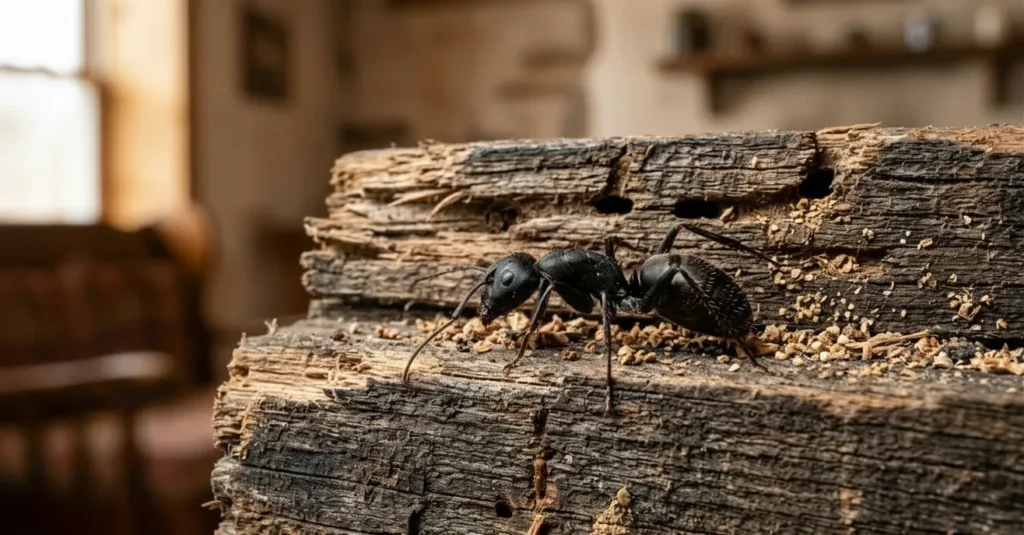
I once inspected a home where the owner had been sweeping up the same small pile of “sawdust” near her kitchen window for six months. She thought it was leftover debris from a home repair. It was carpenter ant frass, and by the time I arrived, two wall studs behind that window had been almost completely hollowed out.
That story is not rare. In my years working in pest management, I have seen this same situation dozens of times. Carpenter ants work silently at night, deep inside your wood, and most homeowners do not notice them until the damage is already expensive. This guide will show you exactly how to identify them, what the warning signs look like, and what to do before a small problem becomes a costly repair.
At a Glance
| Scientific Name | Camponotus pennsylvanicus (black carpenter ant) |
| Size | ¼ inch to ¾ inch (workers to queen) |
| Color | Black, dark brown, or red and black |
| Do they bite? | Yes — mild bite, injects formic acid |
| Do they eat wood? | No — they tunnel through it |
| Peak activity | Dusk to dawn, spring through fall |
| Biggest warning sign | Coarse sawdust (frass) near wood |
| Most dangerous season | Winter sighting = indoor nest confirmed |
| Risk to home | High — structural damage over time |
| Risk to health | Low — bites are mild, no disease transmission |
What Are Carpenter Ants?
Carpenter ants belong to the genus Camponotus. There are over 20 species found across the United States. The most common species is the black carpenter ant (Camponotus pennsylvanicus).
These ants get their name from the way they build nests. They chew through wood to create smooth tunnels and chambers. However, they do not eat the wood. This is a common myth.
Carpenter ants are found across the entire country. But they are most common in the Pacific Northwest, Northeast, and Midwest regions. They prefer moist, wooded environments. Forests, yards with old trees, and homes with water damage are their favorite spots.
How to Identify Carpenter Ants
Knowing how to identify carpenter ants is the first step to dealing with them. Misidentification leads to wrong treatment. Wrong treatment wastes your money.
Size and Color
Carpenter ants are among the largest ants in North America. Worker ants range from ¼ inch to ⅝ inch long. Queens can grow up to ¾ inch.
Most carpenter ants are black. Some species are dark brown, reddish-brown, or a mix of red and black. Their size alone makes them stand out from common household ants.
Body Shape
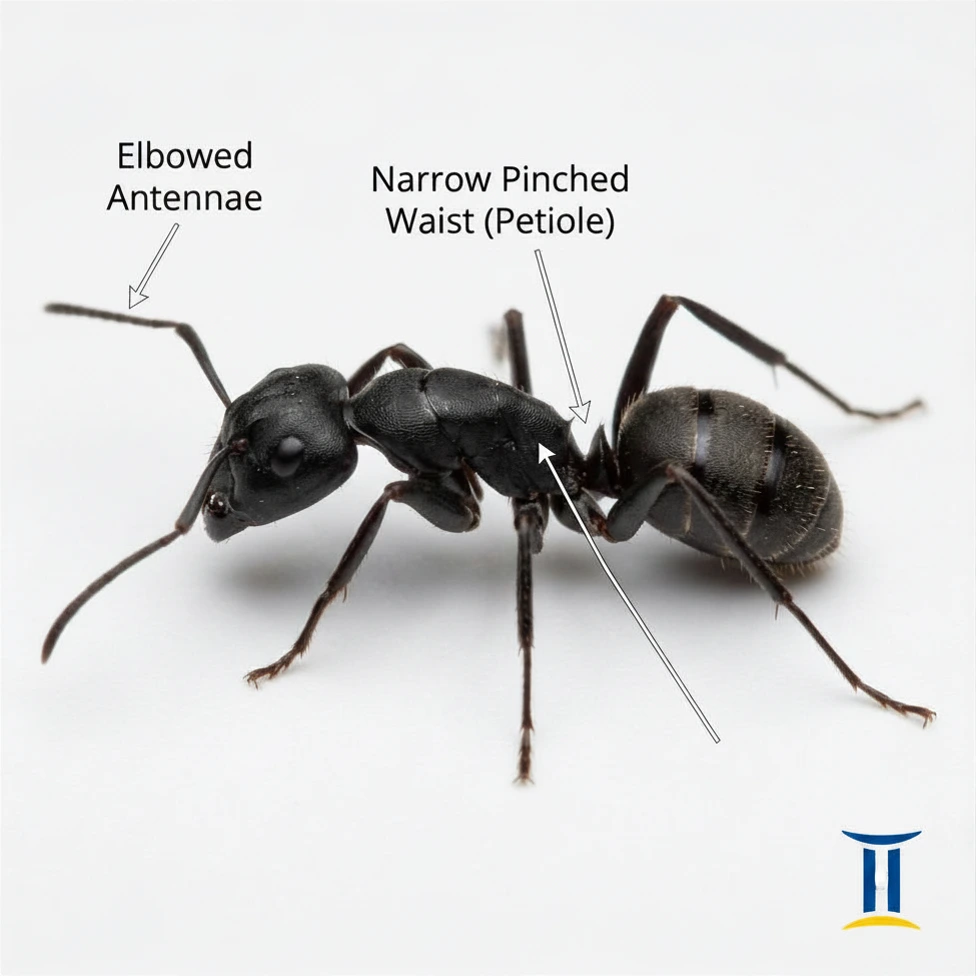
Look at the ant’s body closely. Carpenter ants have three key physical features:
- A pinched, narrow waist between the chest and abdomen
- Elbowed (bent) antennae — they have a clear bend in the middle
- A smooth, evenly rounded thorax — the middle section of the body is arched with no bumps or spines
These features make carpenter ants easy to separate from termites and other ant species.
Carpenter Ants vs. Termites Side by Side
This is the comparison most homeowners need. Both insects damage wood. But they look and behave very differently.
| Feature | Carpenter Ants | Termites |
| Waist | Narrow and pinched | Broad and thick |
| Antennae | Elbowed/bent | Straight, bead-like |
| Wings (if present) | Front wings larger than back | All wings equal size |
| Color | Black or dark brown | Pale white to dark brown |
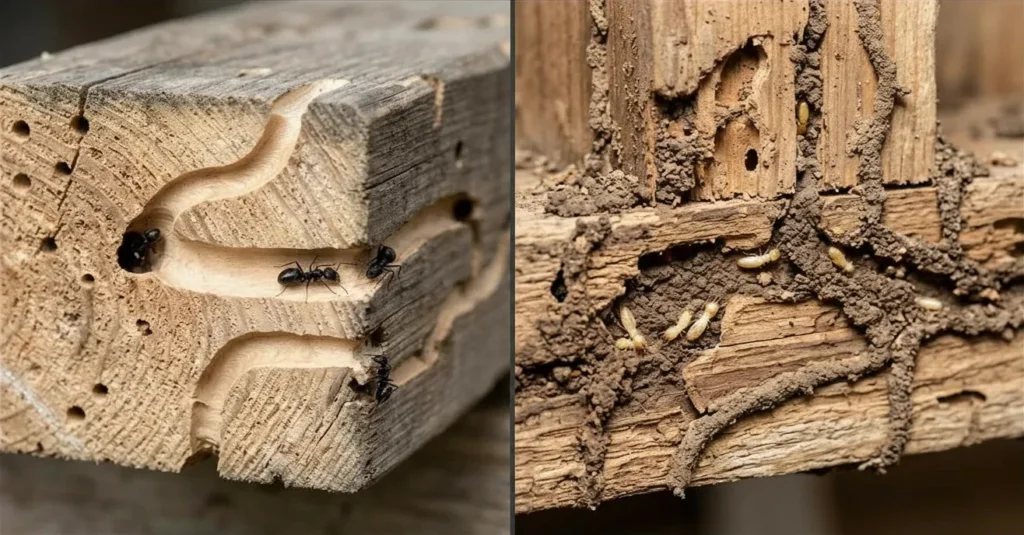
| Frass (debris) | Coarse, chunky sawdust | Fine powder mixed with mud |
| Damage look | Smooth, clean galleries | Muddy, rough tunnels |
| Eat wood? | No — only tunnels through it | Yes — they eat the wood |
| Visibility | Often seen foraging at night | Rarely seen outside tunnels |
Quick Tip: If you knock on a wooden beam and it sounds hollow, both carpenter ants and termites could be the cause. Check for frass nearby to tell the difference.
Carpenter Ants vs. Pavement Ants
Pavement ants are also black and commonly found in homes. But they are much smaller — only about ⅛ inch long. Carpenter ants are nearly five times bigger. If the ant looks huge, it is almost certainly a carpenter ant.
Carpenter Ants vs. Fire Ants
Fire ants are another ant species commonly found in US homes. But they are very different from carpenter ants.
Carpenter ants are large, dark-colored, and nest in wood. Fire ants are small, reddish-brown, and build mounds in soil. Fire ants are far more aggressive. They swarm and sting repeatedly when disturbed. Their stings cause intense burning and can trigger allergic reactions in some people.
Carpenter ants rarely show aggression. They bite only when directly threatened. Fire ants will attack without much provocation.
Here is the key visual difference: if the ant is small, reddish, and came from a soil mound in your yard — it is likely a fire ant. If the ant is large, dark, and was found near wood — it is almost certainly a carpenter ant.
Fire ants are most common in the Southeast and South-Central United States. Carpenter ants are common nationwide but especially in the North, Northeast, and Pacific Northwest.
Flying Carpenter Ants (Swarmers)
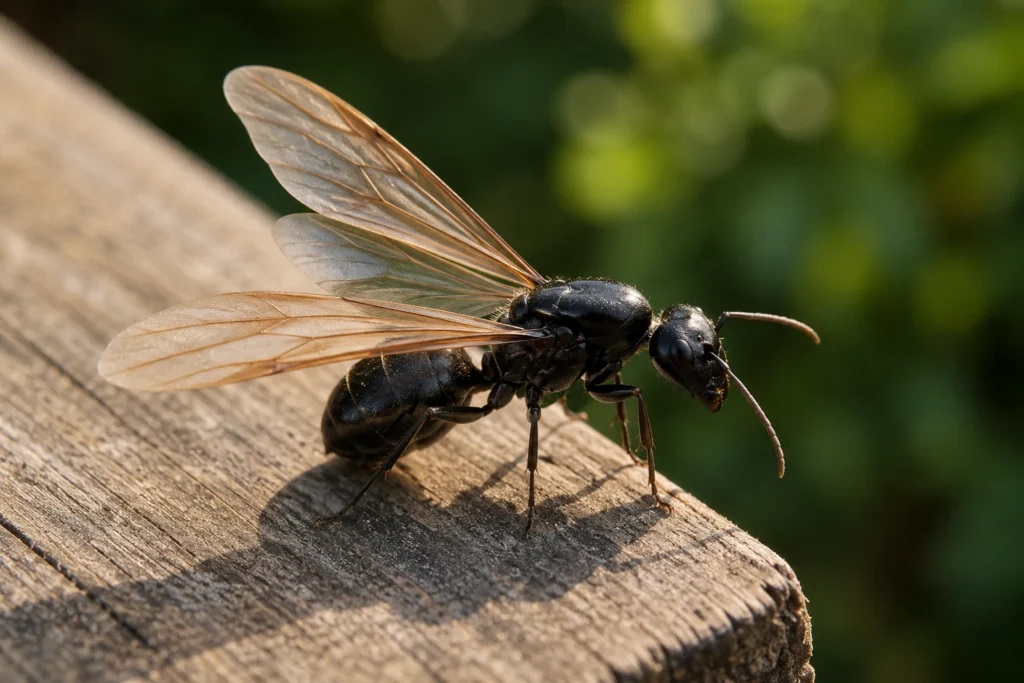
Sometimes, carpenter ants grow wings. These are called swarmers or alates. They are the reproductive members of the colony: males and queens.
Seeing flying carpenter ants indoors is a serious warning sign. It almost always means a mature colony is already living somewhere inside or near your home.
Flying carpenter ants swarm mainly in late spring and early summer from May through July in most US states. They emerge to mate and find new nesting sites.
Flying carpenter ants vs. flying termites: Carpenter ant swarmers have a pinched waist and unequal wings. Flying termites have a thick waist and equal-sized wings. This distinction is easy to spot once you know what to look for.
Signs of Carpenter Ants in Your House
Carpenter ants are sneaky. They work inside your walls and deep in wood. You rarely see the nest directly. But they leave behind clear clues.
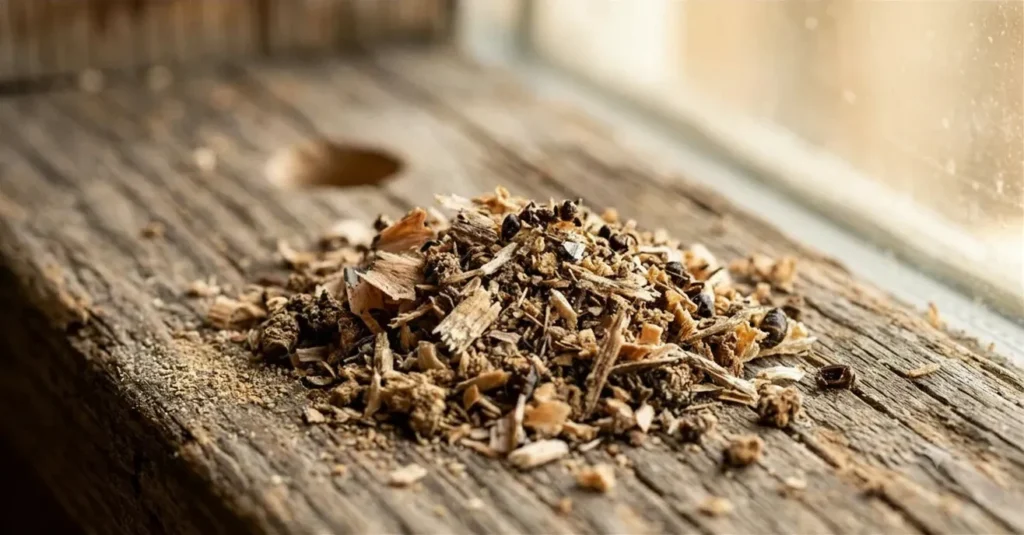
1. Frass (Sawdust-Like Debris)
This is the most common and reliable sign. Carpenter ants chew wood and push the debris out of their tunnels. This debris is called frass.
Carpenter ant frass looks like coarse sawdust or pencil shavings. It may also contain:
- Tiny insect body parts
- Bits of insulation foam
- Dead ant pieces
You will often find frass piled up under holes in wood, near window sills, along baseboards, or in crawl spaces. If you see this, act quickly.
2. Rustling or Crunching Sounds in Walls
Carpenter ants are active at night. If you press your ear against a wall in a quiet room, you may hear a soft rustling or crunching sound. This is the sound of ants excavating wood inside your walls.
This sound is especially noticeable in the evening and at night.
3. Hollow-Sounding Wood
Take a screwdriver or your knuckle and knock on wooden beams, door frames, or baseboards. If the wood sounds hollow, carpenter ants may have already built tunnels inside.
Healthy, solid wood has a dense knock sound. Ant-damaged wood sounds dull and empty.
4. Small Openings (Kickout Holes) in Wood
Carpenter ants create small, irregular holes in wood surfaces. These are called kickout holes. The ants push frass and debris through these holes.
These openings are usually small — about the size of a pencil tip. Look for them on window frames, door frames, wooden beams, decks, and siding.
5. Insect Body Parts
Finding fragments of insect legs or ant pieces near window sills, corners, or under cabinets is another warning sign. Carpenter ant colonies grow large over time. As ants die inside, their body parts get pushed out along with the frass.
This sign usually means the colony has been in your home for a long time.
6. Seeing Live Ants at Night
Carpenter ants are nocturnal. They are most active from dusk until dawn. Seeing one or two large black ants wandering through your kitchen or bathroom at night is a clear warning sign.
They are usually scout ants looking for food. And where there are scouts, there is a colony nearby.
Signs by Location in Your Home
Here is where to look inside your house based on where carpenter ants prefer to nest:
Bathroom: Moisture from showers and pipes attracts them. Check under the sink, around the toilet base, and behind bathroom tiles.
Kitchen: Food sources draw them in. Check under the sink, behind appliances, and around any water-damaged cabinet wood.
Basement and Crawlspaces: These are damp, dark, and quiet — perfect for carpenter ants. Check wooden support beams closely.
Walls: Listen for sounds. Check for frass near the base of walls. Tap the surface for hollow sections.
Attic: Check wooden beams for kickout holes and frass. Water leaks in roofs create the moisture carpenter ants love.
Do Carpenter Ants Bite?
Yes. Carpenter ants do bite. But the good news is that they are not aggressive biters. They almost never bite humans unless they feel threatened.
Bites typically happen when:
- You accidentally place your hand on an ant
- You disturb their nest during home repairs
- An ant gets trapped against your skin
What Does a Carpenter Ant Bite Feel Like?
A carpenter ant bite is a sharp pinch. It can be painful for a moment. Some carpenter ants also spray formic acid into the bite wound. This causes a burning or stinging sensation that lasts a few minutes.
The pain is not severe. It is far less painful than a fire ant sting or a bee sting.
What Does a Carpenter Ant Bite Look Like?
A carpenter ant bite looks like a small red bump on the skin. It is similar in size to a pimple. You may notice:
- A tiny red dot or raised bump
- Mild swelling around the bite
- Slight itching or burning sensation
These symptoms usually go away within 24 to 48 hours.
How to Treat a Carpenter Ant Bite
Treating a carpenter ant bite at home is simple. Follow these steps:
- Wash the area with soap and water right away
- Apply a cold pack or ice wrapped in a cloth for 10 minutes to reduce swelling
- Use hydrocortisone cream or calamine lotion to ease itching
- Take an antihistamine if you notice swelling or itching spreading
- Avoid scratching the bite to prevent infection
When to See a Doctor
Most carpenter ant bites are harmless. However, see a doctor immediately if you notice:
- Severe swelling beyond the bite area
- Difficulty breathing
- Dizziness or nausea
- Signs of an allergic reaction
These symptoms are rare. But they do happen in people with insect bite allergies.
Do Carpenter Ants Bite Pets?
Yes, they can. Carpenter ants may bite dogs or cats if the animal disturbs their nest. Check your pet’s fur around their paws and muzzle if they seem to be scratching unusually. Consult your vet if swelling or irritation develops.
Are Carpenter Ants Dangerous?
Carpenter ants are not medically dangerous to healthy adults. Their bites cause mild, temporary pain. They do not carry diseases. They do not sting.
However, they are very dangerous to your home. Their wood excavation causes structural damage that worsens over time.
What Do Carpenter Ants Eat?
Many people think carpenter ants eat wood. This is one of the biggest myths about this pest. Carpenter ants do not eat wood. They only chew through it to build nests.
Outdoor Diet
Outside, carpenter ants are omnivores. They eat:
- Honeydew — a sugary liquid produced by aphids and scale insects. This is their favorite food.
- Live and dead insects — they are active predators and scavengers
- Plant juices and nectar
- Fruit
Indoor Diet
Inside your home, carpenter ants are opportunistic eaters. They will consume:
- Sweets — sugar, syrup, honey, jelly, jam
- Proteins — meat, pet food, eggs
- Grease and fats
- Bread and baked goods
- Fruit scraps
Leaving pet food out overnight is one of the most common ways to attract carpenter ants indoors.
What Attracts Carpenter Ants to Your House?
Two main things attract carpenter ants to your home:
1. Moisture and Water Damage Carpenter ants love damp, rotting wood. Leaking pipes, roof leaks, wet window frames, and poor drainage create perfect nesting conditions. A moisture problem in your home is practically an open invitation.
2. Food Sources Sweet and protein-rich food scraps left on counters, unsealed trash cans, and open pet food bowls all attract foraging carpenter ants inside.
Fixing water damage and removing food sources are the two most effective prevention steps.
Carpenter Ant Colony and Lifecycle
Understanding how carpenter ants live helps you fight them more effectively.
Parent Colony vs. Satellite Colony
Carpenter ants build two types of nests:
Parent Colony: This is the main nest. It is almost always outdoors in moist, decaying wood – tree stumps, rotting logs, old firewood, or water-damaged wood in your home’s exterior. The queen lives here.
Satellite Colony: This is a secondary nest, usually located indoors. It houses workers, pupae, and larvae. Satellite colonies are often found in drier spots like wall voids, hollow doors, and insulation.
Most carpenter ant infestations inside your home are satellite colonies. The parent colony could be in a nearby tree stump or your home’s exterior wall.
This is why spraying visible ants often does not solve the problem. You need to find and treat both nests.
Carpenter Ant Lifecycle
Carpenter ants go through four stages:
- Egg — Laid by the queen in spring
- Larva — White, legless grub that workers feed
- Pupa — Resting stage inside a light-tan cocoon
- Adult — Emerges as a worker, soldier, or reproductive
A new colony starts with a single fertilised queen. It takes 3 to 6 years for a colony to grow large enough to produce swarmers and cause significant damage.
How Many Ants Are in a Colony?
A mature carpenter ant colony can contain 2,000 to 10,000 workers — and sometimes more in very old colonies. Once a colony reaches about 2,000 workers, it starts producing winged swarmers that go on to start new colonies.
How Long Do Carpenter Ants Live?
- Worker ants: A few weeks to several months
- Queen: Up to 25 years in ideal conditions
The queen’s long lifespan is why carpenter ant infestations can persist for years if left untreated. Killing workers alone will not stop the colony.
When Are Carpenter Ants Most Active? (Seasonal Behavior)
Carpenter ant activity changes with the seasons. Knowing this helps you understand when to look for them and what their presence means at different times of year.
Spring and Summer Peak Season
Spring is when carpenter ants become most visible. Colonies that were dormant through winter wake up and resume foraging. Scout ants appear indoors looking for food. Swarmers emerge from mature colonies in May, June, and July.
If you see carpenter ants in spring, they may simply be foraging from an outdoor nest. This does not always mean they have nested inside your home. However, it still requires attention.
Summer is the most active period. Workers forage nightly, and the colony grows steadily.
Fall
Foraging slows in fall. Workers reduce their activity as temperatures drop. Seeing a few carpenter ants in early fall is not unusual; they may be seeking warmth and food before the cold sets in.
Winter: The Most Serious Warning Sign
Seeing carpenter ants indoors in winter is a major red flag. Outdoor colonies go dormant in cold weather. If you are seeing active ants inside your home during winter, it almost certainly means the colony has already established a nest inside your walls.
Do not wait if you see carpenter ants in December, January, or February. Contact a pest control professional right away.
Do Carpenter Ants Go Away on Their Own in Winter?
No. The colony does not die in winter. Worker activity slows, but the queen and the nest survive. As soon as temperatures rise in spring, full activity returns.
Ignoring a winter sighting is one of the most expensive mistakes a homeowner can make.
Carpenter Ant Damage: How Serious Is It?
Carpenter ant damage is real and costly. But it works slowly. This is both good news and bad news.
Good news: You usually have time to catch it before it becomes catastrophic.
Bad news: Because it is slow and hidden, many homeowners do not notice it until the damage is already significant.
How Fast Do Carpenter Ants Cause Damage?
A new colony rarely causes noticeable damage in the first year or two. Damage becomes serious after 3 to 5 years when the colony grows large. At full size, a colony can hollow out significant sections of wooden beams, joists, and framing.
Signs of Serious Carpenter Ant Damage
Watch out for these red flags:
- Doors or windows that stick or no longer close properly
- Floors that feel spongy or soft underfoot
- Walls that bulge slightly
- Ceilings that sag in certain areas
These are signs of advanced structural damage. At this stage, professional pest control and possibly a contractor are both needed.
Carpenter Ant Damage vs. Termite Damage
Carpenter ant galleries look smooth and clean like they were sanded. Termite damage looks rough and muddy. Termites pack their tunnels with mud, soil, and droppings. Carpenter ants keep their tunnels spotless.
Termite damage is generally more destructive over time because termites eat wood continuously. Carpenter ant damage is serious but progresses more slowly.
How to Prevent Carpenter Ants
Prevention is always easier than treatment. Here are the most effective steps:
- Fix all water leaks immediately — pipes, roofs, windows, gutters
- Replace any water-damaged or rotting wood around your home
- Store firewood away from the house — at least 20 feet away and off the ground
- Seal cracks and gaps around doors, windows, pipes, and wiring entry points
- Trim tree branches that touch or hang over your roof
- Clean up food spills and store food in sealed containers
- Do not leave pet food out overnight
- Reduce moisture in basements, crawl spaces, and attics with proper ventilation
How to Get Rid of Carpenter Ants
If you already have a carpenter ant problem, here are your options:
DIY Methods
Borax bait is one of the most effective home treatments. Mix borax with a sweet food like honey or jelly. Place it near ant trails. Worker ants carry the bait back to the nest, eventually killing the colony. This takes patience, usually 1 to 2 weeks.
Diatomaceous earth is a natural powder that damages the ant’s exoskeleton. Sprinkle it along ant trails, near entry points, and inside wall voids.
Ant bait stations from hardware stores are also effective. Place them along active foraging trails and near entry points. Do not disturb the ants while they are feeding on bait.
Natural Repellents for Carpenter Ants
If you prefer non-chemical options, several natural repellents can discourage carpenter ants from entering your home. These work best as preventive barriers rather than treatments for an existing infestation.
Peppermint oil: Carpenter ants strongly dislike the scent of peppermint. Mix 10–15 drops of pure peppermint essential oil with water in a spray bottle. Spray along baseboards, entry points, window sills, and areas where you have seen ant activity. Reapply every few days.
Cinnamon: Sprinkle ground cinnamon or apply cinnamon essential oil near entry points. The strong scent disrupts the ant’s pheromone trails and discourages them from crossing the barrier.
White vinegar: Mix equal parts white vinegar and water. Wipe down countertops and spray around entry points. Vinegar destroys the chemical trails that carpenter ants use to navigate inside your home.
Tea tree oil: A few drops of tea tree oil mixed with water creates an effective spray. Apply it to ant trails and around nest entry points.
Important note: Natural repellents are useful for prevention and minor ant activity. They will not eliminate an established colony. If you have confirmed frass, hollow-sounding wood, or swarmer activity, use bait treatments or call a professional.
When to Call a Professional
Call a licensed pest control professional if:
- You can hear ants inside walls
- You have found frass in multiple locations
- You see swarmers inside your home
- DIY treatments have not worked after 2 weeks
- You see structural damage like soft floors or sticking doors
Professional treatments reach satellite nests and parent colonies that DIY methods often miss.
Frequently Asked Questions
How many carpenter ants mean I have an infestation?
Seeing even one or two carpenter ants indoors, especially in winter, is a strong warning sign. Carpenter ants are not casual visitors. If they are inside, they almost always have a nest nearby.
Do carpenter ants bite while you sleep?
This is extremely rare. Carpenter ants do not hunt humans. They are unlikely to bite you while sleeping unless you roll onto one. Their focus is wood and food, not people.
Do carpenter ants go away on their own?
No. A colony does not disappear without treatment. If you see carpenter ants in spring, they may temporarily reduce in fall, but the nest remains active. Treatment is always needed to fully eliminate them.
How do I know if carpenter ants are gone?
After treatment, check for new frass regularly. No new frass after 2 to 4 weeks is a good sign. No more sounds in the walls is another positive indicator. A follow-up professional inspection is the most reliable confirmation.
Can carpenter ants damage furniture?
Yes. Carpenter ants can nest in wooden furniture, especially if it has been exposed to moisture. Check old dressers, wooden chairs, and tables stored in damp areas like basements or garages.
Are carpenter ants dangerous to my family?
Their bites cause mild, temporary pain. They do not sting. They do not carry known diseases. The real danger is to your home, not your health.
Final Thoughts
In hundreds of home inspections, the pattern I see most with carpenter ants is always the same. The homeowner had noticed something small months earlier: a few large black ants, a faint rustling sound in the wall, and a tiny pile of debris near the baseboard. They dismissed it. Life was busy.
Then one day, a doorframe warps. A floorboard flexes underfoot. A contractor opens a wall and finds tunnels running through the framing. By that point, what could have been a $200 treatment has become a $4,000 repair.
Moisture is almost always the root cause. In nearly every severe carpenter ant case I have investigated, there was an underlying water problem: a slow pipe leak, a poorly sealed roof edge, or condensation building up inside a wall cavity. Fix your moisture issues first, and you remove the single biggest reason these ants choose your home.
One large black ant indoors deserves your full attention, not a quick spray, not a mental note. A proper check for frass, a listen at the walls, and monitoring for more activity takes less than 30 minutes. That 30-minute check has saved many of my clients from months of hidden damage.
DIY methods like borax bait and diatomaceous earth genuinely work when activity is caught early. But once you are hearing sounds in walls or finding frass in more than one spot, call a licensed professional. Satellite colonies and hidden parent nests are nearly impossible to eliminate without professional-grade tools and inspection.
You now know more about carpenter ants than most homeowners ever learn. Check your wood, fix your leaks, and never ignore that pile of suspicious sawdust. Your home will thank you for it.