
Paper Wasps: Identification, Aggression, Prevention, and When to Call an Exterminator
At a Glance
- Paper wasps are not the same as yellowjackets or hornets but most people treat them identically
- Most native paper wasps only sting when provoked. The invasive European paper wasp does not follow that rule
- Prevention works best in early spring before colonies grow
- Nest location, not nest size determines whether you need a professional
I reached up to grab a garden tool one summer morning and felt a sharp burn on my hand. I looked up and saw a papery cone-shaped nest hanging right above my head. That one sting sent me down a rabbit hole of research I wish I had done much earlier.
Paper wasps are one of the most misunderstood stinging insects around American homes. Most people confuse them with yellowjackets, spray the wrong product, and end up making things worse. This guide gives you everything you need: correct identification, honest aggression facts, proven prevention steps, and a clear answer on when to stop DIYing and call a professional.
What Are Paper Wasps?
Paper wasps are social insects. They live in colonies. Each colony has workers, males, and one queen. These wasps get their name from their nests. They chew wood fibre and mix it with saliva to build papery, open-celled nests. You may also hear them called ‘umbrella wasps’ a name that comes from the shape of their nest.
There are more than 22 species of paper wasps in the United States. You can find them in almost every state. They are most active from late spring through early fall.
Paper wasps are not the same as yellowjackets or hornets. However, many people confuse them. Knowing the difference matters because the control method changes depending on which one you have.
How to Identify Paper Wasps
Physical Features
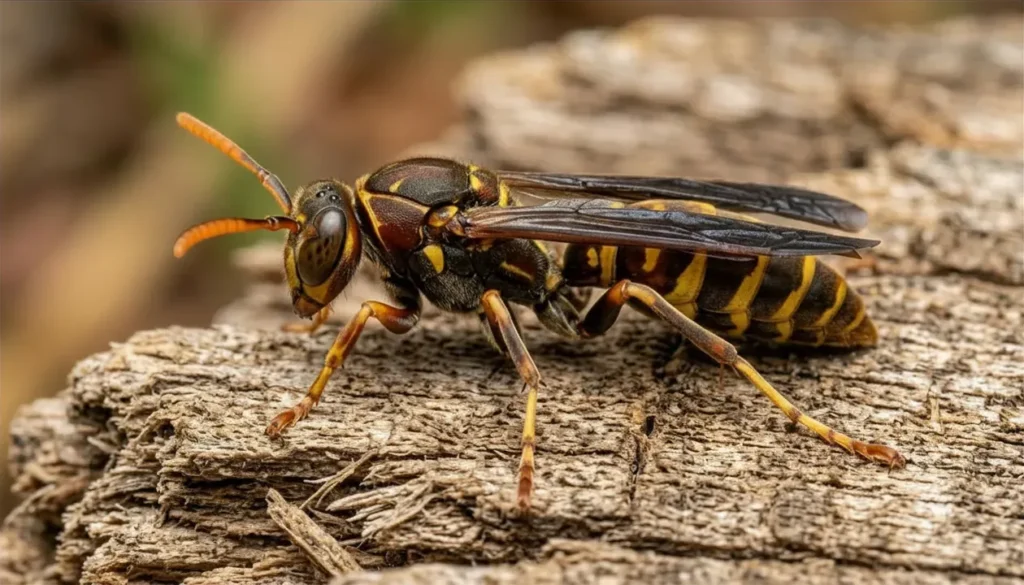
Paper wasps have a very distinct look. Once you know what to look for, they are easy to spot.
Here is what to watch for:
- Body shape: Long and slender with a narrow waist
- Size: About 5/8 to 1 inch long
- Colour: Usually brownish with yellow markings. Some species are reddish-orange or black
- Legs: Long legs that dangle below the body during flight
- Antennae: Orange-tipped in most native species a useful way to tell them apart from yellowjackets
- Wings: Dark and folded flat against the body when resting
In flight, the dangling legs are the biggest visual clue. Yellowjackets tuck their legs into their body. Paper wasps let them hang.
What Paper Wasp Nests Look Like
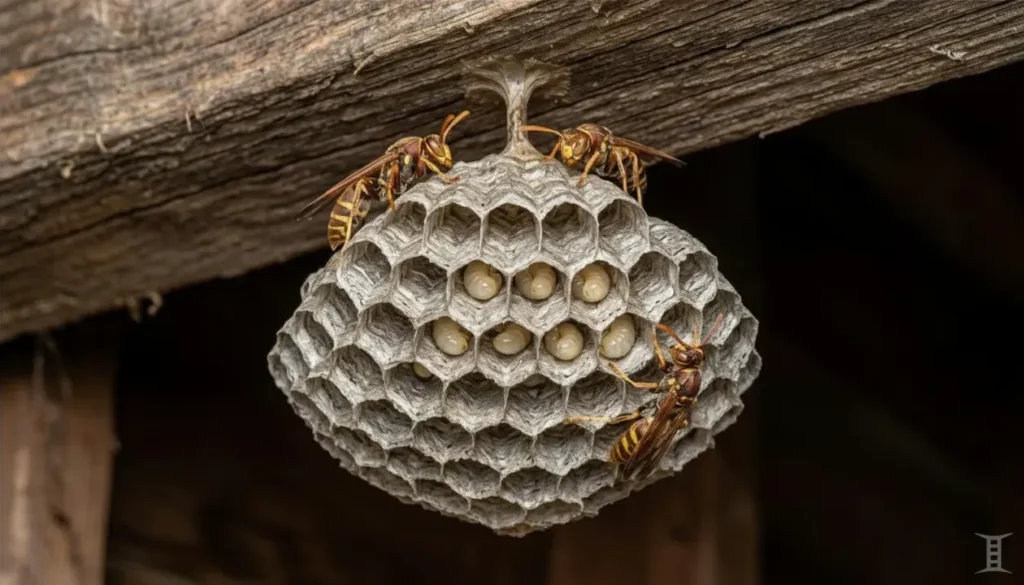
The nest is the clearest sign you are dealing with paper wasps. Their nests look like an upside-down umbrella or cone. The cells are open and visible; you can actually see the larvae inside.
Nests are made from grey, papery material. They attach to a surface through a single thin stalk called a pedicle. You will often find them under the following:
- Porch ceilings and overhangs
- Roof eaves and gutters
- Window frames and door frames
- Tree branches and shrubs
- Garage rafters and sheds
- Deck railings and fences
Important: Paper wasp nests are never enclosed in a paper covering. If the nest has an outer shell, it belongs to hornets or yellowjackets, not paper wasps.
Common Paper Wasp Species in the United States
Not all paper wasps behave the same. Knowing the species in your area helps you understand your risk. Here are the five most common species in the US:
1. Northern Paper Wasp (Polistes fuscatus)
This is the most widespread species in the eastern United States. It has dark brown and yellow markings. It is generally non-aggressive unless the nest is disturbed.
2. Southern Paper Wasp (Polistes exclamans)
Also called the Guinea wasp. It is common in the South and Southeast. This species builds larger colonies than most. It is moderately defensive.
3. Western Paper Wasp (Polistes aurifer)
Found primarily in the western US and California. It has golden-yellow and brown colouring. It tends to be less aggressive than eastern species.
4. Red Paper Wasp (Polistes carolina)
This species is reddish in colour. It lives mainly in the southeastern US. It gets defensive quickly when its nest is disturbed.
5. European Paper Wasp (Polistes dominula)
This is an invasive species first confirmed in the US in Cambridge, Massachusetts, in 1981. It has since spread across most of the country. This species is far more aggressive than native paper wasps. It reacts to even minor vibrations like walking on a deck above its nest. If you have been stung without an obvious reason, this is likely the species involved.
Are Paper Wasps Aggressive?
This is the most common question people ask. The short answer is it depends.
Native paper wasps are mostly defensive. They do not usually attack unless you get close to the nest. In fact, a lone paper wasp foraging in your garden is very unlikely to sting you.
European paper wasps are different. They have a notably short fuse. A vibration, a sudden movement, or even a noise can trigger them. Pest professionals consistently report that the European paper wasp is behind many of the so-called unprovoked sting incidents across the US.
What Triggers Paper Wasp Aggression?
Paper wasps release alarm pheromones when they feel threatened. These chemical signals call other wasps to defend the nest. This means one sting can quickly lead to many more.
Common triggers include:
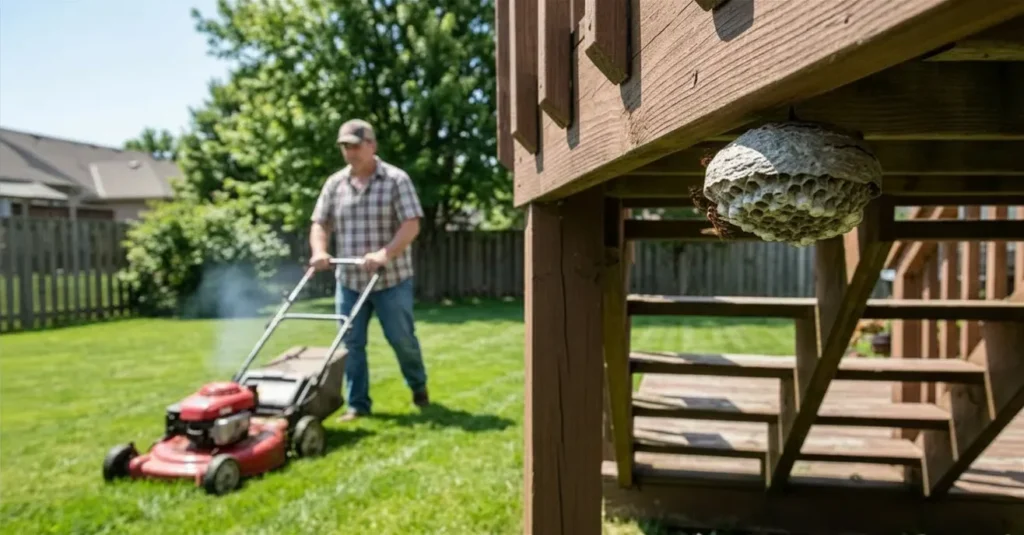
- Getting within 2 to 3 feet of the nest
- Vibrations from lawnmowers, trimmers, or power tools
- Bumping a window shutter or painted overhang
- Swatting or squashing a wasp near others
- Wearing bright floral colors or strong perfume near a nest
Can Paper Wasps Sting Multiple Times?
Yes. Unlike honeybees, paper wasps do not lose their stinger. They can sting the same person multiple times. This increases the risk of a serious allergic reaction significantly.
Paper Wasp Sting: Symptoms and Treatment
Most paper wasp stings cause pain, redness, and swelling at the site. These symptoms usually go away within a few hours.
Normal Reaction
- Sharp, burning pain immediately after the sting
- A raised red welt at the sting site
- Swelling and itching for a few hours
- Symptoms usually clear up within 24 hours
What to do:
- Move away from the area calmly. Do not swat or run.
- Wash the sting area with soap and water.
- Apply an ice pack for 10 minutes on and 10 minutes off.
- Take an antihistamine like Benadryl to reduce itching.
- Use a hydrocortisone cream on the welt for extra relief.
Large Local Reaction
Some people develop swelling beyond the sting site. A sting on the forearm can cause the entire arm to swell. This is not necessarily a full allergic reaction. However, it may need a doctor visit if the swelling is very large or continues getting worse after 48 hours.
Allergic Reaction (Anaphylaxis)
About 3% of adults experience a severe systemic reaction to wasp stings. This is called anaphylaxis. It is a medical emergency.
Signs of anaphylaxis include:
- Throat tightening or difficulty swallowing
- Sudden drop in blood pressure
- Dizziness or fainting
- Rapid heartbeat
- Hives spreading across the body
- Difficulty breathing
Call 911 immediately if you or someone nearby shows these signs. If the person carries an EpiPen, use it right away and still call for emergency help.
Note: There is also a delayed reaction called serum sickness. It can appear 6 to 14 days after a sting. Symptoms include joint pain, fever, and a spreading rash. See a doctor if this happens. Most people are unaware this reaction exists.
Paper Wasp Life Cycle and Seasonal Activity
Understanding the life cycle helps you time your prevention efforts correctly.
Spring (March–May): Queen Emerges
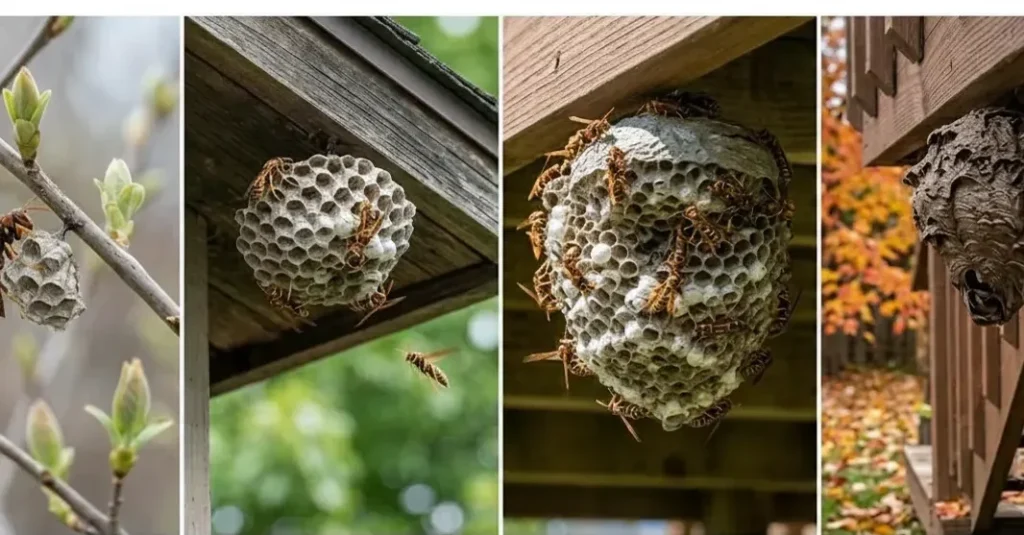
A fertilised queen survives winter by hiding under tree bark, in wall cracks, or in sheltered spots. In early spring she comes out and starts a new nest alone. She lays the first eggs herself.
Summer (June–August): Colony Grows
Worker wasps hatch and take over nest-building and food gathering. The colony grows steadily through summer. This is when you are most likely to encounter paper wasps near your home. Nest size peaks in late August.
Fall (September–October): Colony Declines
As temperatures drop, workers and males die off. New queens mate and find overwintering spots. The old nest is abandoned and will not be used again.
Key Fact: Nests Are Never Reused
Paper wasps do not return to old nests. However, queens often return to the same location to build a brand new one. If you had a nest under your eave last year, there is a strong chance you will get one there again next spring.
Are Paper Wasps Beneficial?
Most people want paper wasps gone the moment they see a nest. That reaction makes sense. But before you reach for the spray, it is worth knowing what these insects actually do.
Paper wasps are natural pest controllers. They hunt caterpillars, flies, beetle larvae, and other soft-bodied insects. They bring this prey back to the nest to feed their young. A single colony can consume hundreds of garden pests over the course of a summer.
They are also minor pollinators. Adult paper wasps feed on nectar. As they move between flowers, they transfer pollen. They are not as efficient as bees, but they still contribute to your garden’s health.
So are paper wasps good or bad? The honest answer is both; it depends entirely on where they are nesting.
A paper wasp colony in a far corner of your yard, up in a tree, or under a remote eave is doing more good than harm. Leave it alone if you can safely keep your distance.
A colony near your front door, under a deck you use daily, or in a children’s play area is a genuine hazard. Remove it. The ecological benefit does not outweigh the sting risk when the nest is in a high-traffic spot. That is the only line you need to draw.
What Attracts Paper Wasps to Your Home?
If paper wasps keep coming back year after year, your property is giving them exactly what they need. Understanding what draws them in is the first step toward long-term prevention.
Here are the main attractants:
Sheltered, shaded surfaces. Paper wasps need a protected spot to anchor their nest. Porch ceilings, roof eaves, window frames, and garage rafters offer exactly that. Structures with lots of overhangs are naturally more attractive to nesting queens.
Weathered or unpainted wood. Queens scrape wood fibre from untreated and weathered surfaces to build their nests. Fence boards, old deck rails, and bare wood siding are prime targets. A freshly painted or sealed surface is far less useful to them.
Abundant insect prey nearby. Paper wasps go where the food is. Gardens with aphids, caterpillars, and beetle larvae are reliable feeding grounds. A healthy pest population in your yard means paper wasps will keep returning season after season.
Open water sources. Like many insects, wasps need water. Bird baths, leaky spigots, clogged gutters, and even pet water bowls can draw them in during hot months.
Previous nesting sites. Even though paper wasps never reuse an old nest, queens have a strong memory for productive locations. If a nest was successfully built somewhere on your property last year, a new queen will likely scout that exact spot again in spring.
Removing or reducing these attractants is more effective than any spray. It stops the problem at the source rather than just treating the symptoms.
Paper Wasp vs. Yellowjacket vs. Hornet: Key Differences
| Feature | Paper Wasp | Yellowjacket | Bald-Faced Hornet |
| Size | 5/8″ – 1″ | About 1/2″ | About 3/4″ |
| Color | Brown/yellow, some red | Bright yellow and black | Black and white |
| Legs in flight | Dangle visibly | Tucked in | Tucked in |
| Nest type | Open cells, umbrella shape | Enclosed, often underground | Enclosed paper shell, above ground |
| Aggression level | Low to moderate | High | Moderate to high |
| Stings multiple times? | Yes | Yes | Yes |
If the nest is in the ground, it is almost certainly yellow jackets — not paper wasps.
How to Keep Paper Wasps Away
Prevention is easier than removal. Here are the most effective steps you can take.
1. Inspect Early in Spring
Walk around your home in March and April. Look under eaves, gutters, porch ceilings, and deck railings. Find and remove small starter nests before they grow. Early nests may only have 5 to 10 cells and just the queen inside.
2. Seal Entry Points
Paper wasps slip through cracks in siding, torn window screens, open vents, and gaps around pipes. Seal these with caulk or foam. This also prevents them from nesting inside wall voids where removal becomes far more difficult.
3. Paint Overhangs sky blue.
This is one of the most surprising and effective prevention tips. Wasps avoid building on sky-blue-coloured surfaces. They appear to confuse the colour with the open sky. Paint the inside of porch ceilings and eave boards light blue to deter nesting, especially in spots where they have built before.
4. Remove Weathered or Untreated Wood
Paper wasps love to scrape fibre from weathered, unpainted wood for nest building. Paint or seal all exposed wood surfaces on your home. This removes one of their key building materials at the source.
5. Avoid Attracting Them to Your Person
- Do not wear bright floral colors near known nesting areas
- Avoid strong perfumes, hairspray, or scented sunscreen outdoors in summer
- Cover sweet drinks and food during outdoor gatherings
6. Hang a Fake Nest
Paper wasps are territorial. They will not build near another active colony. You can purchase or make a fake paper wasp nest. Hang it near common nesting spots early in spring. This deters queens from settling on your property during their scouting phase.
7. Use Soap and Water on Small New Nests
A solution of dish soap and water sprayed directly on a wasp’s starter nest at night when wasps are least active can break down the wasp’s protective body coating. It is a non-toxic option for very small, early-stage nests only. Always wear thick protective clothing even for small nests.
Should You Remove the Paper Wasp Nest Yourself?
Here is a simple rule: location decides the risk.
Consider leaving the nest if:
- It is high up in a tree or a remote area of the yard
- There is no foot traffic near it
- The colony is small and appears to be a non-European species
Paper wasps eat caterpillars, flies, and other garden pests. They are also minor pollinators. A distant nest does real ecological good and costs you nothing.
Remove the nest if:
- It is near a doorway, mailbox, play area, or air-conditioner unit
- Anyone in your household has a known wasp-sting allergy
- It is inside a wall void or attic space
- The colony is large or the species appears to be the European paper wasp
For small, accessible nests at night a commercial wasp freeze spray applied directly to the nest can be effective. Stand back. Wear thick clothing and eye protection. Never use fire. Never remove an active nest with bare hands.
When to Call a Wasp Exterminator
Some situations are simply too dangerous for DIY. Call a professional if:
- The nest is large — more than 30 to 40 cells
- The nest is inside your walls, attic, or soffit
- Someone in your home is allergic to stings
- You have already been stung attempting removal
- You cannot safely reach the nest
- The wasps appear unusually aggressive likely European paper wasps
What Does a Wasp Exterminator Cost?
Professional wasp nest removal typically costs between $100 and $400 in the US. The price depends on nest size, location, and your region. Wall void or attic treatments cost more. Most pest control companies offer a follow-up visit if wasps return within 30 days.
A professional uses targeted insecticide and proper protective equipment and knows how to eliminate the entire colony, not just the visible nest. They also check for secondary nests you may not have found on your own.
Frequently Asked Questions About Paper Wasps
Q: Do paper wasps sting for no reason?
Usually no. Native paper wasps sting to protect their nest. However, European paper wasps can react to vibrations and sudden movements with very little provocation. Always stay cautious near any wasp nest regardless of species.
Q: Can I knock down a paper wasp nest with a stick?
No. Do not do this. Disturbing an active nest will trigger a mass defensive response immediately. Even if you run, wasps can follow you for a short distance. Always treat or freeze the nest before any attempt to remove it.
Q: Do paper wasps come back after you remove the nest?
They may. Queens have a strong instinct to return to familiar nesting sites. After removal, apply a residual insecticide spray to the area. This deters rebuilding. Seal the surface if possible to remove the anchor point entirely.
Q: Are paper wasps dangerous to dogs and cats?
Yes. Paper wasp venom is toxic to mammals, including pets. A dog or cat that snaps at a wasp can receive multiple stings quickly. Watch for swelling around the mouth, excessive drooling, or difficulty breathing. Take your pet to a vet immediately if this happens.
Q: What is the difference between a paper wasp and a mud dauber?
Mud daubers are solitary wasps. They build tube-shaped mud nests and are almost never aggressive. Paper wasps are social and actively defend their nests. If you see a lumpy mud tube on a wall it is almost certainly a mud dauber — a far lesser concern than paper wasps.
Final Thoughts
After years of dealing with paper wasps personally and through extensive research, one thing is always true. The homeowners who act early in spring almost never face a serious problem by summer. A nest the size of a quarter in March is manageable. The same nest in July is not.
Do not treat all wasps the same. If you are getting stung without an obvious reason, there is a strong chance it is the European paper wasp. That species is far more aggressive than the native ones and plays by completely different rules.
The sky-blue paint trick, sealing weathered wood, and doing a quick walk-around of your property every March these are not big tasks. But they make a real difference. Prevention almost always beats removal.
And if the nest is large, near a doorway, or someone in your home has a sting allergy, please call a professional. One exterminator visit costs far less than an emergency room trip. That is not a scare tactic. It is just experience talking.
You do not have to fear your own backyard. You just need the right information and now you have it.