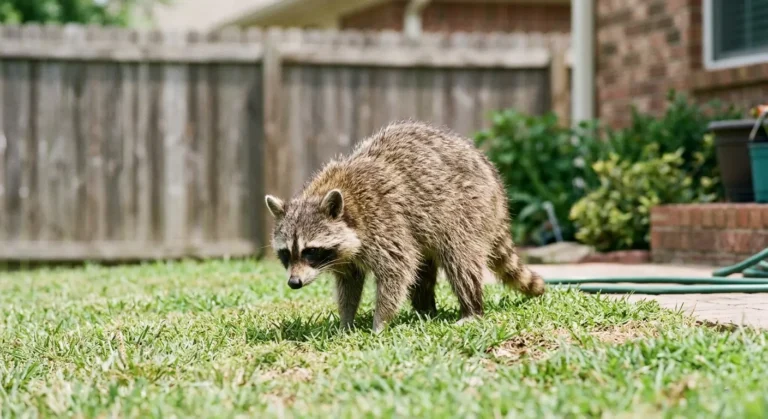
Raccoon Poop Identification and Cleanup Risks for Homeowners
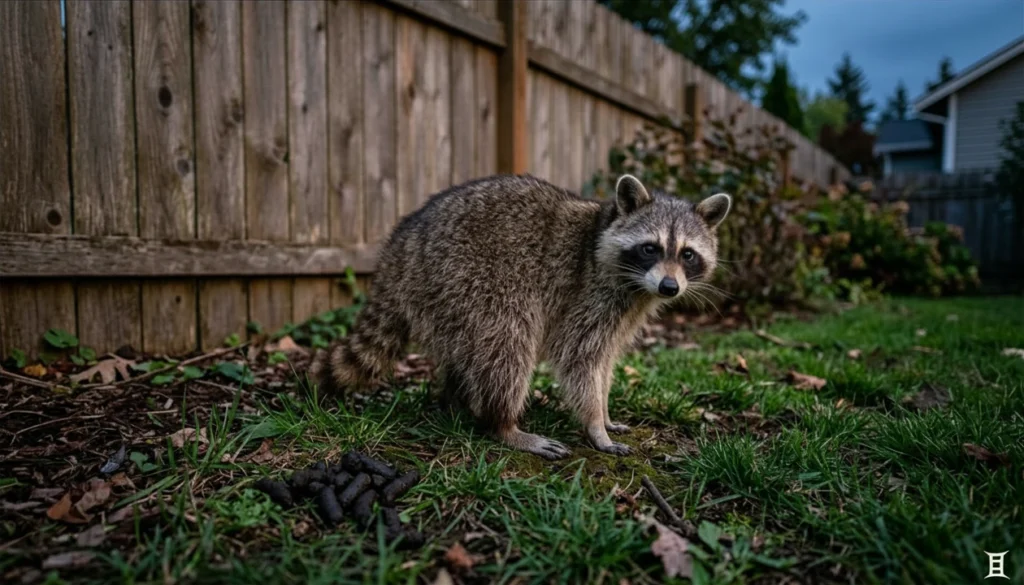
I still remember the first time I found a strange pile of droppings near my backyard fence. My dog had already sniffed it twice before I even noticed it was there. I swept it up with a broom and thought nothing of it that was a big mistake.
A few days later, the pile came back. That is when I started researching what raccoon poop actually looks like and what dangers it carries. After years of helping homeowners deal with wildlife waste, I have seen this same situation play out hundreds of times.
At a Glance: What You Will Learn:
- How to identify raccoon poop by size, color, and contents
- How to tell it apart from opossum and dog poop
- Where raccoons build latrines and why that location matters
- Five diseases raccoon poop droppings can carry, including one bleach cannot kill
- A safe, step-by-step cleanup guide
- Real professional cleanup costs and an insurance tip most homeowners miss
Table of Contents
- What Does Raccoon Poop Look Like?
- Raccoon Poop vs. Opossum vs. Dog Poop
- What Is a Raccoon Latrine?
- 5 Health Risks of Raccoon Droppings
- Pet Safety: What If My Dog Was Exposed?
- What NOT To Do
- How to Safely Clean Up Raccoon Poop
- DIY vs. Professional: How To Decide
- When To Call a Professional
- Seasonal Raccoon poop Activity Calendar
- Prevention Tips
- Frequently Asked Questions
- Final Thoughts From the Field
1. What Does Raccoon Poop Look Like?
Raccoon poop identification comes down to a few clear features. Once you know them, it is easy to spot.
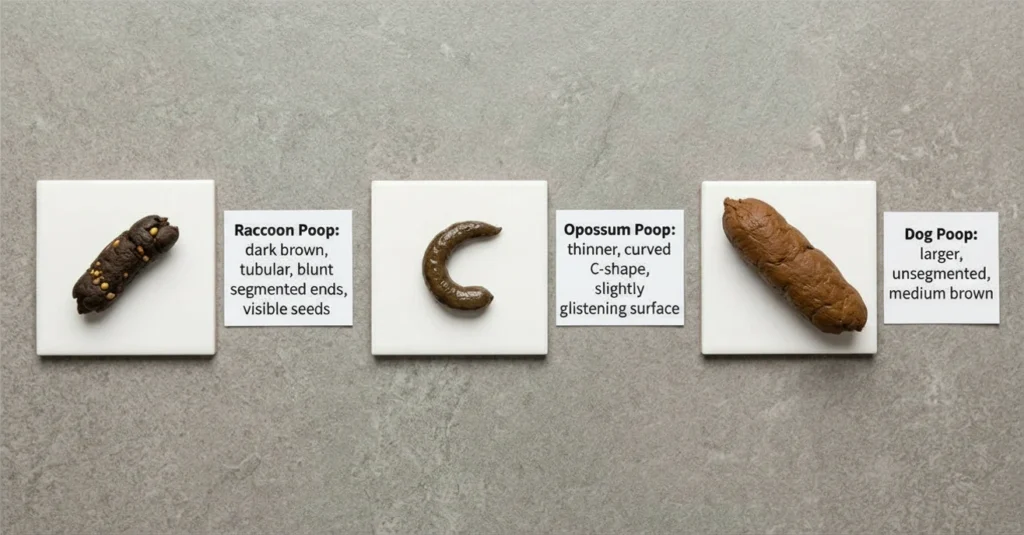
Size and shape: Raccoon poop droppings are tubular and segmented. They look like small logs. Each dropping is about 2 to 3 inches long and ½ to 1 inch in diameter. Many people mistake them for dog poop at first glance.
Colour: The colour is usually dark brown or black. It can change slightly based on what the raccoon has been eating recently.
Texture: This is the biggest giveaway. Raccoon poop scat almost always contains undigested food particles. You will often see berries, seeds, corn kernels, or insect parts inside it. If you see seeds in the dropping, it is very likely from a raccoon.
Smell: Raccoon poop droppings have a strong, musky odour. The smell gets noticeably worse as the droppings age.
Fresh vs. old raccoon poop: Fresh droppings are dark, moist, and soft. Old droppings dry out and become crumbly. Dry droppings are actually more dangerous. They turn into fine dust when disturbed, and that dust can carry parasite eggs directly into the air you breathe.
Important: Never poke or disturb dry raccoon poop droppings without wearing a respirator mask. The dry particles can be inhaled without you realising it.
2. Raccoon Poop vs. Opossum vs. Dog Poop
Many homeowners confuse raccoon poop scat with droppings from other animals. Here is a simple comparison to help you tell them apart.
| Feature | Raccoon Poop | Opossum Poop | Dog Poop |
| Size | 2–3 inches long, ½–1 inch wide | 1–2 inches, thinner | Varies, usually larger |
| Shape | Tubular, segmented, blunt ends | Thin, tapered, often curved in a C-shape | Tubular, no segments |
| Color | Dark brown to black | Dark brown to black, may glisten when fresh | Brown, varies by diet |
| Contents | Seeds, berries, insect parts | Rarely has visible food particles | No food particles |
| Deposit pattern | Piled in one spot (latrine) | Scattered randomly | Random |
| Odor | Strong, musky | Strong, musky | Typical fecal odor |
Key difference: Raccoons always return to the same spot. Opossums drop waste wherever they walk. So if you find a growing pile in one fixed location, that is almost certainly a raccoon poop latrine.
3. What Is a Raccoon Latrine?
A raccoon poop latrine is a fixed toilet spot that raccoons return to repeatedly. Multiple raccoons in the same area will often use the exact same location. This creates a large, growing pile of contaminated waste over time.
Raccoon latrines are commonly found in these locations:
- Attics — the most dangerous location due to insulation contamination
- Flat rooftops — a favorite because of the wide, flat surface area
- Decks and patios — especially in corner areas or under outdoor furniture
- Tree stumps and woodpiles — very common outdoor latrine spots
- Near swimming pools — raccoons wash food near water sources and then defecate nearby
- Garden beds and vegetable patches — a serious concern for families who grow food at home
Finding a latrine means multiple raccoons are actively using your property. It is not a one-time visit from a passing animal.
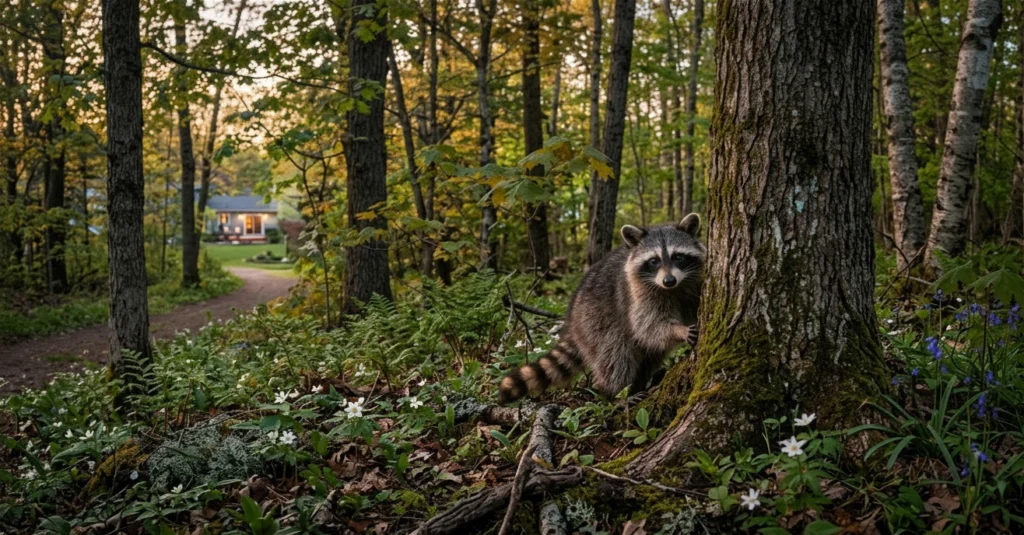
4. Five Health Risks of Raccoon Droppings
This is the most critical section of this guide. Raccoon faeces carry serious diseases that affect both humans and pets. Do not skip this section.
Raccoon Roundworm (Baylisascaris procyonis)
This is the most dangerous disease linked to raccoon poop. The roundworm lays its eggs inside raccoon droppings. The eggs are not immediately harmful when freshly deposited. However, they become infective after 2 to 4 weeks. After that point, they can survive in soil for years.
If a human accidentally swallows or inhales these eggs, the larvae can travel to the brain and organs. This causes severe neurological damage. In extreme cases it leads to coma or death. Children are most at risk because they may touch contaminated soil and then put their hands in their mouths.
Leptospirosis
This is a bacterial infection spread primarily through raccoon urine, which then contaminates surrounding soil, water, and surfaces, including faecal matter nearby. It enters the body through skin contact, inhalation, or contaminated water sources. Early symptoms feel like the flu — fever, muscle aches, and vomiting. Without treatment, it can progress to kidney failure, liver failure, or meningitis.
Raccoons can carry this bacteria without showing any symptoms at all. There is no way to know if a raccoon is infected just by looking at it.
Giardia
Giardia is a parasite found in raccoon droppings. It is a zoonotic disease, meaning it spreads from animals to humans. It causes stomach cramps, nausea, and watery diarrhoea. Dogs are especially vulnerable to contracting Giardia from raccoon faeces.
Salmonella
Salmonella bacteria live in raccoon scat. It is resilient and can survive in dry soil and droppings for several weeks to months. Ingesting it causes abdominal pain, diarrhoea, and fever. Children, the elderly, and immunocompromised individuals face the highest risk of serious complications.
Trypanosoma cruzi (Chagas-Related Parasite)
This parasite has been documented in raccoon faeces across several US states. The CDC lists it as a concern in raccoon waste. While human cases from raccoon contact are rare, it is a confirmed risk worth knowing.
Most at risk: Young children, pregnant women, elderly adults, immunocompromised individuals, and household pets — especially dogs.
5. Pet Safety: What If My Dog Was Exposed?
Dogs love to sniff and sometimes eat raccoon poop. This is one of the fastest ways for them to become seriously ill.
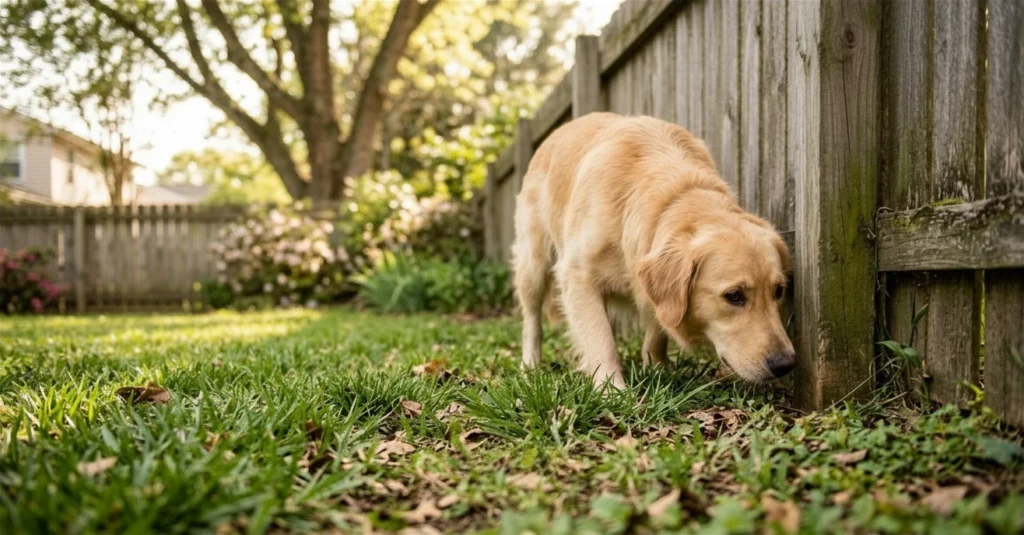
If your dog was near a raccoon latrine, watch closely for these symptoms:
- Vomiting or diarrhea that does not stop within 24 hours
- Lethargy or sudden loss of appetite
- Yellowing of the eyes — a key warning sign of Leptospirosis
- Dark-colored urine
Call your vet immediately if you notice any of these signs. Do not wait to see if symptoms improve on their own. Early treatment makes a significant difference in outcomes for both leptospirosis and Giardia.
Prevention tip: Ask your vet about the Leptospirosis vaccine for dogs. It is strongly recommended for any dog that spends time outdoors, especially in suburban or semi-rural areas where wildlife activity is common.
6. What NOT To Do
Many homeowners make these mistakes without knowing the consequences. Each one can make the situation significantly more dangerous.
Do NOT vacuum the droppings. Vacuuming sends dried particles and parasite eggs directly into the air. You can inhale them without realising it.
Do NOT sweep dry droppings. Sweeping does exactly the same thing as vacuuming. It disturbs particles and makes them airborne instantly.
Do NOT use a pressure washer. This spreads contaminated water across a wide area. It pushes waste deep into soil, cracks, and nearby surfaces.
Do NOT rely on bleach alone. This is the most dangerous myth. Bleach does NOT kill Baylisascaris roundworm eggs. Only boiling water, direct flame, or extreme heat can destroy them. Standard household disinfectants are completely ineffective against this specific parasite.
Do NOT touch droppings with bare hands. Always wear disposable gloves, a respirator mask, and eye protection before approaching raccoon waste of any kind.
7. How to Safely Clean Up Raccoon Poop
If the contamination is small and located in an outdoor area, careful DIY cleanup is possible. Follow every step in order.
Step 1 Get your PPE ready. You need an N95 or P100 respirator, disposable gloves, safety goggles, and disposable coveralls if available.
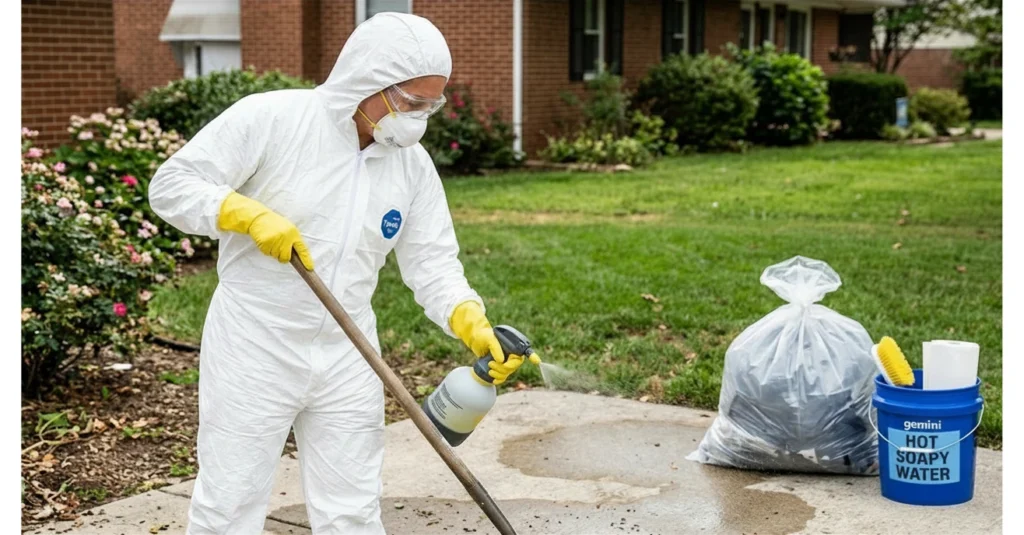
Step 2 Mist the area first. Lightly spray water over the droppings before touching anything. This prevents dry particles from becoming airborne during cleanup.
Step 3 Remove the waste carefully. Use a shovel or an inverted plastic bag to pick up the droppings. Do not use your hands under any circumstances.
Step 4 Dispose of it properly. Place all waste in a sealed plastic bag. Take it directly to an outdoor trash can for immediate landfill pickup. You can also bury it or burn it if local regulations allow.
Step 5 Clean the surface. Use a damp sponge with hot, soapy water. Rinse the sponge in clean water frequently. Do not reuse it after cleanup is complete.
Step 6 Apply boiling water if possible. For hard outdoor surfaces, pour boiling water directly over the area. This is the only reliable method to kill Baylisascaris eggs on hard surfaces.
Step 7 Wash everything. Wash your hands thoroughly with soap and warm running water. Launder all clothing immediately on the hottest setting the fabric allows.
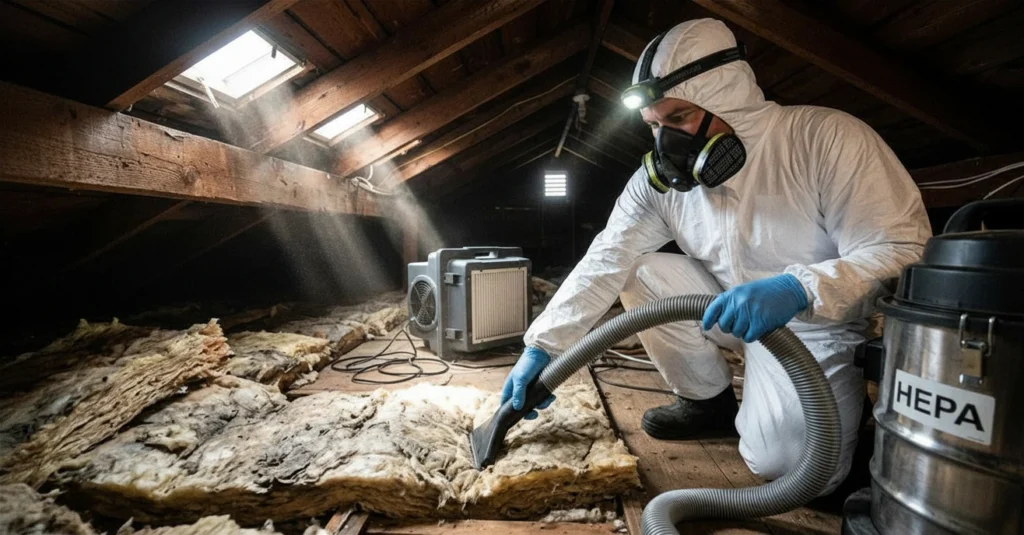
When DIY is NOT appropriate: If the latrine is inside your attic, if insulation is contaminated, or if the area is large, stop immediately and call a professional.
8. DIY vs. Professional: How To Decide
Not sure whether to clean it yourself or call someone? Use this checklist before you touch anything.
You CAN handle cleanup yourself if the following are true:
- The latrine is outdoors in a yard, on a deck, or in a garden
- The affected area is small — under one square foot
- No insulation, drywall, or porous wood has been contaminated
- No children under 5 or immunocompromised people live in your home
- You have access to proper PPE, including an N95 mask, gloves, and goggles
You MUST call a professional if:
- The droppings are inside your attic or within your walls
- Insulation has been soaked, flattened, or visibly contaminated
- You find more than one latrine on the property
- Someone in your household is pregnant, elderly, or immunocompromised
- You notice a strong ammonia-like odor coming from inside the ceiling or walls
- The droppings are dry and crumbling; this means aerosolized particles and serious inhalation risk
Bottom line: Outdoor cleanup with the right gear is manageable for most homeowners. Indoor attic cleanup is never a DIY job. The health risks are too high without professional equipment and training.
9. When To Call a Professional
Some situations always require expert help regardless of how confident you feel. Call a licensed wildlife removal professional if any of the following apply.
- The latrine is inside your attic or walls
- Droppings have soaked into insulation or drywall
- You find multiple latrines across your property
- Anyone in your household is immunocompromised, pregnant, or under five years old
How much does professional raccoon cleanup cost?
Costs vary depending on the size and location of the contamination.
- Outdoor spot clean: $250 to $500
- Attic spot sanitation: ~$380 per area
- Full attic remediation with insulation removal: $3,000 to $10,000+
- Insulation replacement: $1 to $7 per square foot
- Exclusion barriers: $10 to $25 per linear foot
Can homeowner’s insurance cover it? Often, yes. Raccoons are not classified as rodents. This means standard rodent damage exclusions in most policies do not apply to raccoon damage. Always contact your insurer and file a claim before starting any remediation work. This one call could save you thousands of dollars in out-of-pocket costs.
10. Seasonal Raccoon Activity Calendar
Raccoon behaviour changes throughout the year. Knowing the seasons helps you stay ahead of problems before they start.
Spring (March – May) Highest Risk: This is baby season. Female raccoons actively search for warm, safe spaces to give birth. Attics are their top choice. Inspect your roof, soffits, vents, and fascia boards every March. Seal any gaps before females move in. A mother raccoon with babies is significantly harder and more expensive to remove than a single adult.
Summer (June – August): Active Foraging Raccoon families are active and feeding heavily during summer. They raid gardens, compost bins, and trash cans regularly. Latrines in yards and on decks are most common during this period. Keep all outdoor food sources securely locked down throughout summer.
Fall (September – November) Pre-Winter Feeding Raccoons eat aggressively before winter arrives. This is when they are most bold around human homes and properties. They frequently return to latrines established earlier in the year. Check and clean any known latrine spots from summer before roundworm eggs age further in cooling soil.
Winter (December – February) — Lower Activity Raccoons do not fully hibernate, but they slow down significantly in cold weather. This is the best time to seal all entry points, install chimney caps, and reinforce attic vents. Raccoons are far less likely to resist or return during exclusion work carried out in winter.
11. Prevention Tips
The best strategy is to stop raccoons from establishing latrines on your property in the first place. These steps are simple but highly effective.
- Secure all trash cans with bungee cords or locking lids — never leave them open overnight
- Remove pet food from porches and decks every single evening without exception
- Trim tree branches that hang over or touch your roofline
- Install chimney caps and cover all attic vents with heavy-gauge steel mesh
- Use motion-activated lights or sprinklers to deter raccoons during nighttime hours
Consistent prevention during late winter and early spring is the single most effective thing you can do as a homeowner.
12. Frequently Asked Questions
What does raccoon poop look like? Raccoon poop is dark brown or black, tubular, and 2 to 3 inches long. It almost always contains undigested seeds, berries, or insect parts inside it.
Is raccoon poop dangerous to humans? Yes. Raccoon faeces can carry roundworm, leptospirosis, Giardia, and Salmonella. These diseases can cause serious illness in both humans and pets.
What is the difference between raccoon poop and opossum poop? Raccoon droppings are blunt-ended, segmented, and left in a growing pile in one fixed location. Opossum droppings are thinner, curved, and scattered randomly with no latrine behaviour.
Does bleach kill raccoon roundworm eggs?
No, bleach does not kill Baylisascaris procyonis eggs. Only boiling water or direct flame on hard surfaces can reliably destroy them.
How long do raccoon roundworm eggs survive in soil?
The eggs become infective after 2 to 4 weeks. After that they can survive in soil or on surfaces for several years under the right conditions.
My dog ate raccoon poop. What should I do?
Call your vet immediately. Watch for vomiting, diarrhoea, lethargy, and yellowing of the eyes. These can all be signs of Giardia or leptospirosis, and both require prompt veterinary treatment.
What should I do if I accidentally touched raccoon poop?
Do not touch your face, eyes, or mouth. Walk to the nearest sink immediately and wash your hands thoroughly with antibacterial soap and warm water for at least 20 seconds. Monitor yourself for fever, nausea, fatigue, or muscle aches over the following 1 to 4 weeks. If symptoms appear, tell your doctor about the exposure and the date it occurred. If contact involved your eyes or mouth, see a doctor the same day without waiting for symptoms.
How much does raccoon poop cleanup cost?
Outdoor spot cleanup ranges from $250 to $500. Full attic remediation with insulation removal can cost $3,000 to $10,000 or more depending on the extent of the damage.
Will homeowner’s insurance cover raccoon cleanup?
It often does. Raccoons are not rodents, so rodent damage exclusions typically do not apply. Contact your insurer and file a claim before starting any work.
What kills raccoon roundworm eggs?
Boiling water and direct flame are the only reliable methods on hard surfaces. Standard disinfectants, including bleach, do not kill Baylisascaris eggs.
13. Final Thoughts From the Field
Over the years, I have walked through attics full of raccoon latrines and helped families who had no idea their yard was putting their kids at risk. The most common thing I hear is always the same: “I had no idea it was this serious. “That is exactly why this guide exists.
Raccoon poop identification is straightforward once you know the signs. The real challenge is understanding what comes next the roundworm eggs, the leptospiros risk to your dog, and the dry droppings that go airborne the moment you disturb them. These are the real reasons wildlife professionals wear full PPE for what looks like a simple cleanup job.
Act fast, because roundworm eggs become infective within 2 to 4 weeks. Never DIY an attic latrine; proper remediation needs an air scrubber, professional disinfectant, and full protective gear. Always call your insurer before hiring anyone, since raccoon damage is often covered under standard homeowner policies.
If you are ever unsure about the extent of contamination or whether it is safe to enter your attic, bring in a licensed wildlife control professional first. A proper inspection costs far less than the health consequences of getting it wrong. Your family’s safety is always worth more than a quick fix.