Bed Bug Bites: What They Look Like, Symptoms, Itch, Duration, and Treatment
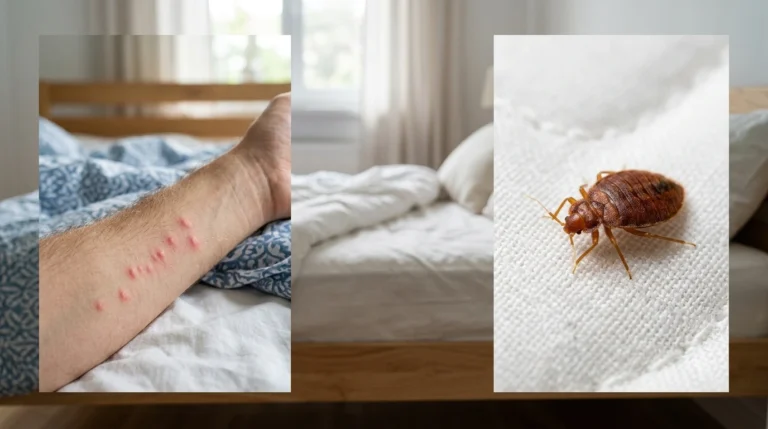
A bed bug bite is a small, red, itchy blemish that typically occurs on areas of the body left exposed overnight. Most commonly, the arms, neck, face, and legs. These bites are caused by Cimex lectularius, a small, blood-feeding parasite. Because the insect injects an anesthetic and an anticoagulant while feeding, the bite is initially completely painless.
The skin’s reaction can range from minor (no visible mark at all) to severe, resulting in swollen, highly itchy welts or a widespread bed bug rash. This guide covers everything you need to know, including the early signs of bed bug bites and the best available treatment options.
What Do Bed Bug Bites Look Like?
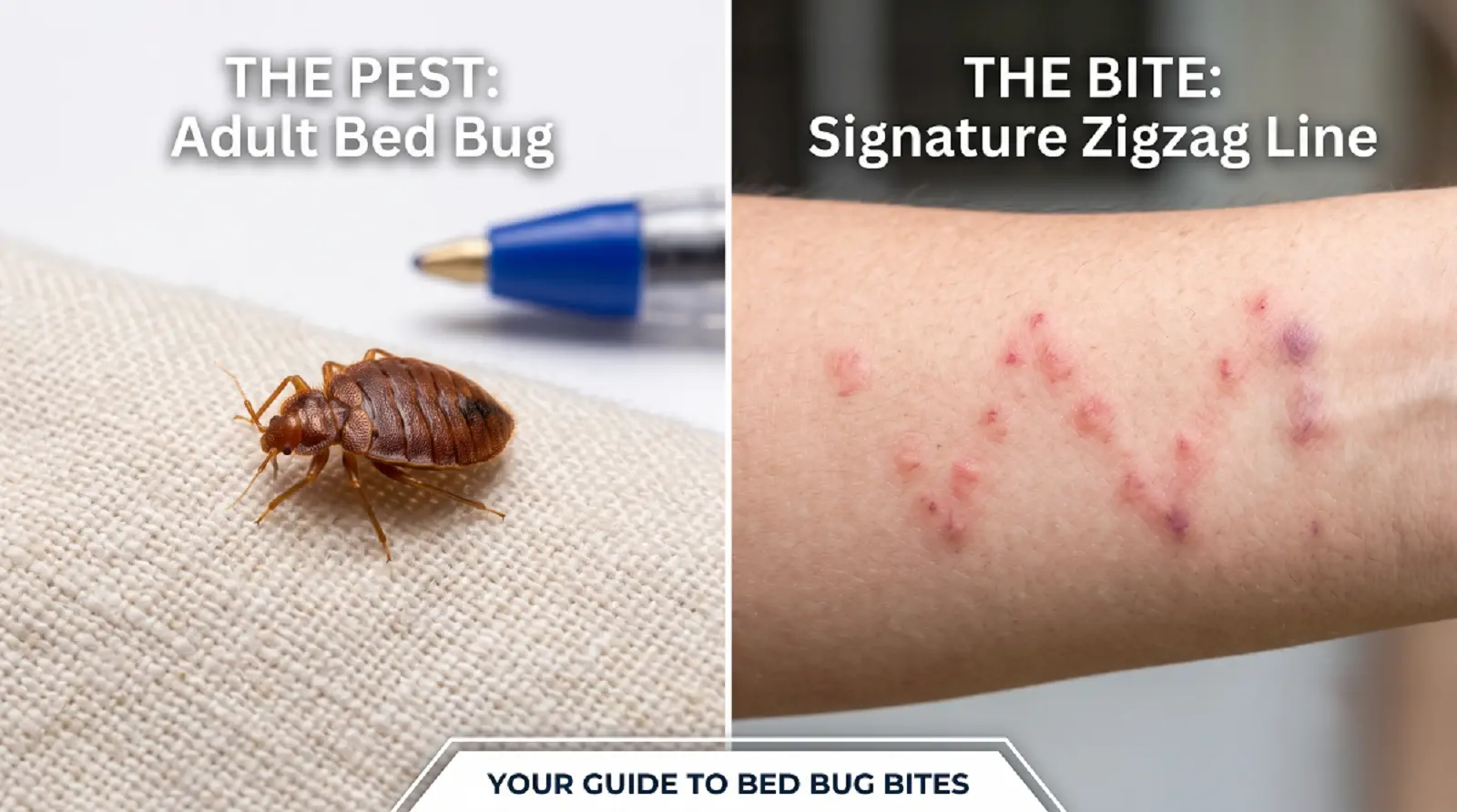
Bed bug bites normally appear as small, flat bumps or slightly raised red spots on the skin. They commonly show up in a zigzag pattern, a straight row, or a tight cluster of 3–5 bites. This distinctive layout is one of the easiest ways to distinguish their marks from other insect bites.
The appearance of the bites can vary significantly from person to person. Some individuals develop a pimple-like bump with a dark red center. Others may experience round, fluid-filled blisters or a localized hive-like patch that looks red or purple.
Crucially, everyone responds differently. Some people display no physical marks at all, while others wake up with large, swollen welts. Furthermore, it can take up to 14 days for bite marks to fully manifest on the skin.
| Bite Type | Appearance | Common Location |
|---|---|---|
| Classic welt | Little red swollen bump, dark center | Arms, neck, face |
| Cluster pattern | 3-5 bites in tight group | Shoulders, back |
| Zigzag line | Bites in a row or Z shape | Legs, arms |
| Blister | Clear fluid-filled bump | Any exposed area |
| Hives reaction | Red or purple patch of bumps | Torso, arms |
What They Look Like on Lighter Skin
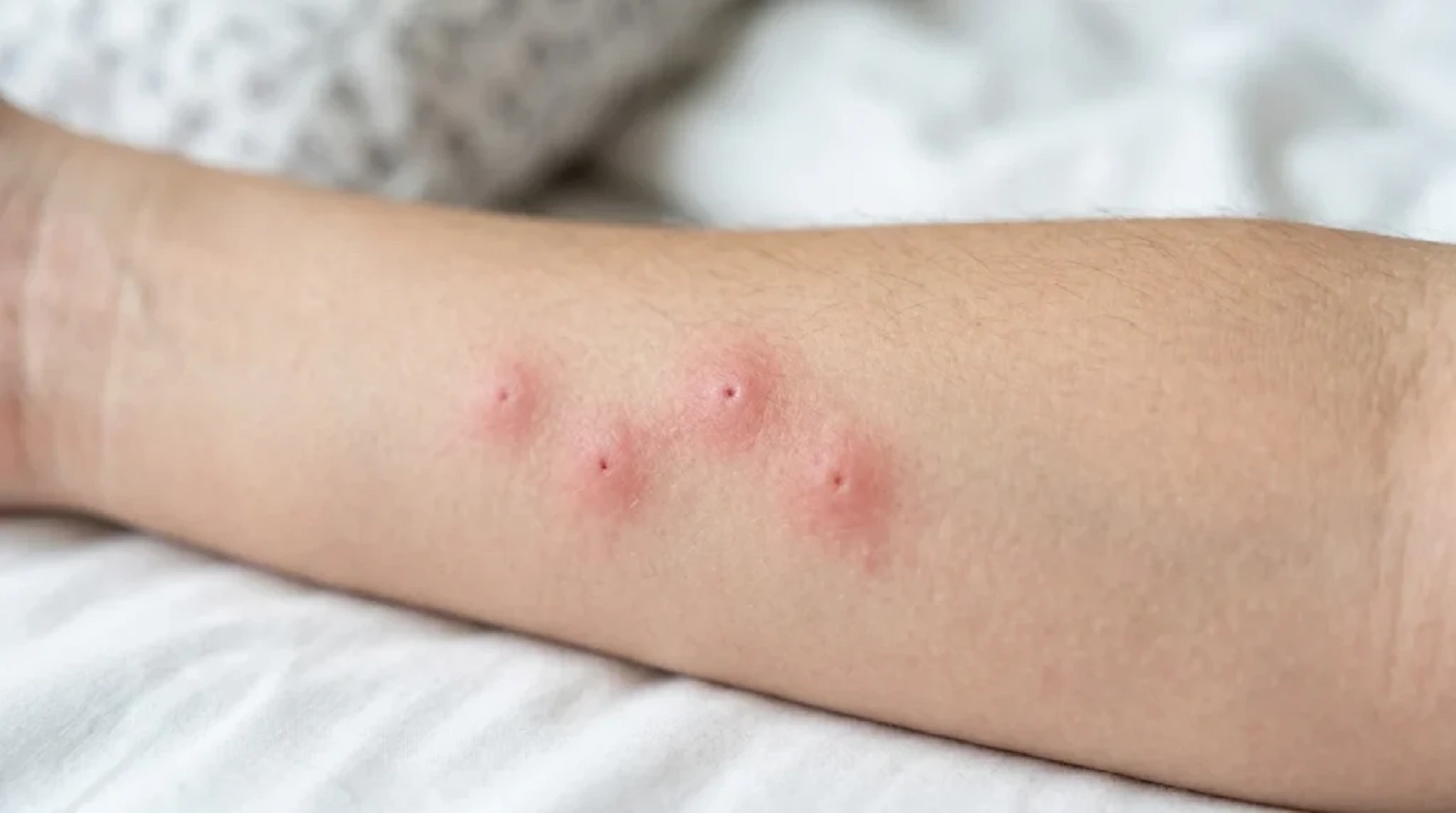
On fair or light skin, bites show up as pink or red raised bumps. They’re easy to spot. You might see a tiny dark dot in the center that’s the puncture point. The area around it can look a bit puffy or swollen, and sometimes a pale red halo forms around the bump within a day or two.
What They Look Like on Dark or Black Skin
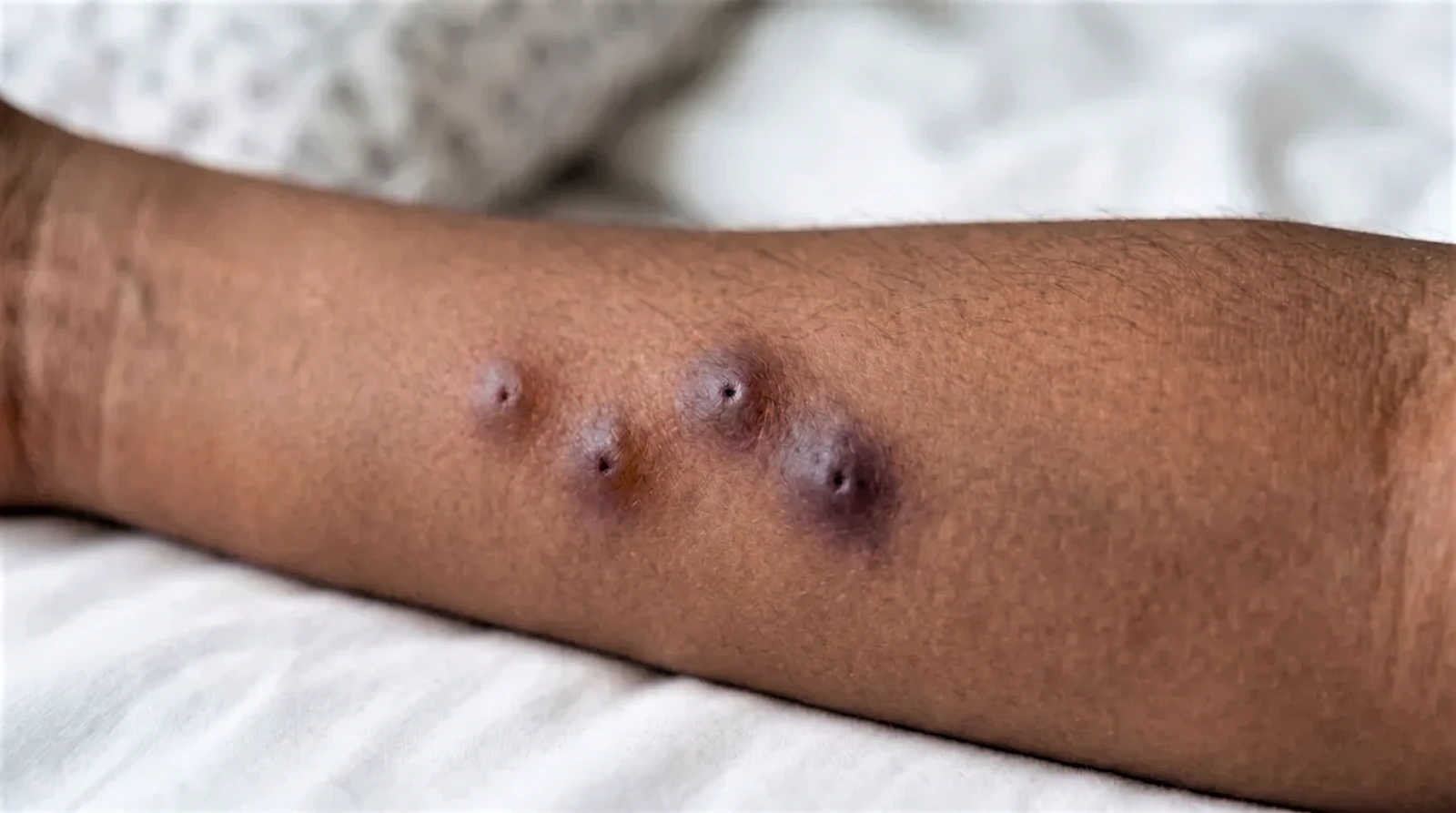
On brown or black skin, the bites don’t look red. They show up as dark purple marks, deep brownish-red patches, or spots that just look slightly darker than the surrounding skin. The redness you’d see on lighter skin? It’s hidden under melanin. That makes bites genuinely harder to spot visually.
If you have a darker skin tone, pay more attention to how the area feels rather than how it looks. Warmth, swelling, and tenderness are your real indicators. One more thing: bites on darker skin are much more likely to leave dark spots behind after they heal. That’s called post-inflammatory hyperpigmentation. It’s not dangerous, but those marks can hang around for weeks or even a few months after the bite itself is long gone.
Where Do Bed Bugs Bite on the Body?
Bed bugs target skin that comes into direct contact with the mattress or bedding while you sleep. The most frequent sites include:
- Face and neck (the most exposed areas during sleep)
- Arms and hands (usually left uncovered at night)
- Shoulders and upper back
- Legs and ankles (especially if you sleep without heavy covers)
Bites located on the torso or strictly under tight clothing are uncommon for bed bugs. If you notice bites concentrated primarily around your ankles and waist, you are likely dealing with fleas instead.
How Do Bed Bugs Actually Bite You?
Bed bugs are nocturnal feeders. They emerge in the dark, typically between 2:00 AM and 5:00 AM, while you are fast asleep. The bug pierces your skin with its elongated beak to locate a small blood vessel.
Once it finds a vessel, it simultaneously deposits two things: a numbing agent to render the area insensitive, and an anticoagulant to keep your blood flowing freely. This is why you never feel the bite when it happens.
A single bed bug can feed uninterrupted for up to 10 minutes. If it is disturbed while feeding, it will move a short distance away and bite again. This erratic feeding behavior is precisely what creates the characteristic zigzag or linear pattern on your skin.
Bed Bug Bite Symptoms: What to Watch For
Symptoms normally manifest a few hours after a person is bitten, though they can sometimes take days to appear. The most common symptoms include:
- Intense Itchiness: The most prevalent and frustrating complaint, ranging from mild to severe.
- Red, Raised Welts: Small, pimple-like bumps or localized patches of redness.
- A Burning Sensation: Particularly when you first notice the bites.
- Mild Pain or Discomfort: Localized strictly around the bite site.
- Bed Bug Rash: When numerous bites are clustered together, the entire area can become enlarged and inflamed.
Certain individuals may experience stronger reactions, particularly children, the elderly, and anyone with a compromised immune system.
Warning: Anaphylaxis (a severe, life-threatening allergic reaction) is incredibly rare but possible. Warning signs include difficulty breathing, a swollen tongue, fever, and an irregular heartbeat. Seek emergency medical care immediately if these symptoms occur.
Stages of Bed Bug Bites Over Time
| Time After Bite | What Happens | What You See |
|---|---|---|
| Day 1 | Anesthetic subsides, immunity commences | None or small red dot |
| Day 2-3 | Histamine response kicks in | Itchy, red raised welt is seen |
| Day 4-7 | Peak inflammation | Welt at its biggest, most itchy |
| Day 7-14 | Healing begins | Redness disappears, itch subsides |
| Week 2+ | Full recovery (no scratching) | Skin returns to normal |
Do Bed Bug Bites Itch? How Bad Is It?
Yes. For most people, the intense itching is the worst part of the experience. Your body is reacting to the foreign proteins present in the bed bug’s saliva. The more sensitive your immune system is to these proteins, the more severe the itch will be.
Some people find the itch far worse than a mosquito bite, while others barely notice it. Interestingly, if you are bitten repeatedly over a long period, your body can become increasingly sensitized, meaning subsequent bites will itch even more.
The hardest part of recovery is resisting the urge to scratch. Scratching tears the skin open, leaving you vulnerable to secondary bacterial infections that are much harder to treat than the initial bite.
How Long Do Bed Bug Bites Last?
The marks typically heal within 1 to 2 weeks, provided you do not scratch them. The exact timeline depends on your body’s immune response, the total number of bites, and whether a secondary infection develops.
- Mild reactions: Usually heal within 5–7 days.
- Moderate reactions: Generally take 1–2 weeks to disappear completely.
- Severe reactions or scratched bites: Can persist for 2–3 weeks or longer.
- Infected bites: Require medical treatment and will take longer to cure.
Crucial Note: If you have an active infestation in your home, you will continue to get new bites every night. The problem will not go away until the bugs themselves are eradicated. If you have bed bugs in your house, you will continue getting new bites. The infestation will never go away until it is properly treated.
Bed Bug Bite Treatment: What Actually Works
The majority of bed bug bites do not require professional medical intervention and can be easily managed at home.
At-Home Self-Care
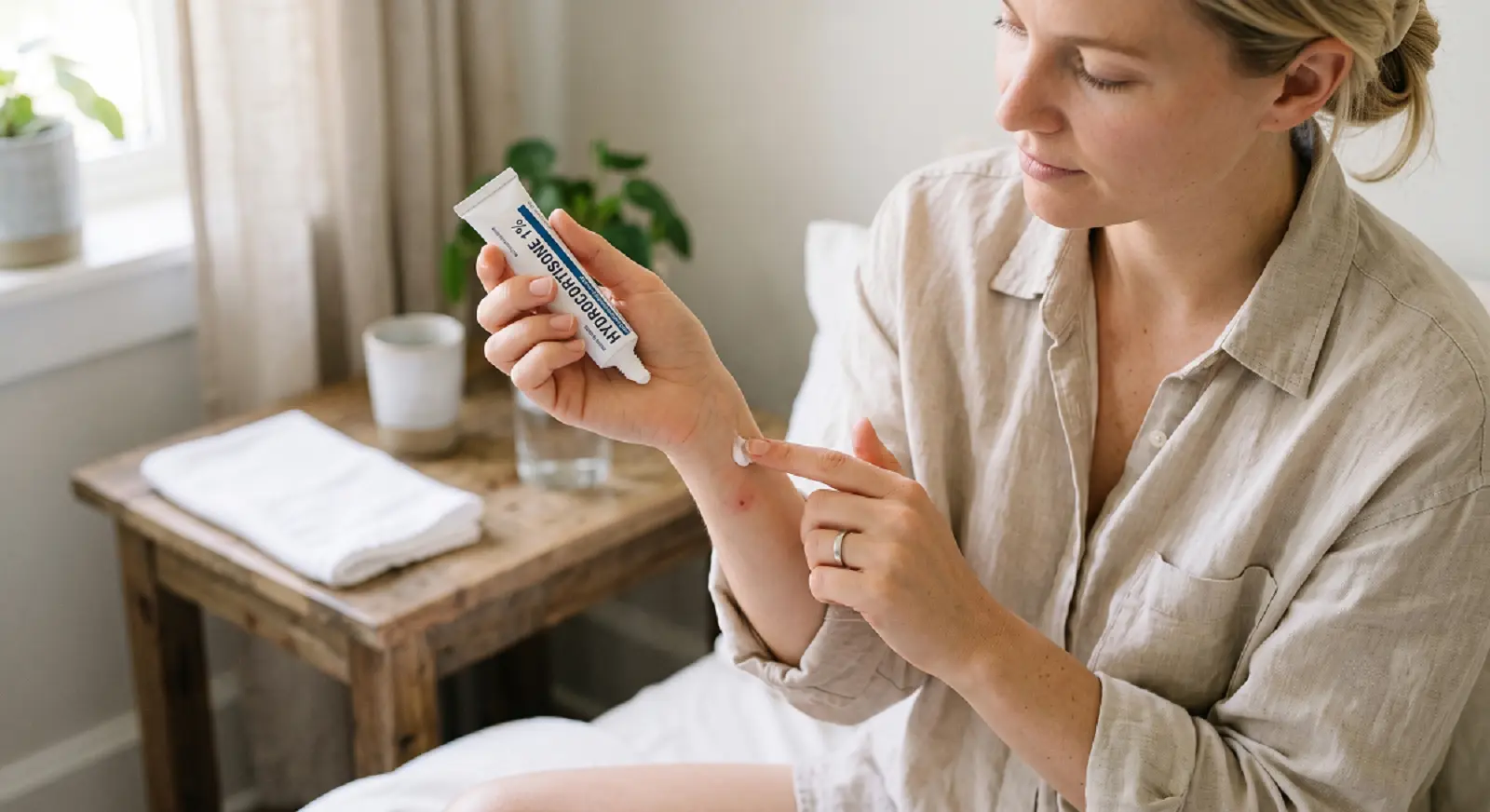
- Wash the area: Clean the bites with mild soap and cool water to reduce irritation and minimize the risk of infection.
- Apply a cold compress: A cold cloth or an ice pack wrapped in a towel will help bring down localized swelling.
- Use 1% hydrocortisone cream: Apply this over-the-counter topical steroid once or twice a day to calm the itch and reduce inflammation.
- Take an oral antihistamine: Over-the-counter allergy medications like diphenhydramine (Benadryl) or loratadine (Claritin) can significantly lower your body’s histamine response.
- Do not scratch: This is the absolute golden rule. Keeping the skin intact prevents bacterial complications.
When to See a Doctor
You should visit a healthcare provider if:
- The bite area becomes increasingly swollen, oozes pus, or develops red streaks (clear signs of infection).
- The itch is so intense that it disrupts your sleep or daily life.
- You develop widespread hives or a generalized rash away from the bite sites.
Medications Used for Treatment
| Medication | Type | What It Does |
|---|---|---|
| Hydrocortisone 1% cream | Topical steroid | Decreases itch and inflammation |
| Antihistamines (oral) | OTC allergy medicine | Inhibits histamine, decreases itch |
| Stronger steroid cream | Prescription topical | For severe reactions |
| Antibiotics | Prescription oral/topical | For secondary skin infections |
Bed Bug Bites vs. Other Bug Bites: How to Tell the Difference
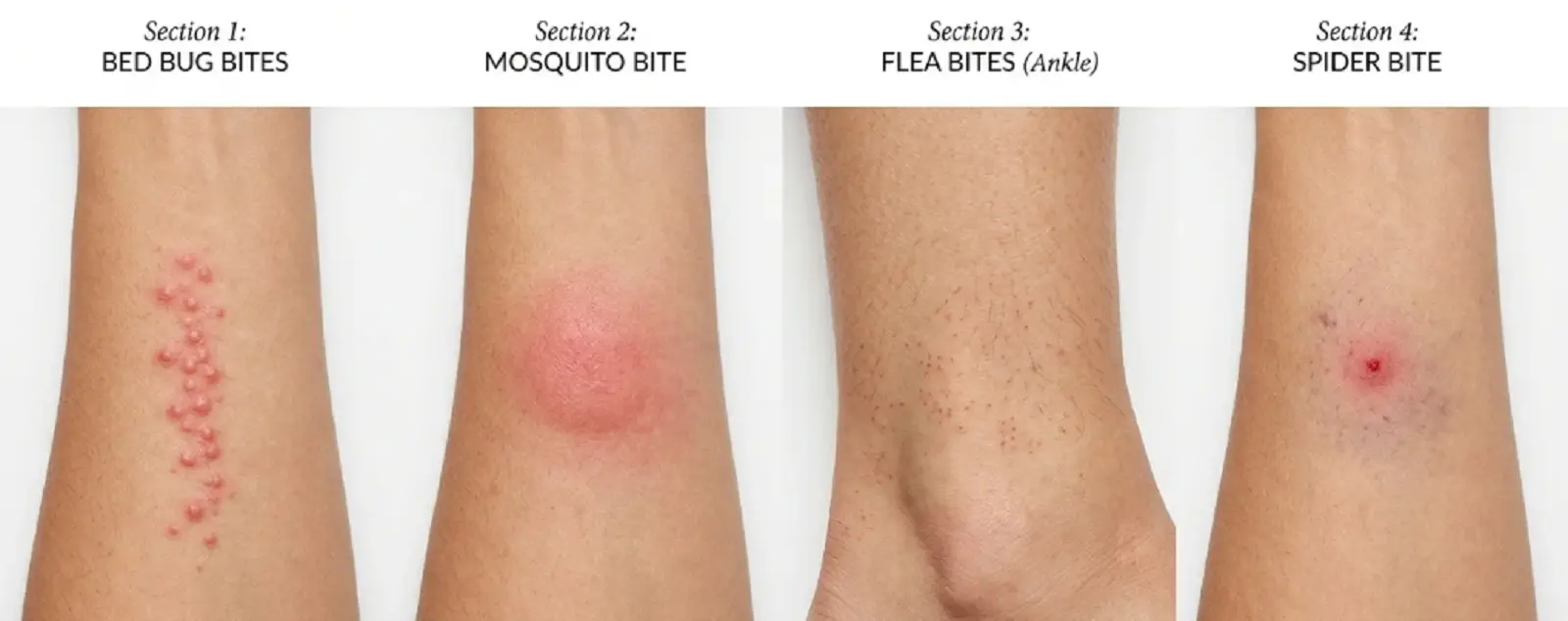
Because many insect bites look remarkably similar, telling them apart can be tricky. Here is a quick reference guide:
| Feature | Bed Bug | Flea | Mosquito | Spider |
|---|---|---|---|---|
| Pattern | Line or cluster | Random clusters | Single bite | 1-2 isolated |
| Location | Arms, neck, face | Ankles, waist | Exposed skin | Any area |
| When bitten | Night (sleeping) | Any time | Any time | When provoked |
| Itch level | Moderate to high | Very high | Moderate | Low to severe |
| Special signs | Zigzag row | Red dot center | Single puffy bump | Two fang marks |
The ultimate giveaway for bed bugs is the linear or zigzag pattern and the fact that the marks appear overnight.
Bed Bug Bites on Kids: What Parents Should Know
Children often experience more pronounced skin reactions than adults. Because their skin is highly sensitive, the bites may swell larger, look redder, and remain painful for longer. Children also find it much harder to resist scratching, putting them at a higher risk for secondary infections.
For early bed bug bites on children, apply a gentle, child-safe anti-itch lotion and keep their fingernails trimmed short to prevent them from breaking the skin while asleep. For children under the age of two, always consult a pediatrician before administering or applying over-the-counter medications.
Can Bed Bugs Bite Dogs and Cats?
Yes, bed bugs can bite household pets. The symptoms are quite similar to those in humans: small, red, irritated marks on the skin.
However, unlike fleas or ticks, bed bugs do not live or travel on animals. They bite quickly and immediately retreat to their hiding spots inside your mattress, baseboards, or furniture. If you suspect your pet is being bitten, check their bedding for tiny dark fecal spots or shed exoskeletons.
How to Confirm You Have Bed Bugs
A bite mark alone cannot confirm an infestation because skin reactions are subjective. To be sure, look for these early signs of a bed bug infestation around sleeping area:
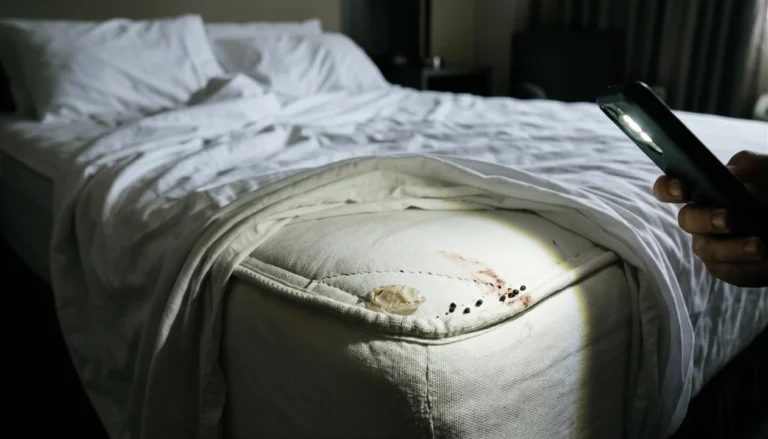
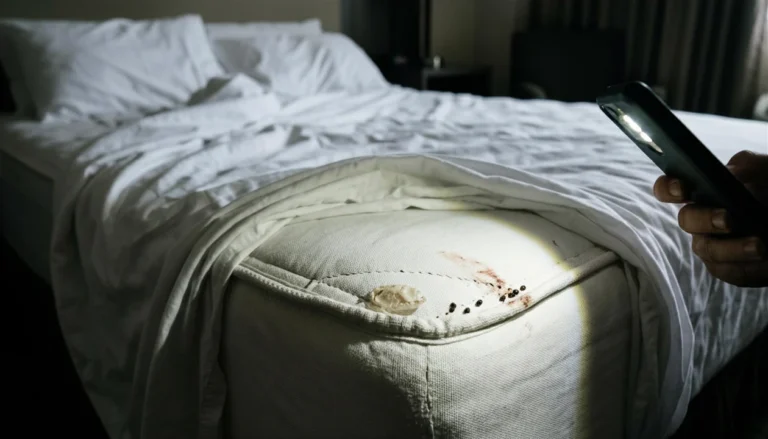
- Rust-colored stains on sheets or pillowcases (from crushed bugs or fecal matter).
- A sweet, musty odor lingering around the bed.
- Shed exoskeletons (translucent cast skins) hidden in mattress seams or headboard crevices.
- Live insects inside mattress folds, box springs, or behind electrical outlets.
- Bed bug eggs look like tiny, pearly-white dots roughly the size of a pinhead.
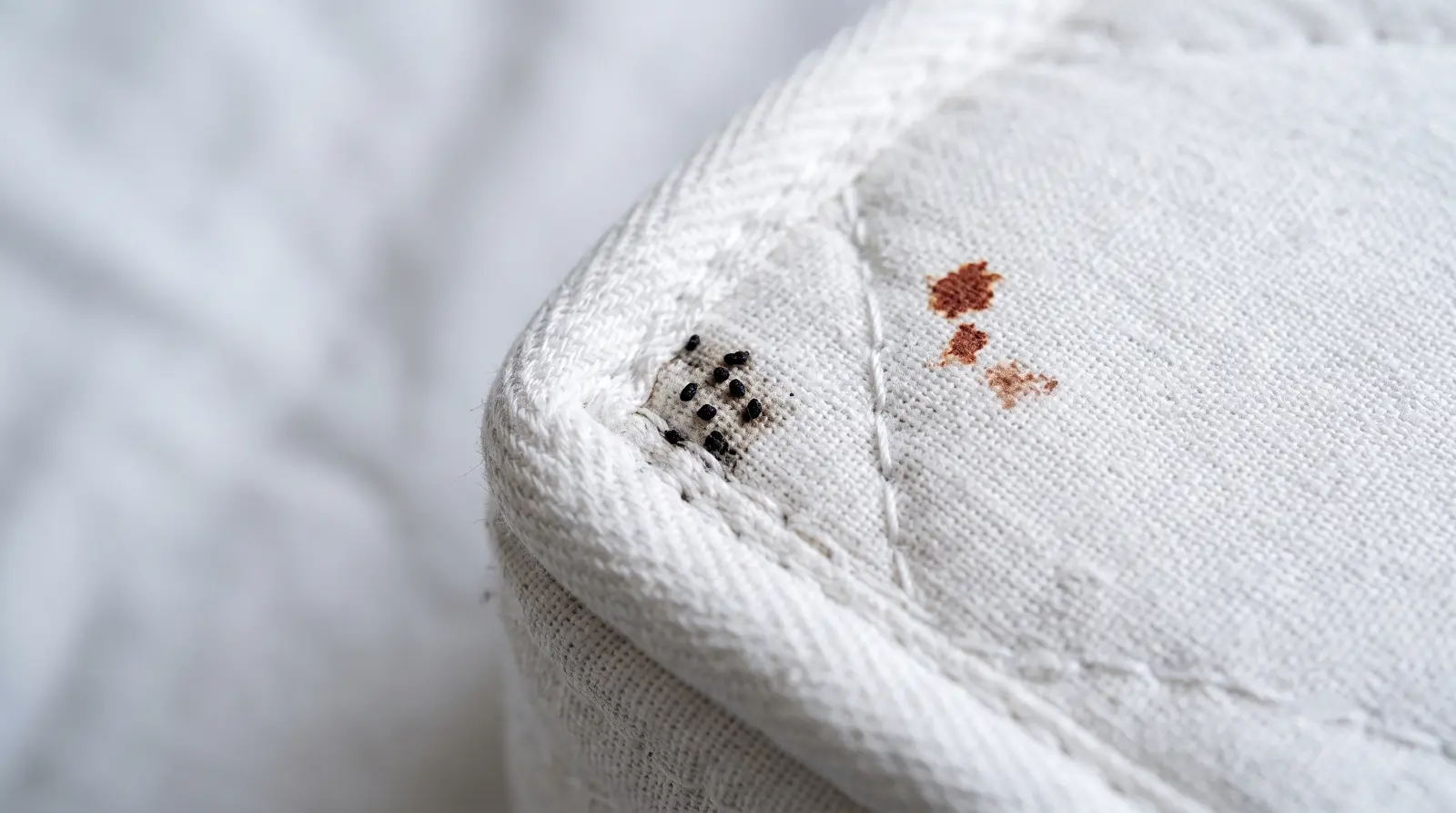
Focus your inspection within 8 feet of your bed. Bed bugs cannot fly and prefer to stay as close to their food source as possible.
How to Prevent Bed Bug Bites
Prevention relies entirely on keeping the insects out of your living space and stopping existing bugs from reaching you.
- Encase your mattress and box spring in high-quality, zippered, bed-bug-proof protective covers.
- Thoroughly inspect hotel rooms before unpacking. Always check the mattress seams, headboard, and luggage rack.
- After traveling, immediately wash your clothes in hot water and dry them on high heat for at least 20 minutes.
- Vacuum frequently, paying special attention to baseboards, carpets, and furniture seams.
- Declutter your bedroom to eliminate potential insect hiding spots.
- Inspect all second-hand furniture meticulously before bringing it inside your home.
Final Thoughts
Dealing with bed bug bites is a two-part challenge: managing the immediate skin irritation and eliminating the underlying infestation. While these bites are rarely medically dangerous, the intense itching, sleep disruption, and anxiety they cause can take a heavy toll.
To successfully handle a bed bug issue from start to finish, keep these essential steps in mind:
- Soothe the Skin First: Treat itchy bites with mild soap, cold compresses, 1% hydrocortisone cream, and oral antihistamines. Above all, avoid scratching; keeping the skin intact is the single best way to prevent secondary bacterial infections.
- Confirm the Source: If you wake up with new bites in a linear or clustered pattern, inspect your sleeping environment immediately. Check mattress seams, headboard crevices, and bedding for blood spots, dark fecal marks, or shed skins.
- Target the Root Cause: Topical treatments relieve your symptoms, but they will not stop new bites from happening. Bed bugs reproduce quickly and hide in tight spaces, making complete DIY eradication difficult.
- Know When to Call Professionals: Consult a healthcare provider if bites show signs of infection (such as pus or expanding redness) or severe allergic reactions. For your home, contacting a licensed pest control specialist, especially for professional heat treatment, is the fastest and most reliable way to clear an active infestation.at your skin to relieve discomfort, inspect your b
The Bottom Line: The earlier you identify bed bugs and take action, the easier they are to eradicate. Treat your skin to relieve discomfort, thoroughly inspect your bedroom, and do not hesitate to consult a pest control professional to reclaim your home and peace of mind.
Frequently Asked Questions (FAQs)
What does a bed bug bite look like on first appearance?
On the first day, a bite might only appear as a tiny, unnoticeable red dot. Within 24 to 48 hours, it typically develops into a swollen, reddish-purple, itchy spot with a darker center. These bites frequently form a close row or a group of 3–5 bumps, often referred to as the “breakfast, lunch, and dinner” pattern.
Are bed bug bites itchy right away?
Not always. Because bed bugs inject a natural numbing agent when they pierce the skin, you won’t feel anything initially. The intense itching usually kicks in hours or even days later. Once the anesthetic wears off, your immune system begins to react.
How long do bed bug bites last on the skin?
Most bed bug bites heal completely within 1 to 2 weeks. However, if you scratch them open or develop a secondary bacterial infection, they can easily last 3 weeks or longer.
Can bed bug bites spread if you scratch them?
No, the bites themselves do not spread because they are individual localized insect wounds, not a contagious rash. However, scratching can break the skin barrier and introduce environmental bacteria, causing an infection that spreads and requires antibiotics.
What is the fastest way to treat bed bug bites?
Wash the area immediately with soap and cool water, apply a thin layer of 1% hydrocortisone cream, and take an over-the-counter oral antihistamine to curb the systemic itch. Above all else, avoid scratching.
Do bed bug bites look different on kids than on adults?
Yes. Children naturally have more sensitive skin, meaning their immune responses are often more pronounced. Their bites tend to exhibit more severe swelling and brighter redness and may take longer to heal due to the difficulty children have resisting the urge to scratch.
Can I have bed bugs without seeing any bites?
Absolutely. Studies show that up to 30% of people do not react to bed bug saliva at all. You could have an active infestation without ever developing a single itchy mark, which is why checking for secondary signs like mattress stains and shed skins is so critical.