Common House Spiders: Types and State-Specific Spider Identification Guide
How to identify big spiders in the home?
I found a large, fast-moving spider in my bathroom at 2 a.m. I had no idea what it was. After years working in pest management across multiple US states, that moment reminded me why so many homeowners panic: not because big spiders are dangerous, but because the right information is so hard to find quickly.
Here is the truth I have learned from inspecting hundreds of homes: out of 3,500+ spider species in the USA, only two pose a real medical risk. Everything else you are likely to find in your home is harmless, predictable, and, honestly, easier to identify than you think. This guide gives you exactly that, fast.
🕷️ At a Glance What You’ll Find in This Guide
| What You Need | Where to Go |
| I want to identify a spider by size or colour. | Jump to: Identification by Color section |
| I found a spider in my state. | Jump to: State-Specific Guide |
| I want to know if it is dangerous | Jump to the Dangerous House big Spiders section |
| I found something that looks red or white | Jump to: Red / White & Yellow Spiders |
| I found a round sac or egg cluster | Jump to: Seasonal Patterns & Egg Sac ID |
| I have a quick yes/no question | Jump to the FAQ section |
What Is a House Big Spiders?
A house spider is any spider that lives inside or near your home. They come inside looking for warmth, food, and shelter. Most house big spiders feed on insects like flies, mosquitoes, and cockroaches. So in many ways, they are actually helping you.
House big spiders are not usually dangerous. Out of the thousands of spider species in the USA, only a small number can harm humans. Knowing which ones to watch for is the key.
How to Identify a House Big Spiders?
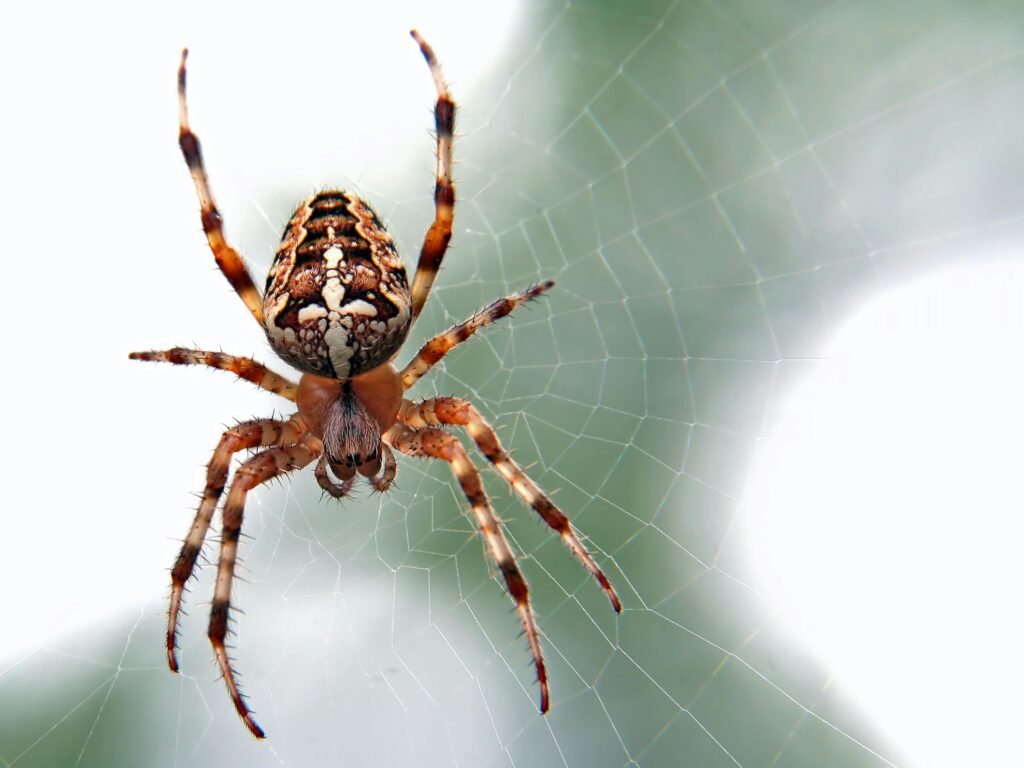
Before looking at specific types, here are the basics. You can identify most house big spiders by four things:
- Body size Is it small like a pea or big like a silver dollar?
- Colour Is it brown, black, white, red, or yellow?
- Leg length: Are the legs short and thick or long and thin?
- Web type Is the web messy and tangled or neat and circular?
These four clues will narrow it down fast. Use the sections below to match what you see.
Most Common Types of House Big Spiders in the USA
1. American House Spider
The American house spider is the most common spider found inside US homes. It is small, brown, and easy to miss.
What it looks like: It has a round, tan-to-brown abdomen with dark spots. Its body is about the size of a nickel, including its legs. The female is slightly bigger than the male.
Where you find it: Look in corners, basements, garages, and window frames. It builds a messy, tangled cobweb and hangs upside down in it.
Is it dangerous? No. Its bite is harmless to most people. It only bites if you squeeze or trap it.
Don’t confuse it with the brown recluse. The brown recluse has a violin-shaped marking on its back. The American house spider does not.
2. Cellar Spider (Daddy Long Legs)
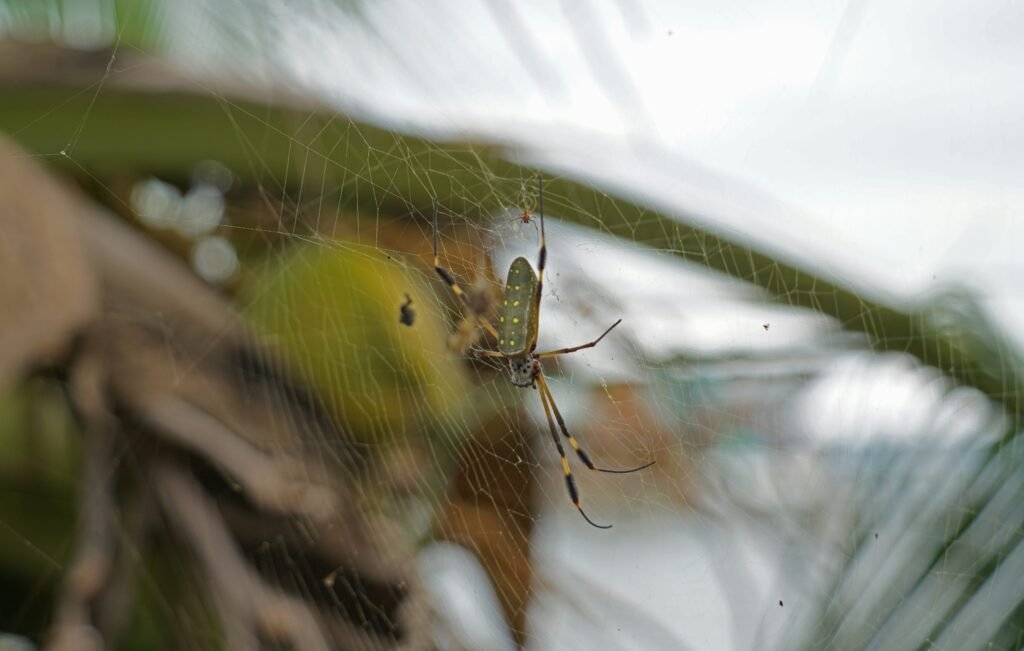
Cellar spiders are one of the most recognised house big spiders in America. They have an extremely long, thin set of legs and a tiny body.
What it looks like: It is pale yellow, grey, or light brown. Its legs are about six times longer than its body. The body is small and oval-shaped.
Where you find it: As the name says, cellars. Also basements, garages, and quiet corners of rooms. It hangs upside down in a loose, irregular web.
Do cellar spiders bite?
This is one of the most searched questions about house big spiders. Here is the truth.
Cellar spiders almost never bite humans. Their fangs are very small. Even if they did bite you, their venom is too weak to cause any real reaction. The old myth that they have deadly venom but fangs too short to bite you? That is completely false. There is no scientific evidence to support it at all.
Are they the same as daddy long legs? Not exactly. True daddy long legs (harvestmen) are not big spiders at all. They do not have two body parts or fangs. Cellar spiders are actual spiders. They just look similar.
3. Wolf Spider
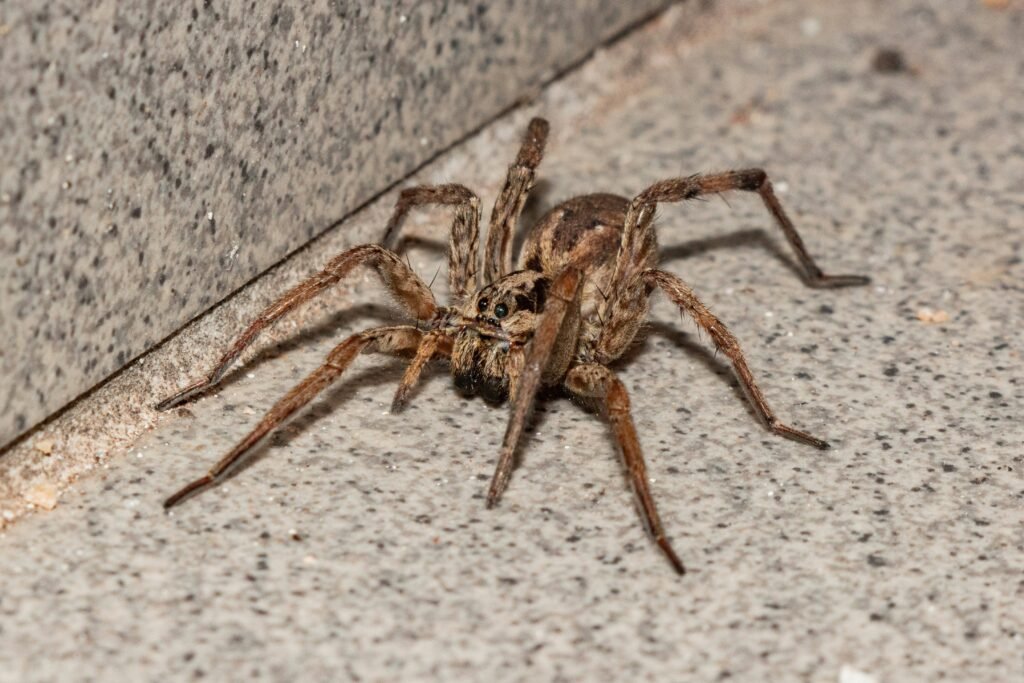
Wolf spiders are big, fast, and often scare homeowners. They are one of the most common large house big spiders in the USA.
What it looks like: It is brown, grey, or black with stripes or patterns on its back. The female can grow up to one inch long. It is hairy and muscular, almost like a tiny tarantula.
Where you find it: Wolf spiders do not build webs. They hunt on the ground. They sneak inside through gaps under doors or cracks in the foundation. Look for them in basements, garages, and along the floor.
Is it dangerous? It can bite if threatened. The bite causes some pain and swelling but is not medically serious for most healthy adults.
Don’t confuse it with the brown recluse. The brown recluse is much smaller and has a violin marking on its body.
4. Grass Spider
Grass spiders are common near doors, windows, and siding. They build flat funnel-shaped webs.
What it looks like: It is brown or tan with two dark stripes running down its back. It has long spinnerets at the back of its abdomen. Its body is about half an inch long.
Where you find it: Mainly outdoors in grass and shrubs. But they often build funnel webs on the outside of window screens or in door frames. They can wander inside too.
Is it dangerous? No. It is harmless to humans.
Don’t confuse it with: The hobo spider. Grass spiders look similar but have more prominent stripes. The hobo spider has no stripes on its back.
5. Garden Spider
Garden spiders are large, colourful, and hard to miss. They are mostly outdoor big spiders. But they do come close to homes.
What it looks like: The most common type is the black and yellow garden spider. It has a bright yellow and black pattern on its abdomen. Females can grow up to one inch long. They build large, circular webs with a distinctive zigzag pattern in the centre.
Can garden spiders come inside? Rarely. They prefer open outdoor spaces. But you might find them near your porch, patio, or garage door.
Is it dangerous? No. They are completely harmless to humans.
6. Brown House big Spider
The brown house spider is similar to the American house spider but slightly larger.
What it looks like: It is dark brown with a rounded abdomen. Its body is about a quarter of an inch long. It builds a tangled web in sheltered spots.
Where you find it: Corners of rooms, attics, behind furniture, and under window ledges.
Is it dangerous? Generally no. Its bite may cause minor irritation.
7. Jumping Spider
The jumping spider is one of the most common house big spiders in the USA. You have probably seen one and not known what it was.
What it looks like: It is small and compact. Its body is usually black, grey, or brown with white, yellow, or red markings. The most distinctive feature is its large front-facing eyes — wide and forward-facing, almost like tiny headlights. The body is fuzzy and about a quarter to three-quarters of an inch long.
Where you find it: Jumping big spiders are usually found hunting around windows and doors because more insects are attracted to those areas. Retreats may also be built under furniture, in drapery folds, between books on bookshelves, and in cracks found in wood floors.
Does it build a web? No. It does not spin a web to catch prey. It hunts with its eyes and jumps on insects directly. It can jump up to 20 times its own body length.
Is it dangerous? No. Jumping big spiders do possess fangs and produce venom, but the venom is not a medical threat. If one bites you, it is only because it felt cornered. Expect mild swelling — nothing more.
Don’t confuse it with the black widow. A black jumping spider with a compact body gets mistaken for a black widow regularly. The jumping spider has no hourglass marking and has those large, forward-facing eyes that a black widow does not have.
8. Hobo Spider
The hobo spider is mostly found in the Pacific Northwest. But it does occasionally show up indoors in other western states too.
What it looks like: It is brown with a pattern of yellow markings on a grey abdomen. Its legs are solid brown with no rings or bands. The body is about half an inch to three-quarters of an inch long. It builds a funnel-shaped web similar to the grass spider.
Where you find it: They prefer ground level. Look near baseboards, in closets, and under furniture. They build funnel webs in dark, undisturbed corners. Hobo spiders are fast runners — clocking around 17 inches per second.
Is it dangerous? Earlier research suggested its bite caused tissue damage. More recent studies have walked that back. Most pest and medical authorities now classify it as low-risk. Its bite may cause a headache or mild irritation but is not considered medically serious.
Don’t confuse it with: The grass spider. Both build funnel webs and look very similar. The hobo spider has no stripes on its back. The grass spider has two clear dark stripes running the full length of its body.
States where it is most common: Washington, Oregon, Idaho, Utah, and western Colorado.
Spider Identification by Color
Not sure what you saw? Use this quick colour guide.
| Color | Likely Spider | Danger Level |
| Brown | American House Spider, Wolf Spider, Brown Recluse | Low–Medium |
| Black | Black Widow, Black House Spider | High (Black Widow) |
| Red / Orange | Red House Spider, Jumping Spider | Low |
| White / Pale | Crab Spider, Cellar Spider | Very Low |
| Yellow | Yellow Sac Spider, Garden Spider | Low |
| Grey | Grass Spider, Hobo Spider | Low |
Important: If you see a small brown spider with a violin-shaped mark on its back, do not touch it. That could be a brown recluse. Leave the area and call a pest control professional.
Red big spiders found in the house. What are they?
People often search for “red spiders in my house” and get confused results. Here is the truth.
There is more than one type of red thing people find indoors. Most of them are not dangerous at all.
1. Tiny red bugs (almost pinhead-sized)
If what you see is incredibly tiny, the size of a pinhead, it is almost certainly a clover mite, not a spider. These are plant-feeding arachnids that wander indoors in spring and fall. Clover mites do not bite, do not carry diseases, and cannot reproduce inside your home. They look like tiny red dots crawling near windowsills and walls. If you crush them, they leave a red stain. Use a vacuum; do not wipe them.
2. Red House Spider (Nesticodes rufipes)
This is an actual spider. It is primarily reddish-brown over its entire body, including the legs. Adult females are about one-fifth to one-third of an inch long. It is most commonly reported in Texas, Florida, and California. It builds a messy, tangled cobweb. It can bite, but its venom is not medically significant to humans and will cause nothing more than minor, localised irritation.
3. Red-Backed Jumping Spider
This is a small jumping spider with a red or orange abdomen. It is harmless and common in the southern USA.
4. Woodlouse Spider
Has a dark red body and pale abdomen. Found in damp areas like basements. Not dangerous to humans.
Quick rule of thumb:
- Pinhead-sized red dots near windows are clover mites (not big spiders)
- Compact red-brown spider with globe abdomen = red house spider
- Small spider with red back that jumps = red-backed jumping spider
None of these are serious threats to humans.
White and Yellow Spiders Found Indoors
White and yellow spiders indoors cause a lot of confusion. Here is what you are most likely dealing with.
White Spiders in the House
- Crab Spider can be white or pale yellow. Normally an outdoor spider that hunts on flowers. Sometimes wanders inside. Completely harmless.
- Pale Cellar Spider Some cellar spiders appear almost translucent white under certain lighting. Look for the very long legs to confirm.
- Newly Moulted Spider: Any spider right after moulting its skin appears pale or whitish temporarily. This is normal.
- White Sac Spider The yellow sac spider (Cheiracanthium) can look pale or white. Found in upper corners of rooms and behind wall hangings. This one can bite and cause mild irritation.
Yellow Spiders in the House
- Yellow Sac Spider The most common yellow spider found indoors is the False Widow spider. It is pale yellow with a darker stripe on its abdomen. About a quarter of an inch long. It hides in silky sacs in corners, behind picture frames, and along ceilings. Its bite causes some pain and swelling but is not medically serious for most people.
- Goldenrod Crab Spider: Bright yellow. An outdoor species that sometimes enters homes. Completely harmless.
- Yellow Garden Spider (Juvenile) Young garden spiders can appear yellow before their markings develop. Rarely found indoors.
If you find a small yellow spider in upper corners or behind wall hangings, it is most likely a yellow sac spider. Leave it alone or catch and release it outside.
State-Specific Spider Identification Guide
Different states have different spider species. Here is what you are most likely to find indoors by state.
Big Spiders in Florida
Florida is warm and humid. That makes it a paradise for big spiders.
Most common house big spiders in Florida:
- Southern House Spider: Large body, crevice-weaver, harmless but frightening in size
- Cellar Spider: Found all over Florida homes
- Black Widow is foundin garages, sheds, and dark corners. Dangerous.
- Brown Widow Similar to the black widow but lighter. Common in southern Florida.
- Huntsman Spider: Large and fast. Hunts cockroaches at night. Harmless but alarming.
Florida also has the spinybacked orb-weaver, a small, colourful spider with spines on its abdomen. It is bright and unusual but totally harmless.
Tip for Florida residents: Check shoes, gloves, and storage boxes left in garages. Black and brown widows, like dark, quiet spots.
Big Spiders in Texas
Texas is big, and so is its spider population.
Most common house big spiders in Texas:
- Brown Recluse Found in closets, attics, and stored boxes. Dangerous. Has a violin-shaped mark.
- Black Widow Common in wood piles, garages, and outdoor furniture.
- Wolf Spider frequently enters homes in autumn.
- Brown House Spider Found in corners and ceilings throughout Texas homes.
- Texas Brown Tarantula Sometimes wanders into garages and sheds. Not aggressive.
Brown spiders in Texas: If you find a brown spider in your Texas home, treat it with caution until identified. There are harmless brown spiders like the American house spider and dangerous ones like the brown recluse. Size and the violin marking are your best clues.
Big Spiders in California
California has a wide variety of big spiders. The climate varies a lot from deserts to coasts to mountains.
Most common house big spiders in California:
- Black Widow The main venomous concern is… Found under furniture, in garages, and sheds.
- Cellar Spider: Extremely common in California homes.
- American House Spider Found statewide.
- Desert Recluse Found in desert regions of Southern California. It has the violin marking.
- Wolf Spider Common throughout the state.
Tip for California residents: The brown recluse is rare in California. The desert recluse exists but stays in remote desert areas, away from most homes.
Big Spiders in Arizona
Arizona’s desert climate means you will encounter different species than those in the rest of the country.
Most common house big spiders in Arizona:
- Desert Recluse: Light tan, violin marking, venomous. Found in desert homes and storage areas.
- Black Widow Very common in Arizona. Found under rocks, in garages, and outdoor furniture.
- Desert Blonde Tarantula: Large and hairy. Sometimes wanders into garages. Not aggressive.
- Wolf Spider Common in yards and homes.
- Cellar Spider: Found indoors statewide.
Desert spiders: Arizona has a unique group of desert-adapted big spiders. Most are sand-coloured and fast-moving. The biggest indoor concern in Arizona is still the black widow, which retreats into cool, dark indoor spots during the hottest months.
Big Spiders in Georgia
Georgia’s warm, humid climate supports a large spider population.
Most common house big spiders in Georgia:
- American House Spider Found everywhere in Georgia homes.
- Wolf spiders commonly enter homes in the fall.
- Black Widow is found in undisturbed, dark areas.
- Brown Recluse: Present in Georgia but not as common as in Texas.
- Cellar Spider Common in basements and garages.
Big Spiders in Michigan
Michigan homeowners deal with big spiders mostly in fall, when big spiders seek warmth indoors.
Most common house big spiders in Michigan:
- American House Spider The #1 house spider in Michigan’s homes.
- Cellar spider Very common in Michigan basements and crawl spaces.
- Wolf Spiders enter homes in late summer and fall.
- Grass Spider builds funnel webs near Michigan windows and doors.
- Fishing Spider: Large and intimidating. Found near water and basements.
Important fact for Michigan residents: Michigan is home to the Northern Black Widow (Latrodectus variolus), which is native to the Lower Peninsula and is found near woodpiles, garages, and window wells. Brown recluse spiders are rare in Michigan but have been reported in isolated cases. If you spot either one, do not handle it. Contact a pest professional.
Big Spiders in Ohio
Ohio has similar spider species to Michigan and the broader Midwest.
Most common house big spiders in Ohio:
- American House Spider Found throughout Ohio homes year-round.
- Cellar Spider Extremely common in Ohio basements.
- Wolf spiders move inside in fall. Commonly mistaken for brown recluse.
- Orb Weaver Found on porches and near outdoor lights.
- Black Widow Rare but present in Southern Ohio.
Big Spiders in Colorado
Colorado’s altitude and climate make it less spider-dense than southern states.
Most common house big spiders in Colorado:
- American House Spider The most common indoor spider.
- Wolf Spider: Very common in Colorado homes and garages.
- Cellar spiders are found in basements and cool indoor areas.
- Black Widow is present in lower-altitude areas and southern Colorado.
- Hobo Spider: Found in western Colorado.
Dangerous House Big Spiders to Know in the USA
Most house big spiders are harmless. But two species deserve your full attention.
Black Widow Spider
- Appearance: Shiny black body with a red hourglass shape on the underside of the abdomen
- Where found: Dark, sheltered spots: wood piles, garages, under furniture, outdoor toilets
- Danger level: High. Its venom attacks the nervous system. Seek medical attention immediately after a bite.
- States: Found across the entire southern and western USA
Brown Recluse Spider
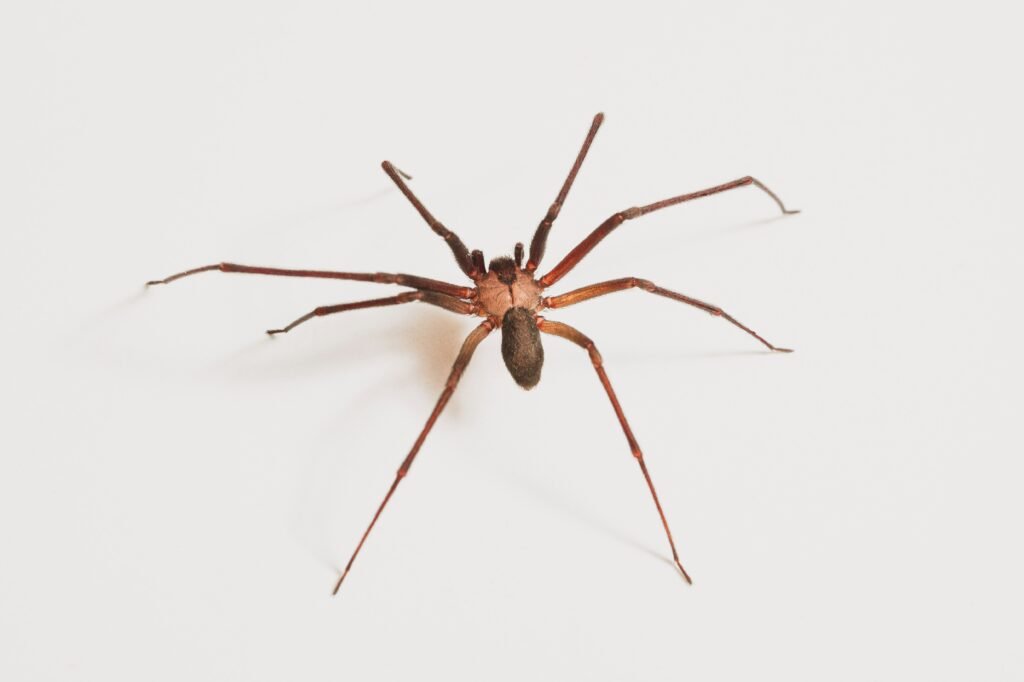
- Appearance: Light to medium brown with a violin or fiddle-shaped mark on its upper back
- Where found: Closets, attics, boxes, stored clothing, and undisturbed areas
- Danger level: High. Its bite can cause tissue damage. Seek medical attention.
- States: Mainly Texas, Oklahoma, Missouri, Arkansas, and surrounding southern states
When Do Spiders Come Inside? Seasonal Patterns by Region
Many homeowners notice more spiders in certain seasons. There is a reason for that. Spider behaviour follows a predictable seasonal cycle.
Fall (September–November): Peak Indoor Season
This is when most Americans notice a sudden spike in house spider sightings. Two things drive this: temperatures drop outside so spiders seek warmth, and male spiders roam more during fall mating season. They leave their usual hiding spots and wander, which is when you see them crossing the floor. This is most noticeable in Midwest and Northeast states like Michigan, Ohio, Pennsylvania, and New York.
Summer (June–August) Southern States Peak
In warm states like Florida, Texas, and Georgia, summer brings more spider activity indoors. High heat drives insects inside to escape the temperature, and spiders follow their food. Florida homeowners often see more huntsman spiders and wolf spiders in summer. Texas residents notice more brown spiders entering through gaps around doors and foundations.
Spring (March–May): Watch for egg sacs.
Spring is when many spiders lay eggs. This is the best time to check undisturbed areas like storage boxes, attics, and garage corners.
Winter Less Activity, but Not Zero
In northern states, outdoor spider activity drops sharply. But house spiders already inside remain active all year. Cellar spiders, American house spiders, and yellow sac spiders do not go dormant. They simply stay hidden.
Spider Egg Sac Identification
Finding an egg sac is often more alarming than finding the spider itself. Here is what to know:
- American house spider egg sac round, tan, papery. About the size of a pea. Found hanging in the web.
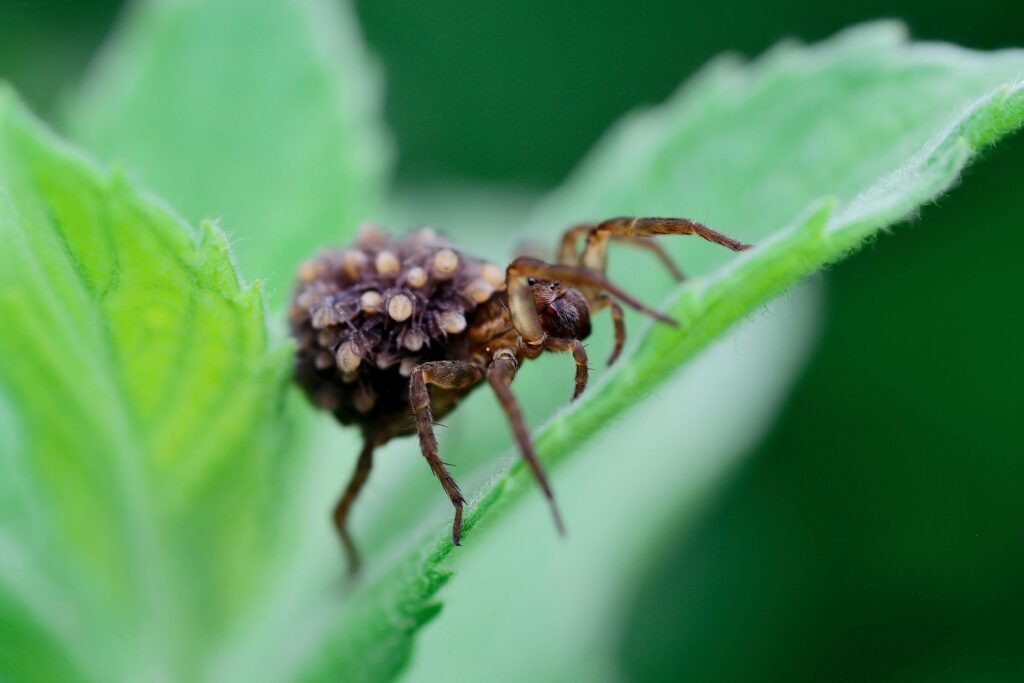
- Wolf spider egg sac Females carry a round, white egg sac attached to their spinnerets. You may see a wolf spider walking with a white ball behind her.
- Black widow egg sac: Round, cream-coloured, and papery with a rough texture. About the size of a marble. Found in the web near the ground.
- Brown recluse egg sac: flat, disc-shaped, and white. Found in secluded indoor areas.
What to do if you find an egg sac: Do not touch it with bare hands. If it is from a harmless species, you can vacuum it up. If you are unsure, especially in Texas, Florida, or Arizona, call a pest professional before disturbing it.
FAQ: Common House Spider Questions
Q: Why are there so many spiders in my house in fall? Spiders come inside in the fall looking for warmth. Male spiders also roam more in fall during mating season. This makes them more visible inside your home.
Q: Are house spiders dangerous to my pets? Most house spiders are harmless to pets. A black widow or brown recluse bite can affect small dogs or cats. If your pet seems ill after a spider encounter, contact your vet.
Q: What attracts spiders to my house? Spiders follow their food supply. If your home has flies, mosquitoes, or other insects, spiders will follow. Bright outdoor lights attract insects which attract spiders.
Q: How do I keep spiders out of my house? Seal cracks around windows and doors. Remove clutter from storage areas. Turn off outdoor lights at night or switch to yellow bulbs. Vacuum regularly to remove webs and egg sacs.
Q: Are celler spiders dangerous? No. Cellar spiders are completely harmless. Their fangs are tiny, and their venom is too weak to affect humans. The myth about deadly cellar spider venom is just that a myth with no scientific backing.
Q: What is the most common spider found in US homes? The American house spider (Parasteatoda tepidariorum) is the single most common house spider found across all US states.
Q: Are cellar spiders the same as daddy longlegs? No. True daddy longlegs (harvestmen) are not spiders. They have no fangs and only one body segment. Cellar spiders are actual spiders that simply look similar due to their long, thin legs.
Quick Identification Table: Common House Spiders at a Glance
| Spider | Size | Color | Web Style | Dangerous? |
| American House Spider | Small (nickel-sized) | Brown / Tan | Messy cobweb | No |
| Cellar Spider | Medium (long legs) | Pale / Grey | Loose tangle | No |
| Wolf Spider | Large (up to 1 inch) | Brown / Grey | No web | Rarely |
| Grass Spider | Medium | Brown with stripes | Funnel-shaped | No |
| Garden Spider | Large | Black and Yellow | Large circular | No |
| Jumping Spider | Small | Black / Brown / Grey | No web | No |
| Hobo Spider | Medium | Brown / Yellow markings | Funnel-shaped | Low risk |
| Black Widow | Medium | Shiny black + red | Irregular | YES |
| Brown Recluse | Small–Medium | Tan/brown + violin | Irregular | YES |
What I Always Tell Homeowners:
After walking through basements in Michigan, crawl spaces in Texas, and garages in Florida, the one thing that surprises me most is not the spiders. It is how often the wrong information causes more harm than the spider ever would. A homeowner once doused an entire room in pesticide because of a cellar spider one of the most harmless creatures alive.
Identification is everything. Take five minutes to match the size, colour, web type, and location of what you found. That five minutes is the difference between unnecessary panic and genuine peace of mind.
The state matters more than most people realise. A spider in a Florida garage behaves very differently from the same-looking species in a Michigan basement. Knowing your state’s common species changes how you respond and whether you even need to respond at all.
Two spiders deserve your full attention: the black widow and the brown recluse. If you live in Texas, Florida, Arizona, or the southern states, learn what they look like. Check dark corners, stored boxes, and old shoes before putting your hands anywhere you cannot see clearly.
Most house spiders are quietly working for you. That cellar spider in your basement is catching mosquitoes and flies you never knew were there. The fear is natural, but the reality is that 98% of house spiders are more useful than harmful.
If you find multiple black widows or brown recluses, or if anyone in your home has been bitten and shows spreading pain, nausea, or muscle cramps do not wait. Contact a licensed pest professional or go to urgent care immediately.
For everything else, use this guide, stay informed, and try to resist opening seventeen browser tabs at 2 a.m.